

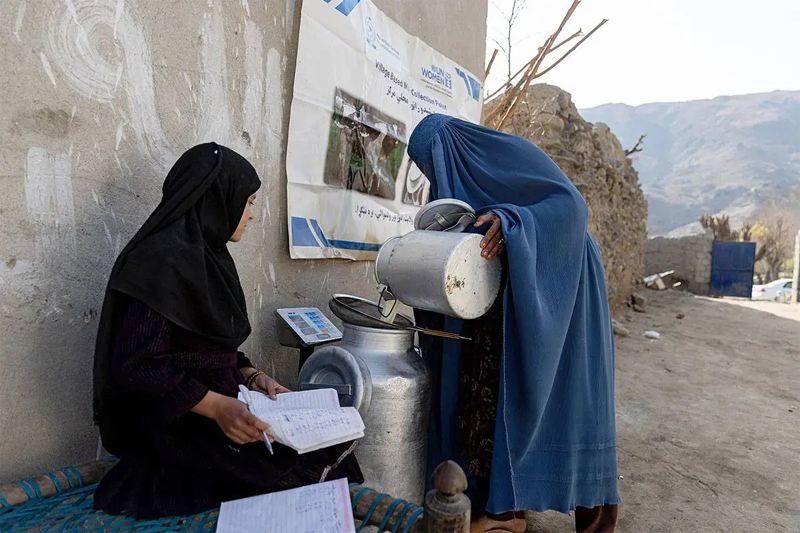
GENEVA, July 4: Nearly eight out of 10 young Afghan women have no access to education, work and training, nearly four times the rate for Afghan men, the United Nations Women organization said in its 2024 Afghanistan Gender Index.
“According to UN Women’s report, developed with financial support from the European Union, 78 per cent of young Afghan women are not in education, employment or training — nearly four times the rate for Afghan men,” the organization said in a statement.
Afghanistan has the second-widest gender gap in the world, with a 76 pc disparity between women’s and men’s outcomes in health, education, financial inclusion and decision-making, the statement added.
“The Index also shows that women, on average, are realizing just 17 per cent of their full potential to make choices and access opportunities, while on average, women worldwide achieve 60.7 per cent,” the organization said.
Meanwhile, UN Women Executive Director Sima Bahous said that Afghanistan’s greatest resource is its women and girls.
“Their (women’s) potential continues to be untapped, yet they persevere. Afghan women are supporting each other, running businesses, delivering humanitarian aid and speaking out against injustice. Their courage and leadership are reshaping their communities, even in the face of immense restrictions. We must stand with them in their pursuit of a country that reflects their rights and the aspirations of all Afghans,” Bahous was quoted as saying in the statement.
Afghanistan still has one of the largest workforce gender gaps in the world, with only 24 per cent of women participating in the labour force, compared to 89 per cent of men. Women are more likely to work at home and in lower-paid, insecure jobs. Women also take on a greater share of unpaid domestic work: 74 per cent of women spent significant time doing household chores, compared to only 3 per cent of men.
The financial divide is equally stark, with men nearly three times more likely than women to own a bank account or use mobile money services, according to the new Index.
While general restrictions remain for women working, there are limited exemptions, and the report shows that Afghan women are still joining the workforce in record numbers, driven by protracted economic and humanitarian crises.
According to the report, by 2022, the number of unemployed women actively seeking work had quadrupled compared to before the takeover, while the number of employed women had doubled.
Still not a single woman holds positions in the cabinet or local government, the study said. Afghan women still continue to push for inclusive governance and find ways to raise their concerns with authorities, at the national and subnational level.
This is the largest study of women’s rights, opportunities, and gender equality since the Taliban took power in August 2021, according to the organization.
(UNI)
 Follow our WhatsApp channel
