

Forged in tradition, ready for tomorrow
Maj Gen Sanjeev Dogra (Retd)
On 30 May 2025, the first batch of nineteen female cadets passed out from the National Defence Academy (NDA), marking a historic milestone for the Armed Forces and the nation.They came from a generation accustomed to speed and instant connection-but they adapted to bugles, boots, and discipline. These nineteen cadets stepped into the legacy of NDA to undergo one of the toughest regimens imaginable. Their journey was not just about breaking barriers; it was about setting benchmarks. A transformation not only of individuals-but of an institution.
It all began on a rain-washed afternoon in July 2022. As the girls stepped onto the platform at Pune railway station-bags on their backs, hearts in their throats-a tall, broad-shouldered drill Ustad with a chest full of ribbons and a moustache as sharp as his tone greeted them. His voice cut through the railway din, firm yet proud: “From this moment, you are not civilians. You wear the honor of the Indian Armed Forces.” That single sentence set the tone. No fanfare. No exceptions. Only expectations and the start of something historic.
The drive to Khadakwasla was quiet, each cadet lost in thought. As the Tri-Shakti Gate loomed and they crossed into NDA, the imposing architecture greeted them-aircrafts on display, cadets sprinting past on cross-country routes, others executing crisp drills on the parade ground. Cadets in mid-air during volleyball spikes, squads barking out drill commands-it was a world already in motion. Everything looked rehearsed, efficient, overwhelming. Nineteen newly inducted girls, surrounded by over 2200 male cadets-what were they thinking? Some wore pride, others caution. They were excited, but unsure. Brave, but still seeking belonging.
The Academy had prepared with precision. Romeo Squadron was refurbished-rooms restructured, lights upgraded, duty officers reassigned. New security protocols were drawn. A revised code of conduct was institutionalised. Yet, the essence of training remained untouched. NDA wasn’t creating exceptions-it was raising the bar. Traditions were respected, but inclusivity was now part of that tradition.
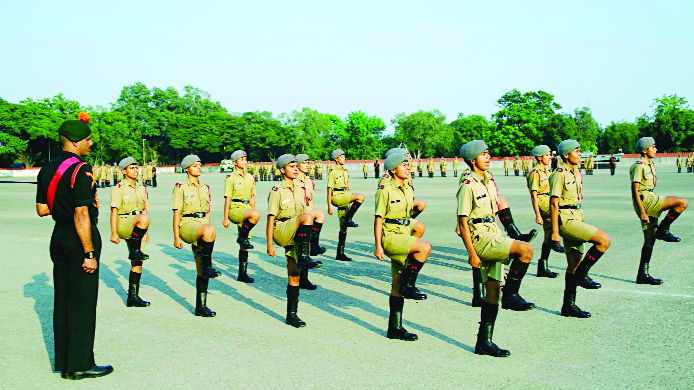
Training began like a thunderclap. The first term was a whirlwind of early wake-ups, punishing PT, relentless drills, academic lectures, and quiet nights of aching limbs. The drill Ustads-towering, sharp-eyed, and fierce-became icons of fear and respect. They roared on the parade ground, yet shielded their cadets like elder brothers. PT instructors focused not just on physical toughness but on inner resilience, adapting routines to match cadets’ progress with silent encouragement.
Academics brought a different kind of challenge. Held in the stately Sudan and Manoj Pandey Blocks, the classes offered everything from geopolitics and military history to physics and service fundamentals. Cadets rushed in breathless from morning PT, faces still wet from drills, uniforms slightly out of place. They tried to sit upright-but heads nodded off mid-lecture, not out of disinterest but sheer fatigue. The instructors understood. They’d been cadets too. Questions flew, notes scribbled furiously, and quiet moments of clarity landed like victory.
The Divisional Officers-often the first and most enduring influence on a cadet-understood that these nineteen girls were not just joining a course; they were stepping into legacy. When a female cadet faltered in a PT test or struggled with drill, it was the Divisional Officer who stood beside her-sometimes with quiet advice, sometimes with a stern word that stung but strengthened. They guided them into the military way of life-adjusting to routines, accepting command structures, and building mental toughness. Over time, these cadets didn’t just adapt-they flourished. They led drills, topped academics, and inspired juniors. By the sixth term, they weren’t seen as female cadets-they were seen as leaders.
The rhythm of NDA gradually became their own-etched in parade commands, squadron assemblies, and the quiet rustle of fatigues at dawn. For the girls, it meant trading ponytails for close-cropped crew cuts, worn with pride to mirror their male counterparts. They picked up the drill vocabulary, learned to march with poise, and synced their energy to the beat of the Academy. In this routine, they found rhythm and resilience. The NDA has its own scent-the sharpness of polish, the earthy smell of monsoon drills, the metallic scent of rifle oil at the range, and the steamy comfort of early morning chai.Each term brings its own seasons, its own pace. Cadets count days left to go home (DLTGH) in fatigues, boots, lectures, and punishments. For the cadets, this rhythm is not imposed-it seeps in, until it becomes their own heartbeat. NDA stopped feeling like an institution. It became home.
When they were integrated into all squadrons, it changed the dynamic-not by weakening it, but enriching it. The male cadets adjusted, watched, then welcomed. Together, they competed in games, parades, and obstacle courses. They failed, they won, and they cheered each other. Squadron spirit didn’t shrink-it grew. Within squadrons, bonds evolved. Course-mates became confidantes.
As the terms rolled on, camaraderie deepened. The nineteen girls became a family-picking each other up after failures, sharing letters, laughs, and lessons. Their bond extended beyond gender-male course-mates, once unsure, now stood shoulder to shoulder with them in training and triumph. Together they braved camps, punishments, victories, and setbacks. By third term, jokes flew in the ante-rooms. By fourth term, they were picking each other up after falls-literally and figuratively.By the sixth term, they weren’t just the first female batch-they were a united course, bound not just by shared memories but a shared spirit of excellence.
When parents came during midterms, they found someone different. The girl who left with a small suitcase returned taller, tanned, sharper in tone and thought. The transformation was unmistakable-and deeply moving. Even hesitant parents now carried pride in their eyes. The Academy had kept its promise.
The Adjutant-immaculate in dress, commanding from his white charger-represented everything NDA stood for: precision, honour, and presence. Cadets lived under his gaze with a mix of fear and pride. NDA never just taught drills or strategy. It instilled values-integrity, responsibility, and the resolve to always choose the harder right over the easier wrong. Whether it was owning up to a mistake or carrying an injured buddy through an exercise, these cadets learned that character isn’t optional-it’s non-negotiable.
The future they step into is starkly different. Operation Sindoor made clear that warfare has moved beyond trenches and tanks. The battlefields of tomorrow will involve AI, drones, satellites, and cyber strikes. These girls must lead in tactical formations as well as tech-driven command centers. And they must do so with empathy, ethics, and foresight. Not just women in uniform-but architects of a changing military ethos.
On 30 May, they marched across the Khetarpal Parade Ground. The Chief Guest saluted-not nineteen girls, but nineteen officers-in-the-making. There was no special reference. No gender called out. Just a stride, a salute, and a silent promise. As they walked past the Tri-Shakti Gate one last time, NDA did not bid them farewell. It whispered: Go lead. You are ready.
They came as nineteen girls.
They left as trailblazers.
And in doing so, they didn’t just enter the NDA’s history.
They rewrote it.
(The author was the Deputy Commandant and Chief Instructor of NDA)
 Follow our WhatsApp channel
