

Prof Raj Shree Dhar
Multi-disciplinary involves working with people from different disciplines, while maintaining the boundaries of each discipline. Inter-disciplinary involves integrating knowledge and methods from different disciplines to create a synthesized whole while trans-disciplinary integrates knowledge from different disciplines while transcending the borders. A multidisciplinary plate of food consists of say different vegetables in logical proportion but not mixed yet and interdisciplinary when we make the curry of all these vegetables to create a new flavor and when we take curry with a fresh salad then it is trans-disciplinary.
The National Education Policy (NEP) 2020 emphasizes multidisciplinary education to develop a range of human abilities, including intellectual, emotional, social, physical, artistic, and moral. The NEP 2020 aims to make India a global knowledge superpower by transforming higher education institutions into multidisciplinary universities, colleges, and knowledge hubs. A multidisciplinary approach brings together experts from different fields (e.g., science, engineering, economics, policy, or sociology) to provide a more comprehensive view and identify solutions that may not be apparent from a single perspective. In this world, most problems are multifaceted, and they don’t fit neatly into one category. For example, a public health crisis like a pandemic requires input from medical professionals, epidemiologists, logisticians, economists, and policymakers.
Multidisciplinary approach to education aligns with the holistic and integrative nature of ancient Indian knowledge systems. This topic explores how ancient Indian scientific texts such as the Sushruta Samhita (on medicine and surgery), Aryabhata’s astronomical work, and Brahmagupta’s mathematics can be used to enrich modern scientific education. By incorporating these ancient perspectives, students can gain a more holistic understanding of science that blends empirical knowledge with deeper philosophical insights.
Interdisciplinary approaches to education especially in fields like climate change and global health offer a wide range of interdisciplinary programs. Students can combine fields such as artificial intelligence, ethics, psychology, engineering, business, data science, and public policy, medicine, technology, social sciences, and environmental studies. India’s National Education Policy (NEP) 2020 advocates for a shift toward multidisciplinary education, encouraging the integration of humanities, arts, sciences, and vocational education. The NEP encourages a flexible curriculum, allowing students to combine different fields and prepare for careers that require diverse skills, such as in data science, digital humanities, and sustainability.
Multidisciplinary education emphasizes teamwork and collaboration among students with different expertise. This is particularly valuable in today’s workforce, where collaboration is the key. Being able to communicate and collaborate with people from diverse disciplines enhances skills like critical thinking, adaptability, and teamwork essential qualities for success in many fields. Multidisciplinary education equips students with a diverse skill set. In today’s interconnected world, employers’ value people who can think across disciplines, collaborate with others who have different areas of expertise, and solve complex problems. By working on projects that draw from multiple fields, students learn to communicate effectively with people from different professional backgrounds, a skill highly valued in many industries.
In many industries, jobs are evolving and requiring skills that blend multiple disciplines. For example, the rise of data science demands knowledge of computer science, mathematics, and domain-specific expertise. Multidisciplinary education helps students acquire a broader skill set, making them more adaptable and competitive in a fast-changing job market. The job market is increasingly dynamic, with many new roles requiring a blend of skills from various fields. For example, data science combines computer science, statistics, and domain expertise, while healthcare innovation may require knowledge from medicine, technology, and business. Multidisciplinary education helps students prepare for such roles and become more versatile in a rapidly evolving economy.
Today’s problems are often multifaceted and require a combination of skills to solve effectively. For example, a project in tech might require knowledge of both coding and design, or a marketing campaign may need understanding of data analytics alongside creativity. The ability to approach challenges from multiple perspectives often leads to better and more innovative solutions. Cross-pollination of ideas from different disciplines often leads to breakthrough innovation. A person who has expertise in multiple areas (e.g., data science, design, and business strategy) can apply concepts from one field to another, generating new insights and solutions that a specialist might not consider.
Hiring individuals with multidisciplinary expertise can reduce the need to hire multiple specialists for different roles. A person who can handle a variety of tasks can be more cost-effective and help streamline operations, especially in smaller or leaner teams. In today’s global and interconnected economy, businesses are looking for people who can bring diverse perspectives and skill sets to the table. Multidisciplinary expertise can help companies stand out and gain a competitive edge in the market, whether through faster time-to-market, more diverse product offerings, or better customer understanding. In short, the demand for multidisciplinary expertise reflects the changing nature of work and the increasing complexity of problems businesses need to solve. Recruiters are seeking individuals who can contribute to diverse projects, collaborate across teams, and adapt quickly to new challenges.
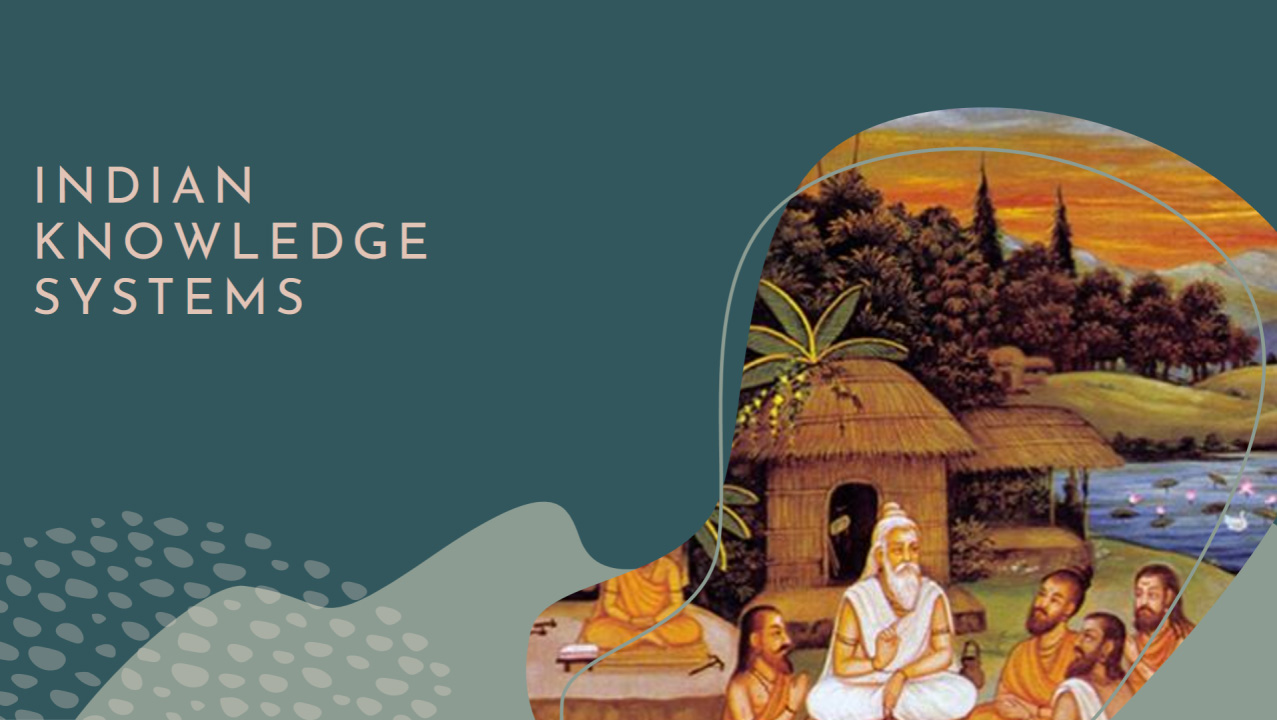
Ancient Education system of India had a tradition of multidisciplinary education that was both comprehensive and integrative, although it may not have been structured in the same way as modern educational systems particularly during the Vedic, Mauryan, and Gupta periods, it emphasized the development of a wide range of knowledge across various fields, including philosophy, science, arts, mathematics, medicine, and spirituality. The curriculum at Gurukuls included grammar, poetry, music, arts, logic, mathematics, astronomy, medicine, and spiritual teachings. Some students would also study military sciences, politics, and statecraft, making the education system quite multidisciplinary.
Ancient India made significant contributions to mathematics and astronomy. The Sulba Sutras, part of the Vedic tradition, included geometrical and mathematical concepts used for constructing altars. These texts contain early forms of Pythagorean Theorem and algebra. The Indian mathematician Aryabhata (476-550 CE) made significant contributions to astronomy and mathematics. His work integrated astronomy, mathematics, and geometry. Ayurveda was practiced as an integrated system that focused not only on treating physical illnesses but also on maintaining balance between mind, body, and spirit. This holistic approach to health involved elements of philosophy, biology, and ethics.
In addition to intellectual pursuits, ancient Indian education also included arts, craftsmanship, and performing arts. Classical dance, music, sculpture, and painting were taught alongside more academic disciplines. The Natya Shastra by Bharata Muni ( 2nd century BCE) is an ancient Indian treatise on performing arts (theater, dance, music) that integrates elements of drama, music, philosophy, and aesthetics. The tradition of Vastu Shastra (architecture) combined elements of geometry, astronomy, design, and art. Ancient Indian architecture, especially in temples, reflects this multidisciplinary approach, with emphasis on not just physical design but also its spiritual and symbolic meanings. Ancient Indian texts like the Arthashastra (attributed to Kautilya or Chanakya) combined elements of politics, economics, law, and military strategy. The Arthashastra presents a multidisciplinary approach to governance, including the management of resources, welfare of the people, legal frameworks, and the organization of the military. The Manusmriti and other Dharmashastras blended law with ethics, politics, and social structure, and the ancient education system often included teaching these interconnected areas.
Ancient Indian philosophy developed into several schools, such as Vedanta, Sankhya, Yoga, and Nyaya. Each school involved a deep inquiry into metaphysics, ethics, epistemology, and logic. The Nyaya school, for example, contributed significantly to the development of logic and debate techniques, making it an early example of critical thinking and interdisciplinary inquiry. Philosophers like Patanjali (in Yoga) and Kapil Muni (in Sankhya) offered systems that combined ethics, spirituality, metaphysics, and practical knowledge of the human mind. Ancient India had well-established centers of higher learning such as Nalanda University (established around 427 CE) and Takshashila, where scholars from diverse fields mathematics, astronomy, medicine, law, linguistics, and philosophy came together. These institutions often offered a multidisciplinary education that integrated religious, scientific, and cultural knowledge. The renowned university of Nalanda attracted scholars from around the world, and its curriculum was comprehensive, encompassing subjects such as logic, theology, philosophy, linguistics, and medicine.
Ancient Indian education was highly interdisciplinary, blending spiritual, philosophical, scientific, and practical knowledge into a holistic system. Education was designed to shape the individual not just in intellectual pursuits, but in moral, social, and spiritual dimensions as well. This integrated approach reflects a deep understanding of how different aspects of knowledge could inform and enrich one another, promoting a well-rounded and holistic education.
(The author is Dean-Cluster University of Jammu/Principal Higher Education Department J&K Government, J&K )
 Follow our WhatsApp channel
