

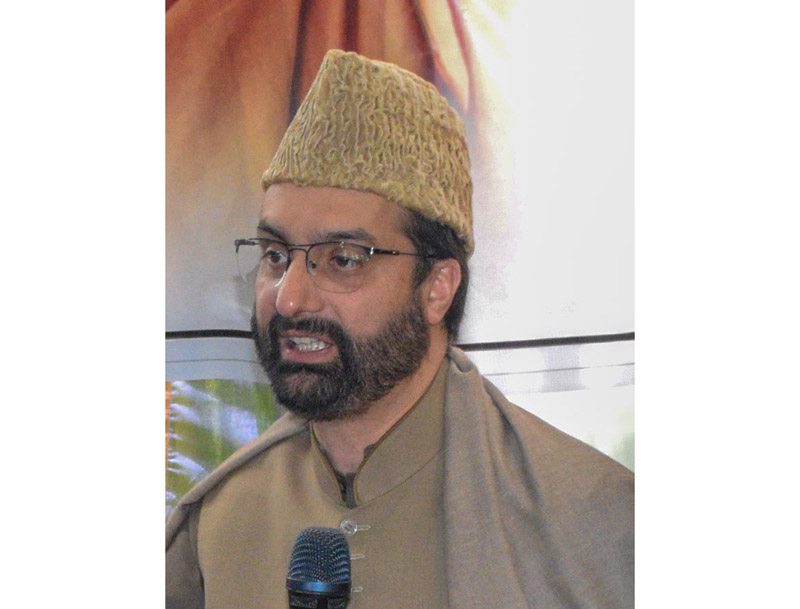
Excelsior Correspondent
SRINAGAR, Apr 21: Mirwaiz Umar Farooq today hoped that the Supreme Court will accept the concerns of the Muslim community and repeal the Waqf Act, which he said threatens the autonomy of Muslim religious institutions and endowments.
Click here to watch video
Speaking to reporters after attending a condolence meeting at the residence of Syed Baqir Sahib in Budgam, the Mirwaiz said that the Mutahida Majlis-e-Ulema (MMU), a platform of prominent Islamic scholars from different sects, had unanimously passed a resolution opposing the Waqf Act.
“The resolution reflects the deep apprehensions of the Muslim community regarding increasing interference in religious matters through administrative and legislative moves,” he said.
He said the Waqf properties are religious endowments donated by people for specific Islamic purposes. “They should be managed by the community in accordance with Islamic principles,” he asserted.
Mirwaiz emphasized that the MMU includes scholars from all sects-Sunnis, Shias, Barelvis-and during a meeting called last week, scholars had arrived from Jammu, Leh, and Kargil.
“Unfortunately, the Government did not allow that meeting to be held. Despite that, we passed a unanimous resolution and pledged our support to any decision the All India Muslim Personal Law Board makes in this regard.”
He stressed that Muslims across India believe there should be no interference in their religious institutions. “Just as the Hindu and Sikh communities run their religious institutions independently, so should Muslims be allowed to manage theirs. For example, the Vaishno Devi shrine is managed by members of that community. Why then does the Government repeatedly interfere in Muslim institutions?” he asked.
Mirwaiz also raised concerns about the repeated closures of mosques in Jammu and Kashmir, particularly the Jamia Masjid Srinagar. “We are not allowed to offer prayers. Prohibitions are placed on our preaching. Why is our voice being suppressed by force? Our stance has always been to resolve political, religious, and other issues through dialogue,” he said.
 Follow our WhatsApp channel
