

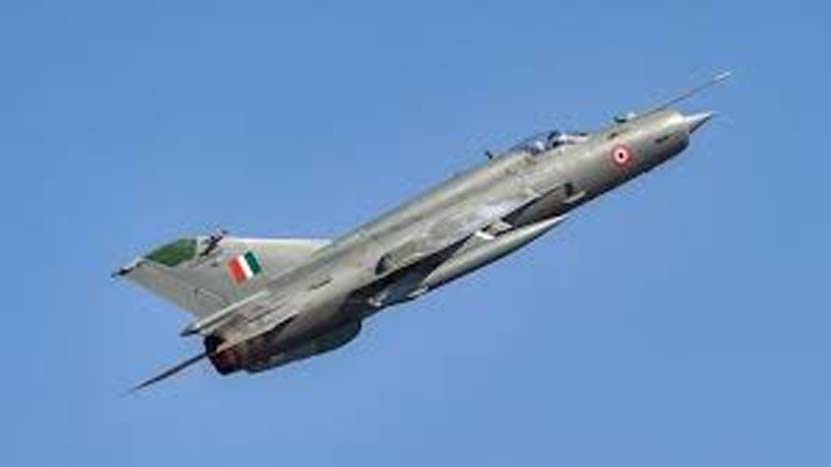
As the Indian Air Force prepares to bid farewell to the MiG-21 with a formal ceremony in September, an era in India’s aviation history quietly draws to a close. For over six decades, this Russian-origin fighter jet has been the backbone of the IAF, shaping its combat capabilities and writing some of the most glorious chapters in India’s military history. The MiG-21’s journey with the IAF began in 1963, and since then, it has become synonymous with India’s air power. During the 1965 war, it established itself as a formidable interceptor. In 1971, it turned the tide in India’s favour, delivering decisive blows deep inside enemy territory. The audacious strike on the Governor’s House in Dhaka on December 14, 1971, which precipitated Pakistan’s surrender two days later, is a story etched in golden letters in the annals of military history. No other fighter in India’s inventory has a war record as distinguished and impactful as the MiG-21. The aircraft’s relevance did not diminish with time. It proved its mettle again in the Kargil War of 1999 under Operation Safed Sagar. And even in the 21st century, when fourth- and fifth-generation fighters dominate the skies, the MiG-21 continued to make headlines. The downing of a Pakistani F-16 by a MiG-21 Bison during the 2019 Balakot standoff remains an iconic moment-a testament to its enduring capability and the skill of IAF pilots.
Yet, every legend must eventually bow out. The MiG-21, despite its illustrious career, could not defy the laws of time and technology. Modern warfare demands multi-role capabilities, advanced avionics, stealth, and network-centric warfare readiness-attributes beyond the reach of this Cold War-era design. The recent spate of crashes and the difficulty in sourcing spare parts were clear indications that its operational life was stretched beyond its limit. Safety concerns, coupled with maintenance challenges, made the decision inevitable. As Air Chief Marshal rightly said, “Everything has a time and place. The technology is outdated, and it is time to move to new platforms.”
The IAF has already embarked on its next phase, with indigenous Tejas fighters gradually taking the place once held by the MiG-21. While the MiG-21 was a gift of Indo-Russian cooperation-its licensed production at Hindustan Aeronautics Limited marking the high point of bilateral defence ties-Tejas represents a leap into indigenous capability. However, whether any aircraft can match the combat record and emotional resonance of the MiG-21 remains an open question. The farewell of the MiG-21 is also a reminder of the strategic significance of Indo-Russian defence cooperation. This partnership began with the MiG-21 deal and evolved into an enduring military alliance encompassing advanced aircraft, tanks, submarines, and air defence systems like the S-400. The transfer of technology for MiG-21 production was unprecedented in its time and laid the foundation for India’s aerospace industry. In that sense, the MiG-21 was not just a fighter jet-it was a symbol of friendship, technological progress, and strategic trust. For the pilots who flew it, the MiG-21 will always remain special. Its simplicity, raw power, and agility made it a pilot’s aircraft. Many IAF legends earned their wings and wrote their stories of bravery in its cockpit. Generations of air warriors have lived and fought with the MiG-21, and their exploits will inspire future aviators for years to come.
September’s farewell at Chandigarh, the very base where the MiG-21 was first inducted, will be a solemn occasion. It marks the end of a historic chapter but also the beginning of a new era powered by indigenous innovation. As India looks forward to Tejas, Rafale, and future-generation fighters, the MiG-21 will remain immortal-a timeless sentinel of the skies that guarded India for 62 years. The last sortie of the Air Chief himself is a salute on behalf of an entire nation to an aircraft that was more than metal and engines-it was an emotion, a legacy, and a legend. The MiG-21 may retire, but its roar will echo forever in the skies of history.
 Follow our WhatsApp channel
