

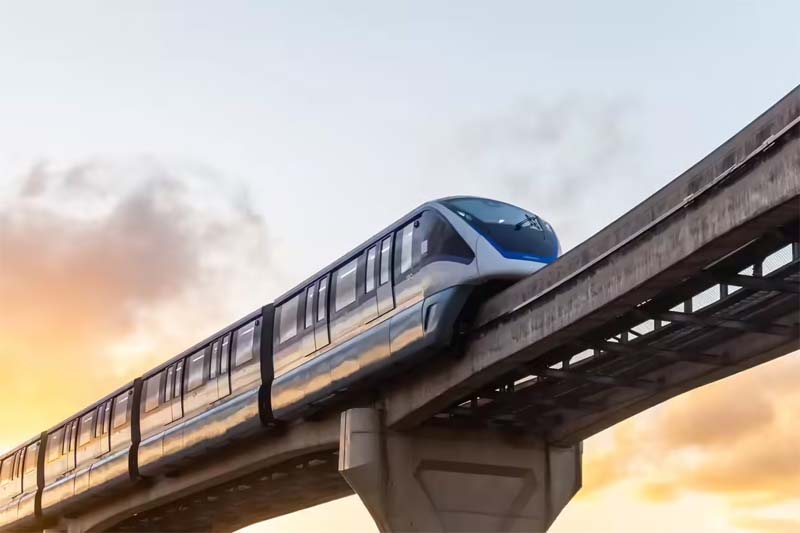
The prolonged wait for a reliable mass public transport system in Jammu and Srinagar reflects a deeper pattern of policy drift, where announcements routinely outpace execution. Years after the initial promise of a full-fledged Metro system-and its subsequent dilution into a Metrolite alternative due to feasibility concerns-the projects remain stuck at the appraisal stage. For rapidly expanding urban centres already under severe traffic stress, this delay is no longer a bureaucratic lapse; it is a looming urban crisis. What makes the situation particularly disconcerting is the sequence of decision-making itself. Metro rail systems were announced without adequate groundwork, only to be scaled down later to Metrolite-an option more suited to the cities’ terrain, population density, and financial realities. While course correction is not inherently problematic, the absence of timely follow-through has left both projects in limbo. This has resulted in a mass transport gap for commuters on a daily basis.
Meanwhile, the ground reality has moved far ahead of planning timelines. Jammu and Srinagar are no longer modest urban clusters; they are expanding cities with rising populations, growing economic activity, and rapidly increasing vehicle ownership. With registered vehicles crossing alarming thresholds and thousands more being added each year, both cities are inching toward a state of chronic congestion. Roads-already constrained by historical layouts and unplanned growth-are operating far beyond their designed capacity. The argument that road infrastructure alone can absorb this pressure is fundamentally flawed. Road widening, beyond a point, is neither physically feasible nor economically viable, especially in dense urban cores. Flyovers and junction improvements offer temporary, localised relief but fail to address systemic mobility challenges. What is required is a high-capacity, reliable, and predictable mass transit system that can shift a significant portion of commuters away from private vehicles.
In this context, the Metrolite system is not merely an infrastructure project-it is an urban necessity. Its elevated design, minimal land requirements, and cost-effectiveness make it particularly suited for Jammu and Srinagar. More importantly, it offers scalability and resilience, essential for cities facing long-term growth pressures. Without such an intervention, the trajectory is clear: worsening congestion, increased pollution, declining productivity, and a steady erosion of quality of life. The consequences of delay are already visible. Traffic snarls have become routine, and their severity is sharply exposed during public events, whether it is a marathon, a religious gathering, or a political rally. These are not exceptional disruptions-they are stress tests that reveal how fragile the current system has become. Even minor surges in traffic can paralyse large sections of the cities, underscoring the absence of a robust transport backbone. Delays also carry a compounding cost. Every month lost today translates into higher project costs tomorrow due to inflation, land value escalation, and changing urban landscapes. As more multi-storey buildings and road infrastructure come up, aligning transit corridors will become increasingly complex. This may necessitate fresh surveys, revised DPRs, and additional layers of approval-effectively trapping the project in a cycle of perpetual deferment.
Equally concerning is the absence of a defined timeline. While due diligence and multi-tier approvals are essential for projects of this scale, the lack of clear communication on progress fosters uncertainty. For citizens, this translates into prolonged inconvenience; for planners, it complicates future urban development; and for policymakers, it risks turning a critical infrastructure initiative into yet another missed opportunity. The urgency of the situation demands a coordinated push at multiple levels. The Union Territory administration must proactively engage with the Centre, emphasising the strategic and socio-economic importance of these projects. At the same time, Central authorities need to recognise that delays in urban transport infrastructure have far-reaching consequences, particularly in regions where geographic and demographic factors already constrain expansion.
Choices are limited. Either act decisively now and create a sustainable urban mobility framework, or allow the current trajectory to culminate in gridlock. The window for timely intervention is narrowing. With each passing year, the cost of inaction rises-not just in financial terms, but in lost time, opportunities, and public trust. For the people of Jammu and Srinagar, mass public transport is no longer a matter of aspiration. It is a necessity long overdue.
 Follow our WhatsApp channel
