

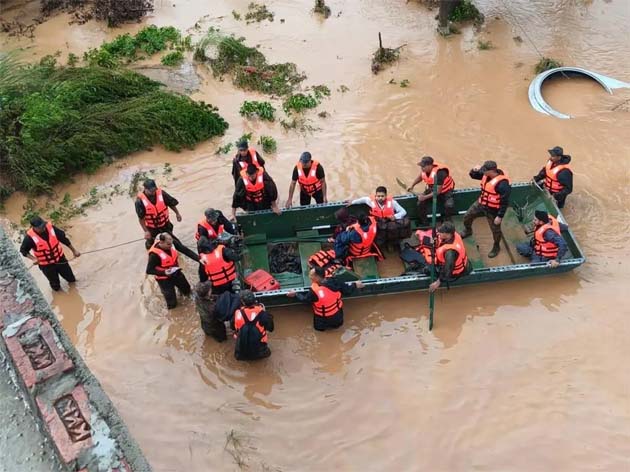
The spell of torrential rain and unprecedented floods across the Jammu region has left behind a trail of devastation of gigantic proportions, marking one of the worst natural calamities in recent memory. The statistics alone are harrowing: many washed away in raging floodwaters, and thousands displaced from their homes. In the initial assessment, over 700 houses have either collapsed or sustained irreparable damage, while more than 100 tube wells and dug wells of the Jal Shakti Department have been affected, leaving vast swathes of the population without access to clean drinking water. The region has witnessed a record rainfall, flooding rivers and nullahs, sweeping away bridges, roads, and even entire habitations in its fury.
What has compounded the severity of the disaster is its widespread impact across all ten districts of the Jammu division. The magnitude of destruction has paralysed not only rural and hilly belts but also urban centres, including the heart of Jammu city, which continues to reel under the aftermath even after the rains have ceased. Connectivity has been crippled, with key highways and link roads either blocked by massive landslides or washed away by flash floods. The Jammu-Srinagar National Highway, the Batote-Doda-Kishtwar route, the Katra-Reasi-Mahore-Gool stretch, and many other arterial roads have been severely affected, leaving several regions cut off from the rest of the UT. Even the vital Jammu-Pathankot National Highway was inundated near Lakhanpur Toll Plaza following the sudden flooding caused by the breach of three floodgates of the Madhopur barrage on the Punjab side. This unexpected breach submerged large areas, including the Toll Plaza and adjoining settlements, necessitating emergency evacuations. The panic was palpable as floodwaters entered buildings and stranded dozens, compelling the administration to requisition help from the Army and the IAF.
The rescue mission that followed was extraordinary, with the IAF deploying helicopters for airlifting marooned people from inaccessible zones. Similar efforts unfolded along the swollen Chenab, where Army teams used boats to evacuate residents, while SDRF and police braved hazardous conditions to save lives in landslide-hit areas around Katra and Udhampur. In total, over 7,000 people have been evacuated from submerged or endangered locations, while food packets and drinking water are being airdropped to those still cut off by the flood fury. These operations, executed in adverse weather and terrain, underscore the scale of manpower mobilisation required in such calamities-an exercise far from easy given the extent of damage and the fact that many Government employees involved in relief work are themselves victims with families in distress.
If the first phase of this disaster response centred on saving lives, the next phase-providing relief and restoring normalcy-is proving to be even more formidable. Many areas are still waterlogged. Large swathes of Jammu city remain without power and potable water even after days, while rural belts are staring at an even grimmer reality. The water supply crisis poses an immediate public health threat, with hundreds of damaged installations disrupting regular supply in both rural and urban areas. While the administration has pressed water tankers into service, their reach is limited. The damage to infrastructure is colossal. Transmission lines have collapsed, transformers have been swept away, and the intricate network of water supply systems has been ravaged. Repairing these lifelines is no simple task. It involves not just clearing debris and pumping out floodwaters but also sourcing equipment, skilled personnel, and technical expertise. Simultaneously, the restoration of electricity necessitates a collaborative approach, involving not only the Power Development Department but also private contractors to ensure the repairs of transformers and other equipment. Further complicating matters is the fact that many affected areas are still inaccessible because of landslides and road breaches.
It is clear that the response going forward cannot be piecemeal or reactive; it must be executed on a war footing with clear priorities and timelines. The steps include a comprehensive damage assessment to gauge the full scale of losses, which appears immense. Early estimates of 700 damaged homes are only the tip of the iceberg, and timely surveys will enable faster financial assistance to affected families. Immediate cash relief for restoring immediate requirements must reach victims without bureaucratic hurdles, and digital disbursement platforms should be leveraged to ensure transparency and speed. Beyond immediate relief, the administration must prepare for the long haul by initiating temporary shelters in schools and community halls with adequate supplies. The danger of waterborne diseases is looming and, as such, requires immediate attention. The challenges must be met head-on with mobile health units and extensive sanitation drives.
Restoring road connectivity is another critical component of recovery. The BRO and Army engineering units should be engaged to install temporary bridges where feasible to make areas accessible. Make the Jammu-Lakhanpur highway operational on a war footing, as train services also stand suspended. In areas that remain inaccessible, airlifting essentials must be initiated. The temporary respite in the weather offers a narrow but vital window to fast-track these measures before another potential rain spell adds to the misery. The administration also needs to prioritise repairing breached embankments to avert secondary disasters.
Collaboration with NGOs, civil society groups, and corporate donors is equally vital to supplement state efforts, especially delivering food, clothing, and medical aid in far-flung pockets. Every helping hand counts in a crisis of this scale, and roping in volunteers can significantly ease the burden on official machinery. While the immediate focus rightly remains on relief and rehabilitation, the calamity underscores the urgent need for structural reforms in disaster preparedness. At this juncture, patience and persistence are key. The administration is putting efforts under unprecedented strain, but the road to recovery will be long and arduous. Citizens must cooperate even as they seek accountability and speedier relief. What is needed now is a collective resolve to rebuild. This tragedy is a stark reminder that extreme weather events are no longer anomalies; they are becoming the new normal. The challenge today is to rise stronger from this devastation and ensure a normal life as early as possible.
 Follow our WhatsApp channel
