

Gates to remain locked for at least one more week
*Power outage continues, all animals unharmed
Mohinder Verma
JAMMU, Sept 7: The Jambu Zoo in Nagrota, one of the Jammu’s most ambitious eco-tourism projects and a prime attraction for visitors, is under an unprecedented shutdown as torrential rains, accompanied by massive landslides and land sinking across the area, have left the zoo battered, forcing authorities to declare it closed for at least one more week.
Follow the Daily Excelsior channel on WhatsApp
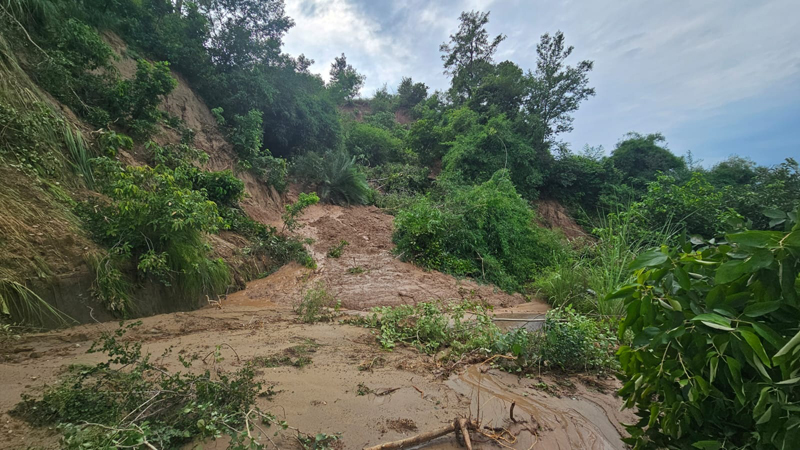
Official sources told EXCELSIOR that unprecedented rains of August 25 and 26 triggered landslides at multiple points along the hilly terrain where the zoo is built. Several internal paths have been blocked or washed away, retaining walls have cracked and stretches of land have sunk, creating dangerous pockets across the premises.
“The scale of damage is much more severe than Wildlife Department initially feared. Large portions of the landscape have shifted, making certain sections unsafe for both staff and visitors”, they said, adding “much of the large-scale damage could have been avoided if proper attention had been paid to the natural drainage system during the construction of zoo”.
They further said, “given that the zoo has been built on loose soil strata, it was imperative to adopt special safeguards similar to those taken at the adjoining Indian Institute of Technology (IIT) premises but this crucial aspect was overlooked”.
Amid the gloom, there is relief on one front. None of the animals have suffered any harm. Majority of the enclosures, despite the rains, remained secure and staff worked round the clock to ensure food and medical supplies reached every species housed at the zoo.
“From leopards to deer, birds to reptiles, all inmates of the zoo are safe and veterinary teams continue to monitor their health daily”, they said while disclosing that few enclosures have been filled with mud but the animals have been shifted to other enclosures.
What began as a temporary closure after the heavy rains on August 25-26 has turned into a prolonged crisis as power supply to the zoo, snapped that day, largely remains un-restored till date leaving certain enclosures, surveillance systems and administrative blocks in darkness.
Disclosing that a detailed estimation exercise is currently underway to quantify the damage, sources said, “the engineers are making all out efforts to map the cracks, measure soil displacement and examine retaining walls but continuous rainfall is hampering the work”.
Officers of the Wildlife Department have confirmed that temporary restoration work will only begin once the weather shows sustained improvement. “Permanent solutions will be drawn up later, in consultation with experts from IIT Jammu, who will help in designing long-term safeguards against erosion and land sinking”, they said.
“We don’t want quick fixes that collapse again in the next rainy season. The idea is to build scientifically sound, sustainable protections to safeguard the zoo for the future”, they said, adding “special attention will be paid towards slopes stabilization and natural drainage system so that such a traumatic situation is not witnessed in future”.
They further said, “the safety of animals, staff and visitors is our first priority. We will not reopen until every risk is addressed. The gates of zoo will remain closed at least for one more week but all depends on improvement in the weather condition”.
Responding to a question, they admitted the need to apply geotechnical engineering solutions like soil nailing, rock bolting and geo-synthetic covers to secure vulnerable slopes. “Further, we need to ensure that the original drainage channels are preserved and scientifically integrated into the zoo’s layout so that excess rainwater can flow out without obstruction and damage to the infrastructure”, they added.
Spread over vast green landscapes on the Jammu-Srinagar National Highway, Jambu Zoo is not just an entertainment hub but a project meant to showcase Jammu’s ecological richness. It houses diverse species and offers visitors an experience of both wildlife and natural scenery. Its temporary paralysis, therefore, is being seen not just as an infrastructural crisis but as a setback to Jammu’s vision of eco-tourism.
 Follow our WhatsApp channel
