

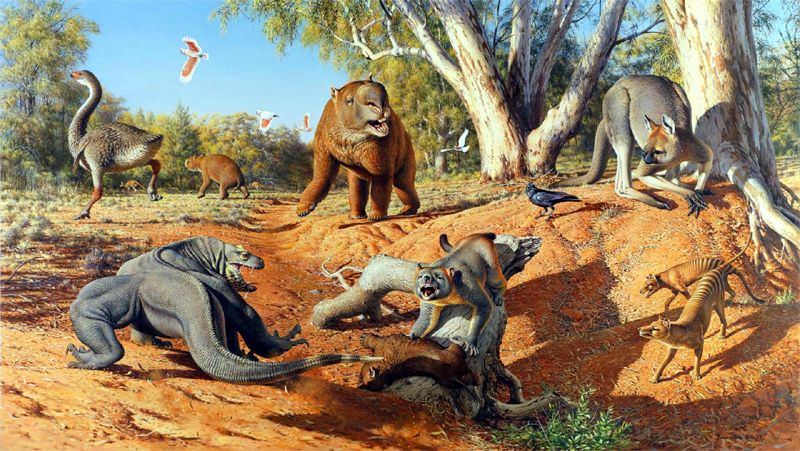
ADELAIDE, July 21 : A new study conducted by researchers in Flinders University, South Australia, found that mammals in Australia and New Guinea have been hardest hit by extinctions and invasive species over the past 100,000 years.
The study found that the loss and introduction of animals over 10 kg have radically changed local ecosystems, prompting new conservation concerns, according to a statement issued by Flinders University today.
Australia once hosted giants like the Diprotodon, a rhino-sized marsupial, and the Megalania lizard, which have been extinct for tens of thousands of years.
Since European arrival in the 18th century, invasive species such as goats, deer, and pigs have further strained native ecosystems, the study said.
Mammals and herbivores have been hardest hit by selective extinctions and species introductions, while birds and reptiles have remained more stable, said lead researcher John Llewelyn from Flinders University.
Mammals have faced the highest extinction rates and account for most large species introduced since European settlement, said the study published in Quaternary Australasia, journal of the Australasian Quaternary Association.
“This bias for introducing mammals, in combination with evolutionary isolation, could partially explain why native mammals have been so strongly affected,” said Flinders Professor Corey Bradshaw, a co-author of the study. Llewelyn said Australia’s isolation shaped unique wildlife, but it doesn’t fully explain why mammals have declined more than birds and reptiles.
Diet may play a key role: mammals are mainly herbivores, making them more vulnerable to environmental change, while birds are largely omnivorous and reptiles carnivorous, offering them greater resilience, he said.
Bradshaw said invasive mammals threaten native species without replacing lost ecological roles, highlighting the need to identify these gaps and develop targeted conservation strategies. (UNI)
 Follow our WhatsApp channel
