

Tarun Upadhyay
The nation is aghast and deeply shocked by the killing of 26 tourists in Kashmir on April 22, 2025. It was the first major massacre in Jammu and Kashmir after massacre of 36 Sikhs by terrorists in Chittsinghpura, Anantnag in 2000
What has intensified the pain is the sight of bullet-ridden bodies lying on the ground, at a time when people had begun to believe that terrorism was a thing of the past in Kashmir.
This belief was a fundamental mistake-and a costly one. For some nations, terrorism is a deliberate State strategy. Unless the very source that nurtures it is dismantled, it cannot be eradicated. Many countries continue to use terrorism as a tool of “strategic depth,” often for nefarious purposes.
In India’s case, the progenitor of terrorism is Pakistan; for Israel, it is Iran. Surrounded by hostile nations, Israel developed a top-tier anti-terrorism grid and carried out numerous high-impact operations against terror threats.
Yet, even Israel failed to anticipate or prevent the October 7 attack. Its response was swift and forceful, virtually eliminating Hamas-but the underlying truth remains: Israel had long lived with the imminent danger and was, to some extent, prepared for it.
In India, a significant portion of the population had begun to believe that the very idea of danger in Kashmir was a thing of the past. Alarmingly, even the security establishment appeared to have subscribed to this belief.
It seems they assumed that terrorists would not target tourists. This assumption was likely grounded in the fact that terrorists hadn’t attacked tourists in the past. Anticipating a terrorist’s response based solely on past behavior is a flawed strategy-Israel learned this the hard way.
Over the past four years, terrorists have steadily shifted the arc of violence towards Jammu. More than 50 security personnel have been killed on this side of the Pir Panjal range during this period
Gradually, attention and focus turned toward Jammu. In hindsight, it’s clear that the terrorists had crafted a meticulous and calculated plan: shift the focus, then strike in Kashmir when the security apparatus is lowered and the State is most vulnerable.
While it can be argued that it’s nearly impossible to prevent every terrorist attack, a careful analysis of the evolving pattern in Jammu-where the arc of attacks kept shifting-should have signaled the possibility of a major strike in Kashmir.
India has much to learn from Israel’s counterterrorism strategy. Despite being a small country, Israel has relentlessly carried out covert operations against Iran to prevent it from developing nuclear weapons. It killed Top Iranian nuclear scientist Mohsen Fakhrizadeh, repeatedly sabotaged its nuclear facilities and eliminated key individuals involved in their development.
Its allies and proxies have also been kept on edge and neutralized-such as killings of Hamas leader Ismail Haniyeh in Tehran and Hezbollah commander Hassan Nasrallah in Lebanon. It reflects Israel’s strategic resolve and its capacity to contain Iran’s influence, recognizing that a nuclear-armed Iran would severely threaten the regional security balance.
India could adopt a similar approach in dealing with Pakistan to take out terrorists leadership. It must ensure that Pakistan military establishment faces continuous pressure, even during periods of ostensible peace.
The Pakistani army should be kept on edge, uncertain about when and where the next Indian response might come. Even if Pakistan manages to execute sporadic attacks, it should remain under constant threat of Indian retaliation-both overt and covert.
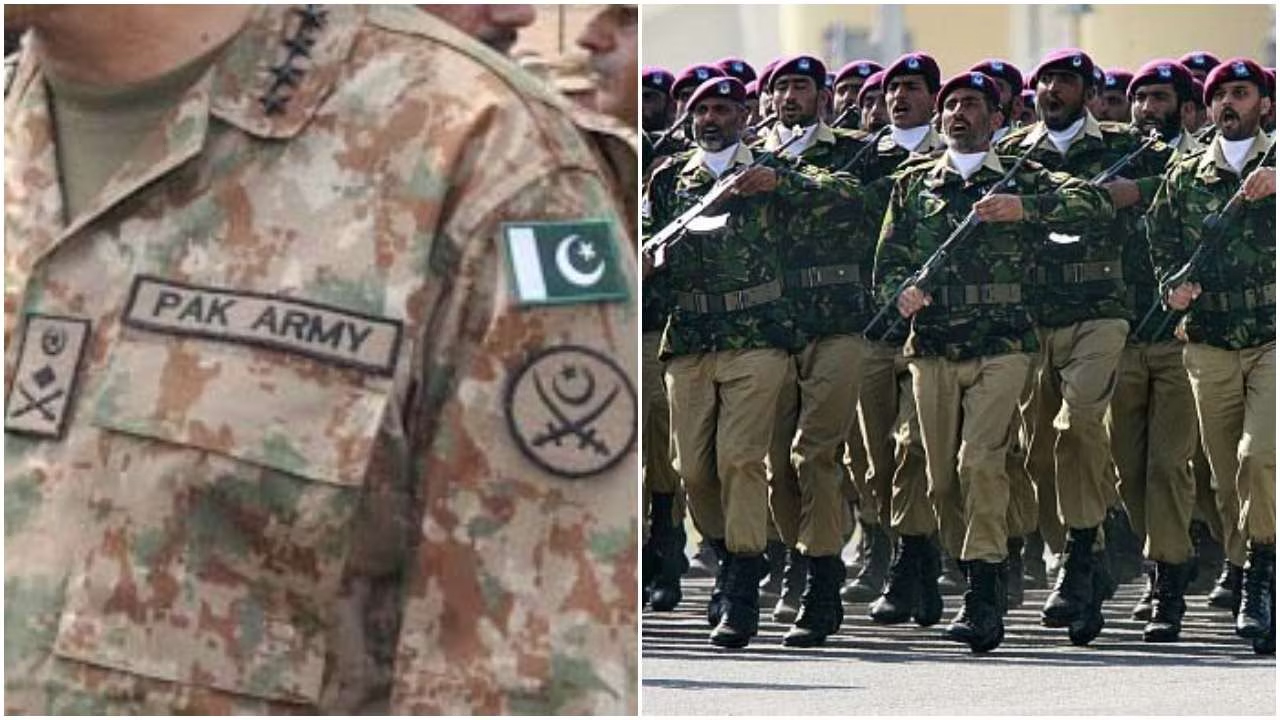
The deeply disturbing Pahalgam attack, while tragic, presents a crucial opportunity for India to act decisively on a more assertive strategic doctrine. The timing is favorable. The Pakistani Army, stretched thin and significantly weakened, is under immense pressure within its own borders.
The institution’s credibility has taken a major hit, especially after the jailing of former Prime Minister Imran Khan, who openly challenges its authority. Just two years ago, angry protesters torched the residence of the IV Corps Commander in Lahore-an unprecedented act of defiance.
Public anger is mounting against the Pakistan Army for its suppression of democracy and dissent. General Asim Munir, the country’s first openly Islamist Army Chief, is leaning on religious rhetoric in a bid to regain lost legitimacy and restore the army’s stature.
His recent statement-“Hindus and Muslims are different… You (Muslims) belong to a superior ideology – Kashmir is our jugular vein”-should be viewed in this context.
Munir’s invocation of religion comes at a time when a significant portion of Pakistan’s population is resistant to returning to the era of General Zia-ul-Haq’s Islamization. The people are beginning to question the role of religious clerics, express wariness over the Tehrik-i-Taliban Pakistan (TTP), and are increasingly critical of ongoing sectarian violence. It’s no more viewed as Peoples’ Army.
This chasm should be worked to India’s advantage. India should strike targets that serve as proxies for the Pakistani military. It would inevitably provoke a backlash from these very terrorist groups against the military establishment itself. Such a strategy would erode the military’s control and influence over these groups.
It will gradually weaken its capabilities and leverage. Sustained pressure of this nature would keep the military distracted and embattled, creating space for the civilian government to assert itself.
Not viewed favorably by the people, with enough political momentum, civilian leaders could begin to openly challenge the military’s misadventures. Former Prime Minister Nawaz Sharif has publicly admitted he was unaware of General Musharraf’s Kargil operation.
India, leveraging its growing economic strength and international stature, should work towards diplomatically isolating Pakistan. This would further exacerbate Pakistan’s economic vulnerabilities and compound internal pressures, accelerating the decline of its military-dominated power structure.
The Pakistan Army may find it increasingly difficult to contend with a complex matrix of challenges: an intensified Indian military presence along the border coupled with the looming threat of strikes, hostile relations on frontiers with Iran and Afghanistan, the Balochistan Liberation Army (BLA) undermining its authority and the Tehrik-i-Taliban Pakistan (TTP) launching frequent attacks on military posts in Khyber Pakhtunkhwa.
This may or could lead to implosion of Pak military. The harsh reality is that Pakistan is not Gaza. Israel managed its response in Gaza by weakening Iran and to that Hamas could no longer launch attacks from there. Similarly, India must weaken Pakistan’s military establishment to prevent incidents like the Pahalgam attack from happening again.
 Follow our WhatsApp channel
