

Shagun Parihar
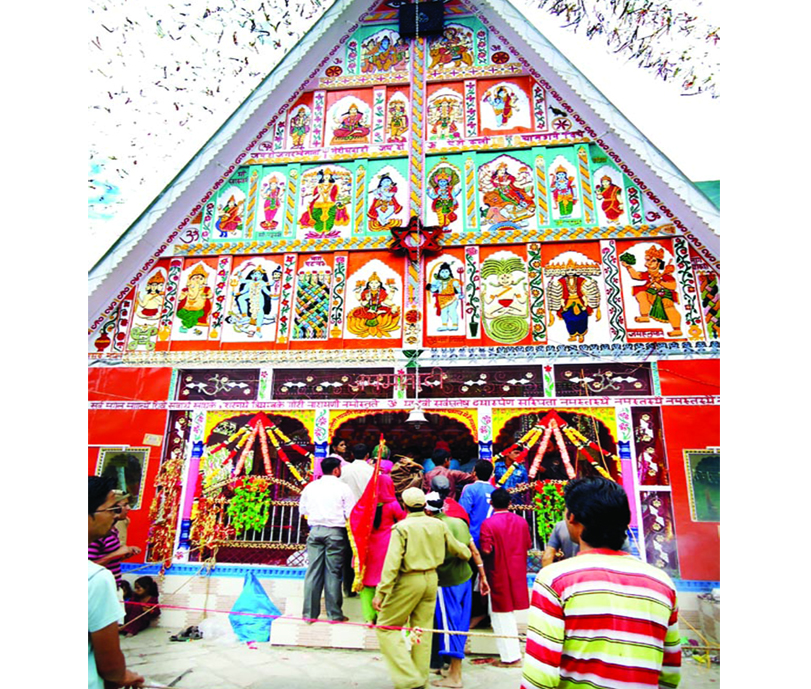
The Machail Mata Yatra leads to the remote temple of the Goddess Chandi in the beautiful hills of the Village of Machail, situated in the Paddar Valley of Kishtwar district. This pilgrimage has become one of the most important spiritual and cultural journeys for the Dogra community. Although it is a religious act and intended with a religious motivation, it plays an in-depth role by reconnecting the Dogra community from different regions, reviving lost ties, and reaffirming a wide ethnic identity that goes beyond language or geography.
Since the end of Dogra rule in Jammu and Kashmir, the identity of the Dogra community has often been linked mostly to linguistic labels, mainly tied to the Dogri-speaking population of the Jammu plains. However, true Dogra identity is not limited to language. It is a broader civilizational feature which consists of various linguistic groups and its geography connects from Lakhanpur to the mountain valleys of Bhaderwah, Paddar, and even into Pangi and Chamba districts of Himachal Pradesh. The growth of the Machail Mata Yatra since the 1990s has helped reveal this overlooked diversity and promote a renewed sense of unity among Dogras.The yatra was inaugurated by Thakur Kulbir Singh, a Dogra noble from Jammu who settled in Bhaderwah. As per the popular belief, he received a divine call from Chandi Mata, who is situated in the village of Machail, to organize and lead a pilgrimage to her shrine. Responding to this divine call, Thakur Kulbir Singh led the first organized yatra from Bhaderwah to Machail, laying the foundation for what has become a major annual event. His actions were not only acts of devotion but also of community leadership, manifestations of cultural awakening.
Initially small in scale, the yatra soon drew thousands from the region. Today, it attracts pilgrims from nearly every district of Jammu province-Jammu, Udhampur, Kathua, Doda, Ramban, Kishtwar, as well as parts of Himachal Pradesh and Punjab. The route, whether traversed on foot or by vehicle, becomes a lively display of Dogra traditions. On this route, diverse dialects like Dogri, Bhaderwahi, Siraji, Kishtwari, and Pangwali merge in shared chants and hymns. These linguistic differences, rather than dividing, enrich the journey and reflect the true range of Dogra identity. What makes the Machail Yatra particularly meaningful is that it provides a unique space for collective exploration and belonging. At a time when younger generations are feeling more disconnected from their roots, this pilgrimage acts as a cultural classroom. People revisit ancestral villages, learn about local myths, witness traditional rituals, and rediscover stories passed down orally for generations. Elders share tales of bravery, struggle, and devotion, while youth capture the experience of their journey on their phones and cameras, uploading the beauty of the region on social media that connects and creating new ways to carry old wisdom forward.
Equally important is the connection between Machail Mata and Mindal Mata. Mindal, located in the Pangi valley of Himachal Pradesh’s Chamba district, is seen by many devotees as the original home of the goddess who later revealed herself in Machail. Pilgrims often choose to visit both shrines, thereby restoring an ancient spiritual bond between the regions. This spiritual path links two sacred sites and reaffirms ancestral ties between the Dogras of Jammu and the mountain Rajputs of Pangi and Chamba. Throughout the Machail Mata Yatra, the Dogra community is reconnecting to a shared identity that had been fragmented over time due to administrative borders, political neglect, and changing social dynamics. This pilgrimage, unlike many other religious journeys, offers more than just spiritual healing; it also promotes cultural pride and regional solidarity. Local economies benefit from the influx of pilgrims. Traditional art forms are revived through devotional performances, and younger generations gain access to their living heritage.
As the yatra moves through varied landscapes from the Chandi Mata Mandir Jammu to the peaceful hills of Bhadarwah and the rugged terrain of Paddar,it traces the geography of Dogra consciousness. Each stop becomes a chance for community gathering and storytelling. Flags are raised, drums are beaten, and devotional prayers are sung in various sub-dogra dialects like Siraji, Kishtwari, Padri, etc, all echoing the same respect for Machail Mata. The unity developed in these shared moments transcends linguistic divisions and political boundaries. In a contemporary world, where ethnic identities are often oversimplified for politics or representation, the Machail Mata Yatra challenges this reduction. It shows that identity is lived, felt, and expressed across landscapes, rituals, and memories.
Machail Mata, perched high in the hills of Paddar, has become more than a deity of devotion. She symbolises Dogra resurgence, a spiritual force calling her people back to their shared past, reminding them of their collective strength, and guiding them toward cultural renewal. As pilgrims climb toward her shrine, they are also deepening their understanding of themselves, not as isolated individuals from different districts, but as a united community carrying forward a rich and diverse heritage.In today’s world, where ethnic identities are often simplified for the sake of politics or representation, the Machail Mata Yatra challenges such reductionism. It proves that identity is lived, felt, and performed across landscapes, rituals, and memories. The yatra tells us that Dogras are not just a linguistic group but a cultural civilization with deep historical roots and wide geographical spread.Machail Mata, situated high in the hills of Paddar, has become more than just a goddess of devotion. She is now a symbol of Dogra resurgence a spiritual force calling her people back to their shared past, reminding them of their collective strength, and guiding them toward cultural renewal. As pilgrims ascend toward her shrine, they are also ascending into a deeper understanding of themselves not as isolated individuals from different districts, but as a unified community carrying forward a rich and diverse heritage.
(The author is an MLA Kishtwar Constituency)
 Follow our WhatsApp channel
