

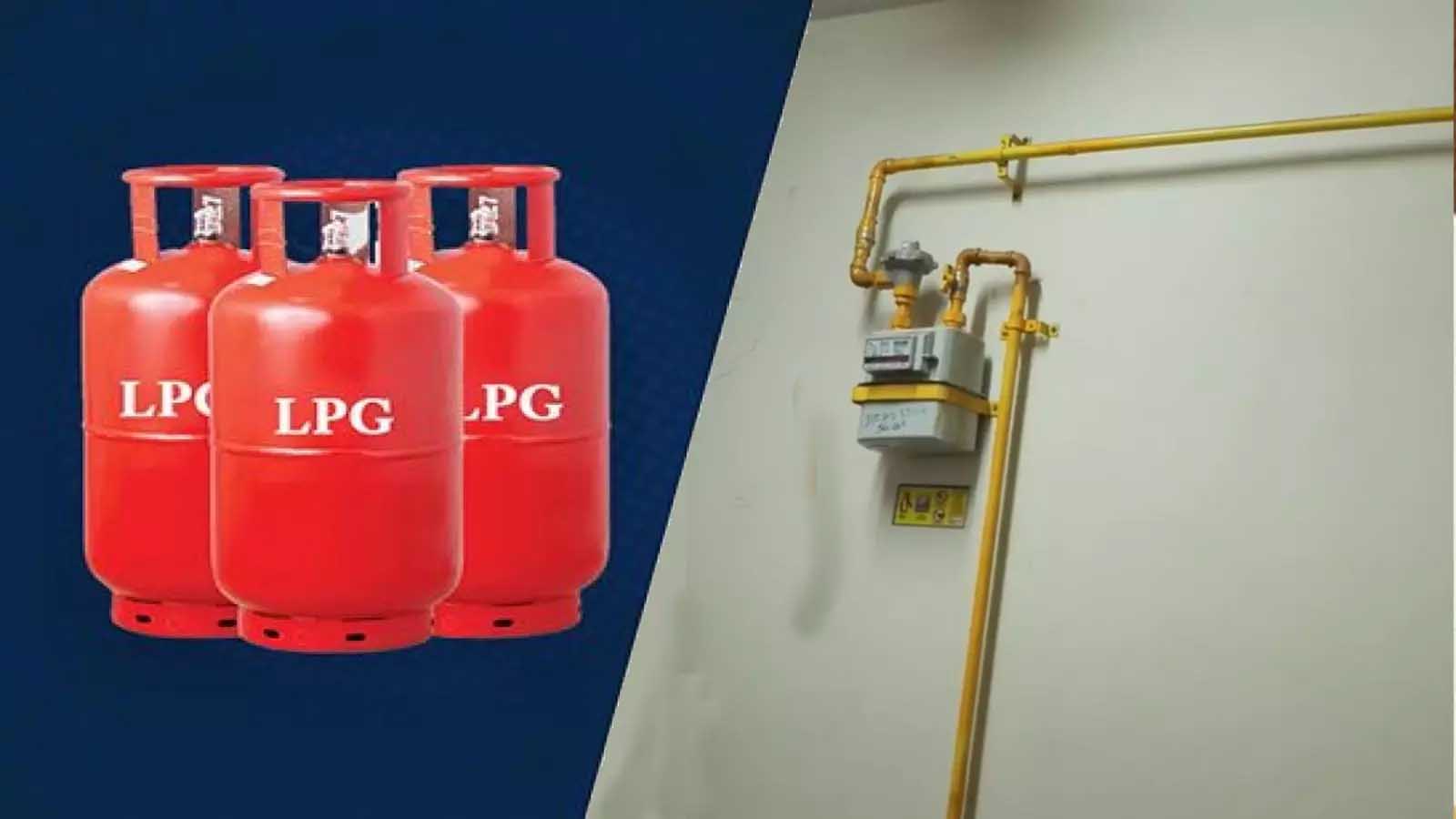
New Delhi, Mar 25: The government has mandated that cooking gas LPG supply to households will be discontinued if consumers fail to switch to piped natural gas where such connectivity is available, under a new order aimed at accelerating gas network expansion and reducing reliance on a single fuel.
As India grapples with an LPG shortage due to the war in West Asia disrupting supplies from key sources, the government is pushing households and commercial users to switch to piped natural gas (PNG) — a more convenient alternative that is both domestically produced and sourced through diversified supply.
PNG is continuously supplied to kitchen burners through pipelines, eliminating the need to book refills.
The Ministry of Petroleum and Natural Gas has notified the Natural Gas and Petroleum Products Distribution (Through Laying, Building, Operation and Expansion of Pipelines and Other Facilities) Order, 2026, aimed at accelerating pipeline infrastructure, easing approvals and promoting a shift from LPG to PNG to strengthen energy security.
The order issued on March 24 states that LPG supply “shall cease after three months” if a household does not opt for PNG despite availability. The provision, however, allows continuation where it is “technically infeasible” to provide a piped connection, subject to a no-objection certificate.
The move is aimed at freeing up LPG supplies from areas with pipeline connectivity and diverting them to regions lacking such infrastructure, while promoting “fuel diversification” amid global supply disruptions, including damage to liquefaction facilities in the Gulf and the continued blockage of the Strait of Hormuz.
Commenting on the order, Oil Secretary Neeraj Mittal in the post on X said “a crisis (has been) turned into an opportunity” through the ease of doing business reforms.
The order, issued under the Essential Commodities Act, seeks to fast-track pipeline infrastructure by easing approvals, standardising charges and ensuring time-bound permissions.
To facilitate rapid rollout, public authorities must grant right of way or permissions within prescribed timelines, failing which approvals will be deemed granted. The order also bars authorities from imposing charges beyond those specified.
In housing areas, entities controlling access must grant permissions within three working days, and last-mile PNG connectivity is to be provided within 48 hours. Applications for pipeline connectivity in such areas cannot be rejected.
The order further provides for intervention by designated officers with powers akin to a civil court to resolve disputes over land access and grant right of way where necessary.
Authorised entities must begin laying pipelines within four months of approval or face penalties, including possible loss of exclusivity.
The Petroleum and Natural Gas Regulatory Board (PNGRB) has been designated as the nodal agency to monitor implementation, including tracking approvals, rejections and compliance.
In case the right of way or right of use permission to lay pipeline to residences for supply of PNG is not granted by the entities that control access to the housing complex, a notice will be issued and three months thereafter oil marketing companies will stop supply of LPG.
Listing out “consequences of households not applying for and obtaining PNG connection when notified by authorised entity” that has laid a pipeline to supply such fuel, it said, “The LPG supply to such an address shall cease after three months from the date of the communication.”
“The supply of LPG to a household shall not cease, if the authorised entity issues a no-objection certificate (NOC) on the ground that it is technically infeasible to provide a piped natural gas connection or gas supply to such household,” it said.
The authorised entity shall maintain records of the reasons for such technical infeasibility and withdraw the NOC as and when it is able to provide and operationalise the piped gas connectivity to such households. (Agencies)
 Follow our WhatsApp channel
