

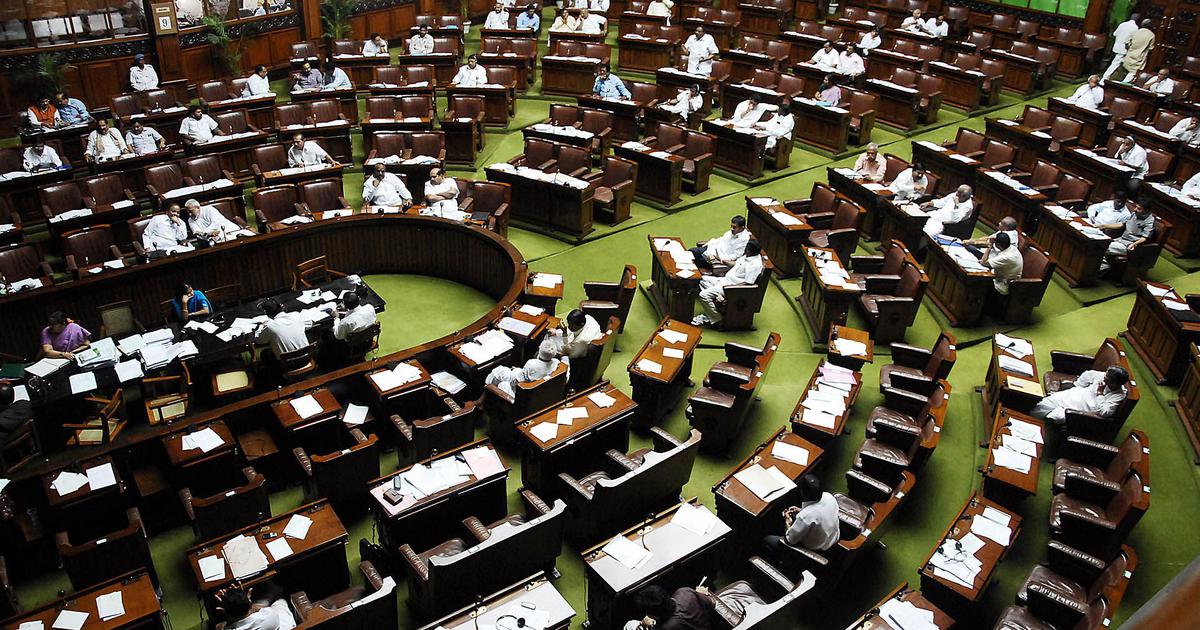
NEW DELHI: The Lok Sabha on Monday took up The National Medical Commission Bill, 2019 which provides for a medical education system that improves access to quality and affordable medical education, ensures availability of adequate and high quality medical professionals in all parts of the country.
Piloting the Bill, Union Health Minister Harsh Vardhan said this was a progressive legislation and help addressing the challenges in the medical sector.
The Bill promotes equitable and universal healthcare that encourages community health perspective and makes services of medical professionals accessible to all citizens, Dr Vardhan said.
The Bill sets up the National Medical Commission (NMC). Within three years of the passage of the Bill, state governments will establish State Medical Councils at the state level. The NMC will consist of 25 members, appointed by the central government.
The Bill seeks to repeal the Indian Medical Council Act, 1956 and provide for a medical education system which ensures availability of adequate and high quality medical professionals, adoption of the latest medical research by medical professionals, periodic assessment of medical institutions, and an effective grievance redressal mechanism.
Dr Vardhan said all concerns raised by Indian Medical association have been addressed in the draft law.
He also said penalties for quacks have been enhanced in the bill, which has been thoroughly scrutinised by the Parliamentary Standing Committee.
Vincent H Pala of the Congress) opposed the Bill. He said the Bill is a dilution of power from the doctors’ fraternity to the government. He said there was no clarity or transparency on community service providers.
He demanded a comprehensive bill, adding that the proposed legislation lacks institutional vision.
Dr Mahesh Sharma of the BJP said the government’s healthcare schemes have helped a majority of the country.
Standardisation of education was done in the Modi government, he said.
Of the 25 members of the NMC, 21 were doctors, he said, adding that which means 60 per cent members were from the medical fraternity. Giving example of the UK, he said such a committee there has 50 per cent doctors.
A Raja of the DMK opposed the Bill. He termed the advisory boards proposed in the Bill ‘joke’.
He asked how the government plans to eliminate corruption in the MCI. He says the way the Bill has been brought about is “undemocratic, anti-poor, anti-social justice and anti-federalism”.
Functions of the NMC include framing policies for regulating medical institutions and medical professionals, assessing the requirements of healthcare related human resources and infrastructure, ensuring compliance by the State Medical Councils of the regulations made under the Bill, framing guidelines for determination of fees for up to 50 per cent of the seats in private medical institutions and deemed universities which are regulated under the Bill.
The Bill sets up autonomous boards under the supervision of the NMC. Each autonomous board will consist of a President and four members, appointed by the central government.
These boards are the Under-Graduate Medical Education Board (UGMEB) and the Post-Graduate Medical Education Board (PGMEB).
These Boards will be responsible for formulating standards, curriculum, guidelines, and granting recognition to medical qualifications at the undergraduate and post graduate levels respectively.
Under the Bill, the NMC may grant a limited license to certain mid-level practitioners connected with the modern medical profession to practice medicine. These mid-level practitioners may prescribe specified medicines in primary and preventive healthcare.
There will be a uniform National Eligibility-cum-Entrance Test for admission to under-graduate and post-graduate super-speciality medical education in all medical institutions regulated under the Bill.
The NMC will specify the manner of conducting common counselling for admission in all such medical institutions.
The Bill proposes a common final year undergraduate examination called the National Exit Test for the students graduating from medical institutions to obtain the license for practice. This test will also serve as the basis for admission into post-graduate courses at medical institutions under this Bill.
(AGENCIES)
 Follow our WhatsApp channel
