

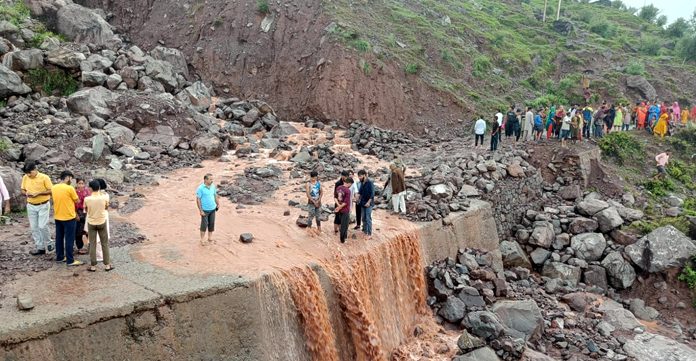
The Central Government’s approval of over Rs 1,430 crore for the repair and restoration of damaged public infrastructure in Jammu and Kashmir is not merely a financial sanction; it is a critical intervention at a decisive moment. Coming at the very beginning of the new year, the grant provides the Union Territory with a rare and valuable window-stretching till August 2026-to undertake comprehensive reconstruction and mitigation works before the next cycle of monsoon-related vulnerabilities sets in. Last year’s fury of cloudbursts, flash floods, and landslides brutally exposed the fragility of J&K’s infrastructure-roads washed away, power networks crippled, water supply systems disrupted, and public institutions left vulnerable. Against this backdrop, the MHA’s decision, based on Inter-Ministerial Central Team recommendations, to classify the calamities as “severe” and release substantial funds assumes great significance. It acknowledges both the scale of damage and the strategic importance of building resilience in a disaster-prone Himalayan region.
Equally important is the clarity of purpose conveyed in the high-level meeting chaired by the Chief Secretary, with the Finance Department playing a proactive role. The message from the top of the administration is unambiguous: funds are available, timelines are defined, and laxity will not be tolerated. Departments have been asked to prioritise works, prepare DPRs on a war footing, move swiftly to tendering, and complete execution well before the onset of the next monsoon. With online monitoring mechanisms in place, there will be little room for excuses later. Identification of vulnerable infrastructure-be it flood-prone roads, unstable slopes, weak power grids, or exposed school buildings-must guide expenditure. Notably, the breadth of central assistance ensures that no sector is left behind. Alongside infrastructure restoration, procedures for compensation to farmers and settlement of pending payments have been eased, providing relief to those whose livelihoods were directly hit by natural disasters. This all-around approach strengthens public confidence and reinforces the idea that resilience is as much about people as it is about assets.
The onus now squarely lies with the J&K Government. After much deliberation, ample funds have been granted and a clear time window provided. Delivery, not intent, will be the true test. If utilised efficiently and transparently, this Rs 1,430 crore grant can become a benchmark for timely disaster response-turning last year’s devastation into an opportunity to rebuild stronger, safer, and smarter infrastructure across Jammu and Kashmir.
 Follow our WhatsApp channel
