

sanchit sharma
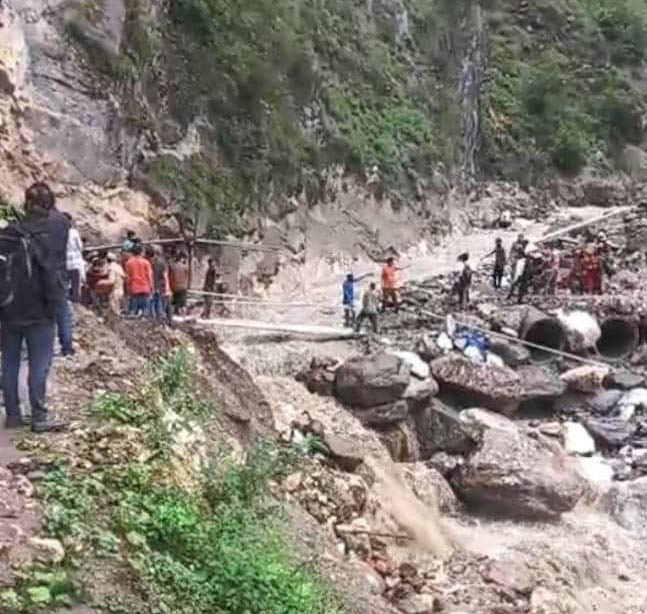
The terrible cloudburst and flash floods that devastated the isolated village of Chishoti in Kishtwar, Jammu and Kashmir, on August 14, 2025, have once again shown how at-risk mountain communities are in the Himalayas. The loss of over 65 lives, the hundreds injured, and the many still missing highlight the crucial need to rethink how we handle disasters, provide early warnings, and build resilience in this fragile and complex area.
Chishoti, located at about 9,200 feet on the way to the Machail Mata shrine, is used to natural risks. However, few could have imagined the scale of destruction that day. What’s puzzling to weather experts and disaster specialists is that Kishtwar saw very little rain – only 5 millimeters – which doesn’t explain the catastrophic flash flood that followed.
Solving the Puzzle: Cloudburst or Glacial Flood?
Official investigations and weather information suggest a typical “cloudburst” — an extremely intense, localized downpour caused by moist air rising over mountains, leading to rapid condensation and sudden heavy rain. The mountains force the moist air up, cooling it quickly and causing concentrated rain over small areas. This is a known danger in the Himalayas, often causing flash floods and landslides.
However, the Chishoti incident challenges our understanding of cloudbursts. 1 . Weather stations around Kishtwar recorded little rain, and Chishoti itself has no weather station. Experts wonder how so little rain could cause such a large flood. Some suggest the downpour might have been very localized – too small to be detected by radar and sensors but still releasing a lot of water in a narrow area.
Another explanation is gaining traction: a Glacial Lake Outburst Flood (GLOF). Kishtwar’s landscape, connected to glacier-filled areas like Zanskar, is experiencing faster glacial melting due to rising temperatures in the Himalayas. Melting glaciers create glacial lakes, often held back by fragile barriers of debris or ice. When these natural dams break – due to earthquakes, avalanches, or the pressure of accumulating meltwater – sudden and massive floods can surge downstream with little or no rainfall beforehand.
This GLOF idea is supported by similarities to recent Himalayan disasters, where minimal rain was recorded but floods were severe, suggesting a sudden glacial event rather than rainfall as the main cause.
Climate Change: Increasing Risks in the Himalayas
Climate change is at the heart of these growing risks. The Himalayan ecosystem is warming at almost twice the global average, destabilizing glaciers and intensifying weather patterns. Western Disturbances – weather systems carrying moisture, traditionally active in winter – are now occurring in unusual seasons, carrying more moisture from the Arabian Sea due to its rising temperatures.
This combination of changing weather and rapid glacial melt has created a dangerous situation, where mountain communities face threats from both extreme rain events and glacial floods. For every degree the temperature rises, the atmosphere can hold about 7% more moisture, increasing the potential severity of cloudbursts. At the same time, glaciers are melting faster, increasing the number and size of glacial lakes prone to bursting.
Closing the Gaps: Working Towards Effective Disaster Management
The Chishoti tragedy reveals significant weaknesses in monitoring, preparedness, and response to Himalayan disasters. Addressing these should be a national priority.
1. Establish Strong Monitoring Networks:Much of the high-altitude Himalayas lacks weather stations and glacial lake monitoring systems. Installing automated weather stations, radars, and satellites to track weather and glacial lakes can provide critical early warnings. Sharing this data with local authorities in real-time is essential.
2. Invest in Joint Scientific Research:The complex relationship between landscape, climate, and water requires interdisciplinary study. Combining weather models with information on glaciers and water flow will improve forecasts and hazard maps. This research supports the development of risk scenarios tailored to specific areas like Chishoti.
3. Build Community Resilience:Vulnerable communities need education and training in disaster preparedness. Early warning messages should be delivered through various channels, including mobile networks and community radios, especially during pilgrimage seasons. Evacuation plans, safe shelters, and emergency supplies must be available.
4. Improve Infrastructure for Hazard Reduction:Roads, bridges, and important facilities need to be designed to withstand sudden flash floods and landslides. Protective barriers, drainage systems, and slope stabilization can lessen the impact of disasters. Regulating construction and tourism in at-risk areas can also reduce exposure to danger.
5. Climate Adaptation and Policy Integration:Disaster management must be linked to climate policies. Protecting forests, promoting sustainable land use, and encouraging environmentally friendly infrastructure in the Himalayas will help moderate extreme water-related events. Policies must incorporate scientific insights into both climate resilience and sustainable development goals.
6. Manage Pilgrimage and Tourism Risks:Remote pilgrimage routes are often hotspots for disasters, so regulating the number of visitors during high-risk times is vital. Pilgrim safety can be improved with timely alerts, limiting numbers, providing rescue training for local volunteers, and setting up emergency response teams along key routes.
The Path Forward: From Vulnerability to Preparedness
Chishoti is a stark reminder that while we can’t control nature, we can control our ignorance and unpreparedness. The tragedy challenges us to rethink how we understand mountain hazards, especially with a rapidly changing climate. Ignoring these lessons means accepting more loss of life and livelihood every monsoon season.
India’s Himalayan regions are valuable ecological and cultural treasures but are highly susceptible to climate-related hazards. To protect these landscapes and their communities, we need concerted action – combining science, technology, governance, and local knowledge. 2 . Early warning systems must extend beyond cities to remote highlands. Disaster response must become proactive rather than reactive. Climate adaptation must be integrated into every policy.
2 . The Chishoti flash flood isn’t just a disaster; it’s a call to action for everyone involved – from weather experts to policymakers, villagers to pilgrims. We must listen, learn, and build resilient systems that predict, prevent, and prepare for such catastrophes.
Only then can the fragile but magnificent Himalayan communities hope to live sustainably with the unpredictable forces of nature shaping their future.
 Follow our WhatsApp channel
