

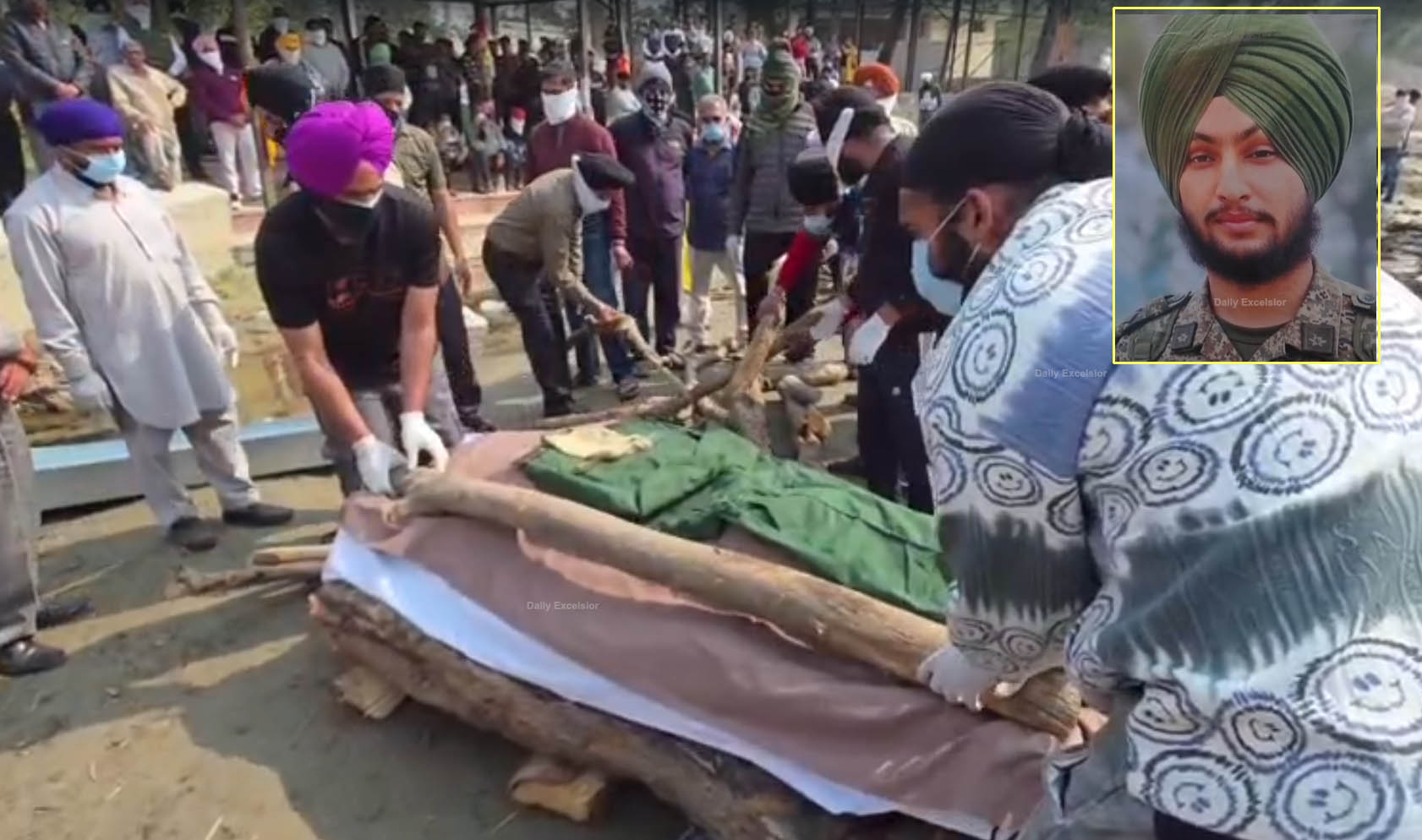
Jammu, Feb 22: Manjinder Singh, 24, travelled to Russia on a student visa with hopes of higher education and supporting his family. He returned to his family, however, months later in a coffin, with his family alleging he was lured into joining the Russian Army under false promises.
Singh had travelled to Russia in December 2024 to build a better life but his death in the Russia-Ukraine conflict has plunged his loved ones in a forward hamlet in the R S Pura sector in Jammu into grief.
They said if there were better opportunities in the country young people could be prevented from such overseas recruitment and urged the government to bring back Indian nationals who have fallen prey to such schemes.
According to his family, he spent seven to eight months studying and working part-time, trying to support himself and reduce the financial burden on his parents.
“He was a good student. He went there to build a future,” Ravinder Singh, his elder cousin brother, said.
The family alleges that during his stay, he came into contact with agents who lured him and other Indian youths with promises of high salaries — reportedly up to Rs 1 crore for a one-year contract — and assurances that the work would be non-combat in nature.
“They told the boys they would only be moving materials or working behind the lines. They even deposited some money into a Russian account to gain trust,” Ravinder said.
In early August, without informing his family, Manjinder joined the Russian Army and underwent around 15 days of training at a facility reportedly located several hundred kilometres from Moscow. His family only learned of the development nearly two weeks later.
“I asked him to come back immediately but he said it was not possible,” Ravinder said.
He said the last conversation between Manjinder and his family took place on August 20. The following day, his phone was switched off. Months passed without contact, prompting the family to approach the Indian Embassy in Russia and the Ministry of External Affairs (MEA).
After repeated emails and requests, the family was informed in early February that Manjinder had been deployed in eastern Ukraine and had died on January 28, reportedly due to either a drone strike or artillery shelling.
Due to heavy shelling in the area, his body could not be recovered for several weeks. When it was eventually retrieved, it was reportedly in an advanced state of decomposition and was chemically preserved before being placed in a mortuary, he said, adding the officials asked the family whether they wished to conduct the last rites in Russia or repatriate the body.
After the family chose to perform his last rites in his native Gowana village in Jammu, the mortal remains arrived in Delhi from Russia on Friday and were brought home on Saturday, casting a shadow of grief across the village. Residents turned out in large numbers to bid an emotional final farewell.
Family members allege that Manjinder is not an isolated case and claim that several Indian youths have been similarly recruited over the past three years — some missing, some returned, and some killed.
They have called for greater awareness among young people and stronger intervention to prevent alleged recruitment traps targeting students abroad.
Jaswant Singh, the deceased’s uncle, questioned how civilians or students could be sent to a conflict zone after just two weeks of training.
He alleged that thousands of youths may have been similarly recruited through inducements and called for greater awareness and government intervention.
The family also raised concerns about unemployment and lack of opportunities in India, arguing that better domestic prospects could prevent young people from falling prey to overseas recruitment schemes.
Meanwhile, anger and grief have gripped the family’s village, with residents demanding accountability and stronger safeguards to prevent further such incidents.
Senior Congress leader and District Development Council (DDC) Member Taranjit Singh Tony strongly condemned what he described as the “exploitation of Indian youth” in alleged recruitment schemes linked to the Russian military.
Calling it a “serious and alarming issue,” Singh alleged that young Indians are being lured with fake promises, fabricated job profiles, and assurances of large payments.
“They are being told stories that they will not be sent to the frontlines, that they will only handle logistics, and that huge sums will be paid. In many cases, the promised money is never fully transferred.” He demanded greater diplomatic intervention from the Indian government.
“The Government of India must raise this issue firmly at the diplomatic level. Our youth should not be misled, exploited, and pushed into war zones through false assurances,” he said.
Singh also urged the Ministry of External Affairs to intensify efforts to identify and bring back Indian nationals allegedly recruited under such circumstances.
“These are not trained soldiers. These are students and labourers who were lured under false pretences. Strong foreign policy engagement is needed to ensure no more Indian families suffer such tragedies,” he said. (Agencies)
 Follow our WhatsApp channel
