

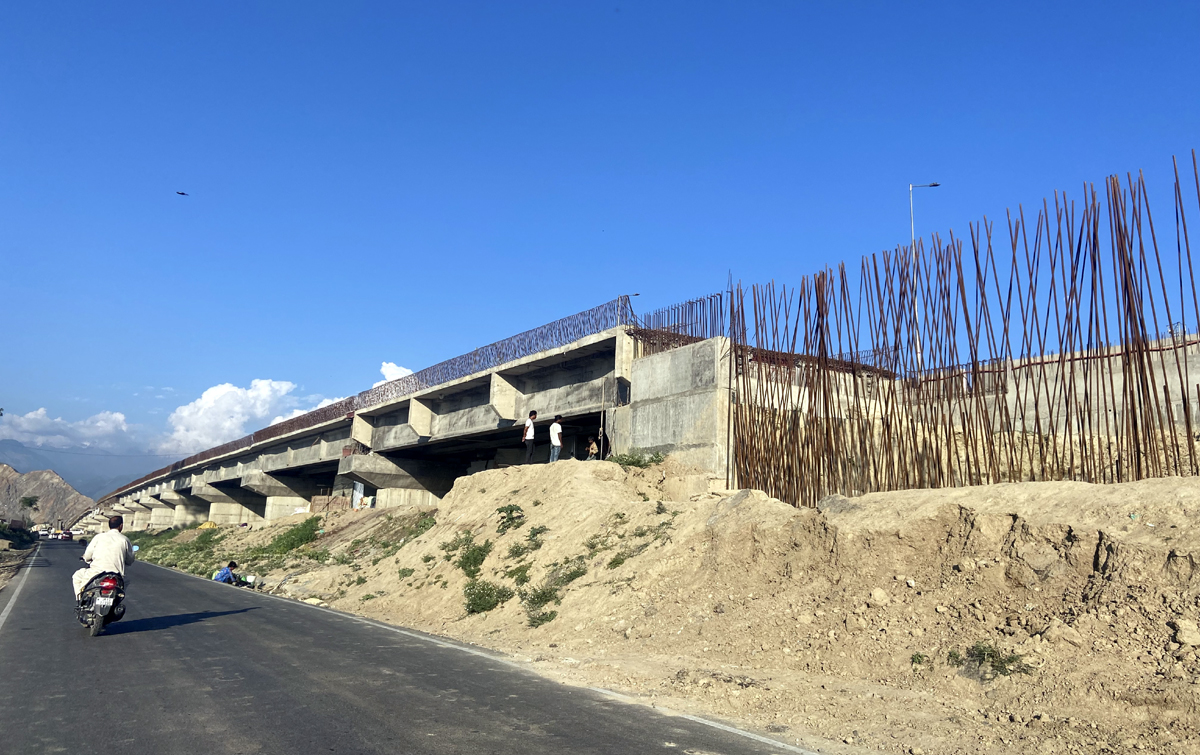
Despite ample funding, the construction of the second phase of the Lasjan Bypass Flyover on the outskirts of Srinagar has faced significant delays, causing the project to miss its June deadline as well. The National Highways Authority of India has executed approximately 90 per cent of the 560-metre-long flyover, estimated to cost Rs. 1.03 crore. However, the remaining portion of the project is progressing slowly for reasons that are currently unknown. Strategically located at a crucial intersection on the highway near the Lasjan area, the flyover was constructed following the new alignment of NH-44 from Pampore to the Lasjan Bypass. Its purpose is to create a grade separation for more efficient traffic flow. Once completed, the flyover will significantly alleviate traffic congestion for commuters heading towards Baramulla and the Pampore Bypass.
It is indeed perplexing that the construction of a 560-metre-long flyover has taken more than a decade to complete, despite its strategic importance. Various reasons have been cited for the delays, ranging from traffic congestion and a lack of funds to a lack of expertise, leading to a change in contractors and the implementation of a rotary to regulate traffic. However, these measures have proven to be ineffective, as the flyover remains unfinished. It is important to acknowledge that such a long delay is unacceptable for such projects. It is difficult to justify why a 560-metre-long structure has taken twelve years and is still incomplete. The situation raises serious concerns about the implementing agency, which was entrusted with the task of constructing the flyover. The repeated missed deadlines and ongoing delays reflect poorly on a Central implementing agency. Despite the administration’s efforts to develop high-quality infrastructure within specified timeframes, this project has failed to meet expectations. It is crucial to establish accountability rather than deflect responsibility. Given that approximately a major portion of the work has been completed, it becomes crucial for higher authorities to intervene and ensure the early completion of the project.
 Follow our WhatsApp channel
