

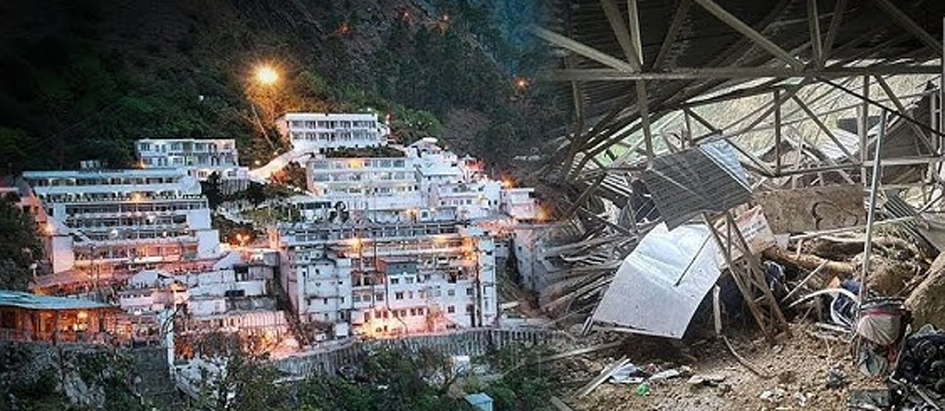
Jammu Division witnessed an unprecedented natural calamity on August 26, as record-breaking rainfall shattered a 99-year-old benchmark, leaving behind a trail of devastation. Numerous lives lost-including pilgrims to the revered Shri Mata Vaishno Devi shrine-scores injured, hundreds displaced, and infrastructure worth crores destroyed. Mighty rivers Chenab and Tawi flowed over 10 feet above the danger mark, roads and bridges collapsed, and thousands of vehicles remained stranded. This is not merely a story of natural fury; it is a grim reflection of systemic failures, policy paralysis, and criminal negligence that amplified the tragedy.
The catastrophic landslide on the Vaishno Devi pilgrimage track is beyond words. Helpless pilgrims had no chance to save themselves as tonnes of debris came crashing down, turning a spiritual journey into a nightmare. This is not the first such tragedy, yet no lessons seem to have been learnt. The shrine board and administration were well aware of the vulnerabilities of the Trikuta hills. Repeated incidents of landslides in the past should have triggered a comprehensive review. Massive development works undertaken along the track-cutting into hill slopes and altering natural contours-have disturbed the fragile ecosystem. Nature responds to such interventions unpredictably, and the damage rarely occurs at the same point of intervention. The recent landslide is a stark warning; go for a proper ecological review. Independent experts must evaluate the stability of the Trikuta hills, identify vulnerable points, and recommend corrective measures. The safety of pilgrims cannot be compromised in the name of convenience or revenue generation. Despite advance warnings from the Meteorological Department, no preventive measures were taken. Both train and road connectivity were severely affected, yet the yatra continued until tragedy struck. Why was the pilgrimage not halted earlier when conditions were clearly unsafe? Why were pilgrims not accommodated in Katra despite ample facilities for temporary halts? These questions demand answers and accountability.
Beyond the shrine tragedy, the entire Jammu region bore the brunt of the rain fury. Urban Jammu and rural belts alike were submerged, nullahs overflowed, and entire neighbourhoods turned into pools. The rainfall broke a century-old record, yet the greater tragedy lies in the UT’s lack of preparedness. Disaster management plans exist only on paper. After the devastating 2014 floods and subsequent calamities like Chashoti, one would expect proactive planning. Instead, what we witnessed was a repeat of past mistakes: blocked drains, encroached flood channels, and zero contingency planning.
How could engineers design stormwater channels and nullahs in zigzag patterns, ignoring the basic principle that water seeks the shortest route? How could critical flood channels remain choked with encroachments and debris? The Government’s own disaster reports remain inactive, failing to address the identified vulnerabilities. Smart City projects promised efficient drainage systems and modern urban planning, yet a single day’s rain turned Jammu into a disaster zone. This is a damning indictment of multiple departmental failures. The role of encroachments cannot be overstated. Flood channels that once carried excess rainwater safely to rivers have been systematically blocked-either by illegal constructions or by official complicity. How did parking lots spring up along the Tawi banks? How were khuds and nullahs allowed to be filled up for private gain? These questions are uncomfortable but critical. Every inch of natural drainage space taken over by the land mafia-and shielded by corrupt elements-translates into flooded homes and lost lives during extreme weather events. Ranbir Canal, the lifeline of irrigation in Jammu, overflowed and inundated low-lying areas, while banks of the Tawi collapsed at multiple points. The result? People lost their lifelong savings, their homes, and in some cases, their lives. This is not a natural disaster alone; it is a man-made catastrophe exacerbated by greed and incompetence.
Repeated tragedies on the Vaishno Devi route and across the Jammu region have far-reaching consequences beyond the immediate loss of life and property. They erode public confidence in the safety of religious tourism, which forms the backbone of Jammu’s economy. Local businesses, transporters, and hospitality sectors will suffer. Negative perceptions travel fast, and they tarnish the image of the region for years to come.
The priority is immediate relief and rehabilitation. The administration must expedite door-to-door assessment of damages and ensure timely compensation for affected families. Agricultural losses, often ignored, must also be recorded and compensated. Farmers cannot be left to fend for themselves after losing crops and livestock. Simultaneously, a comprehensive urban flood management plan for Jammu is non-negotiable. This includes clearing all encroachments on flood channels, creating dedicated rainwater drainage systems, and revisiting construction norms. Illegal structures on riverbanks and khuds must be demolished, irrespective of political pressures. Accountability must go beyond tokenism-engineers, planners, and officials responsible for lapses should face strict action.
Additionally, a robust pilgrimage safety mechanism must be instituted. This includes real-time weather monitoring and clear evacuation protocols. Pilgrimage should be suspended well before conditions turn dangerous-not after tragedy strikes. SMVDSB needs structural reforms and external audits to prioritise safety over optics. The administration must invest in climate resilience. With extreme weather events becoming more frequent due to climate change, it’s time to shun old practices and think out of the box. The cost of inaction is far higher than the investment required for preparedness.
Jammu and Kashmir has suffered too many such tragedies in the recent past. From flash floods to cloudbursts, the pattern is clear: we are unprepared, and we refuse to learn. This must change-now. If not, the next calamity will only deepen the scars on lives, livelihoods, and the reputation of the region. Nature may unleash its fury, but human failure turns it into a disaster. Jammu’s floods and the Shri Mata Vaishno Devi landslide are stark reminders that preparedness and accountability are not optional-they are matters of life and death.
 Follow our WhatsApp channel
