

Dr Sunita Gupta
The word Kriya comes from the Sanskrit root “kri”, meaning “to do” or “action.” In the yogic context, Kriya refers to the eternal action of breath-an unbroken rhythm of inhalation and exhalation occurring 24×7. Whether we are awake or asleep, breath is always present.
But when we begin to breathe with awareness, we enter into union with our breath-and that is the heart of Kriya Yoga. This conscious breathing purifies the body and mind, and draws us closer to our true Self (Atman). The simple act of breathing becomes sacred.
Life itself begins with the first inhalation and ends with the last exhalation. So, in essence, life is breath. When breath is lived consciously, life becomes a sacred journey toward the fulfillment of the four goals of human life: Dharma, Artha, Kama, and Moksha.
Kriya Yoga: A Timeless Path
Kriya Yoga is a powerful, ancient spiritual discipline practiced by great Yogis. It offers a direct path to Self-realization (Atma Darshan). In modern times, this sacred path was brought again into the world by the immortal Himalayan Master Mahavatar Babaji. It is also deeply rooted in the Patanjali Yoga Sutras, the classical scripture of yoga.
The Lineage of Light
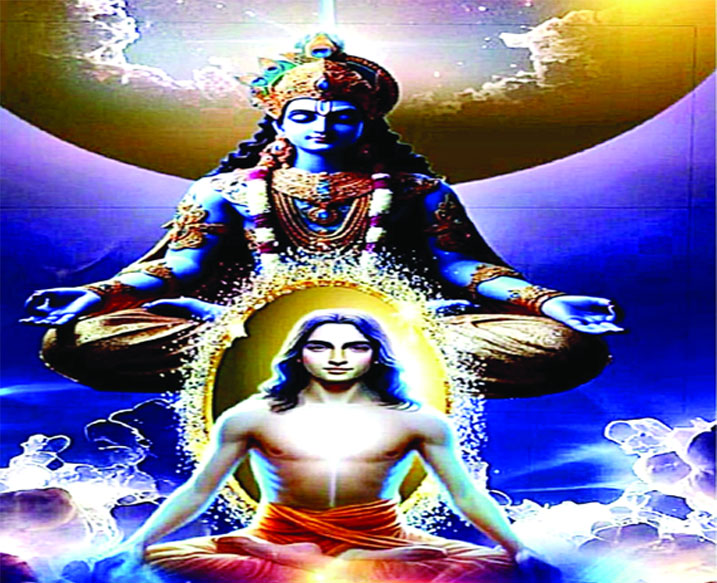
Mahavatar Babaji, the mysterious and eternal yogi residing in the Himalayas, began this divine lineage. His mission: to guide humanity in its spiritual awakening.
In the 19th century, Babaji initiated Lahiri Mahasaya, instructing him to share Kriya Yoga with householders-marking a profound shift from secrecy to accessibility.
Lahiri Mahasaya’s disciple Swami Sri Yukteswar became the Guru of Paramahansa Yogananda, who brought Kriya Yoga to the West through his world-renowned book Autobiography of a Yogi (1946).
This unbroken lineage- Babaji ? Lahiri Mahasaya ? Sri Yukteswar ? Yogananda-carries the eternal wisdom and blessings of Kriya.
The Essence of Kriya
Kriya Yoga is not just a technique. It is a complete spiritual path that includes:
Pranayama (Breath control)
Dhyana (Meditation)
Yama & Niyama (Moral and spiritual disciplines)
Ishwara Pranidhana (Offering each breath to the Divine)
The core technique, Kriya Pranayama, teaches mastery over the breath and life force (prana) through the spine. This practice accelerates spiritual growth, harmonizes the nervous system, and leads to profound inner stillness.
Patanjali’s Yoga Sutras: The Scientific Foundation
Although reintroduced by Babaji in modern times, Kriya Yoga is fully aligned with Patanjali’s Yoga Sutras (circa 200 BCE), especially the Ashtanga Yoga (Eightfold Path):
Yama – Ethical restraints
Niyama – Inner spiritual observances
Asana – Steady, joyful posture
Pranayama – Breath mastery
Pratyahara – Withdrawal of senses
Dharana – Focus/concentration
Dhyana – Deep meditation
Samadhi – Union with Supreme Consciousness
Patanjali states in Sutra 2.1:
“Tapah svadhyaya ishwarapranidhana kriya-yogah”
Kriya Yoga is self-discipline (Tapas), study of the Self (Swadhyaya), and complete surrender to God (Ishwara Pranidhana).
Thus, Kriya is the purest form of worship, from breath to breath.
A Path for the Modern Age
In today’s world of distraction, anxiety, and disconnection, Kriya Yoga offers inner refuge. It does not demand renunciation of worldly life-it teaches how to live in the world, yet rooted in Spirit. As the practitioner walks this sacred path with devotion and awareness, the veil of illusion (maya) gradually dissolves, and divine presence is experienced within.
Conclusion
Kriya Yoga, as blessedly passed down by Mahavatar Babaji, is not just a technique, but a gift from the Divine-a sacred science of soul awakening. Guided by the truths of the Yoga Sutras, it answers the deepest call of every heart: peace, purpose, and union with the Infinite.
(The author is a former ISM (Health) Official
 Follow our WhatsApp channel
