

Excelsior Correspondent
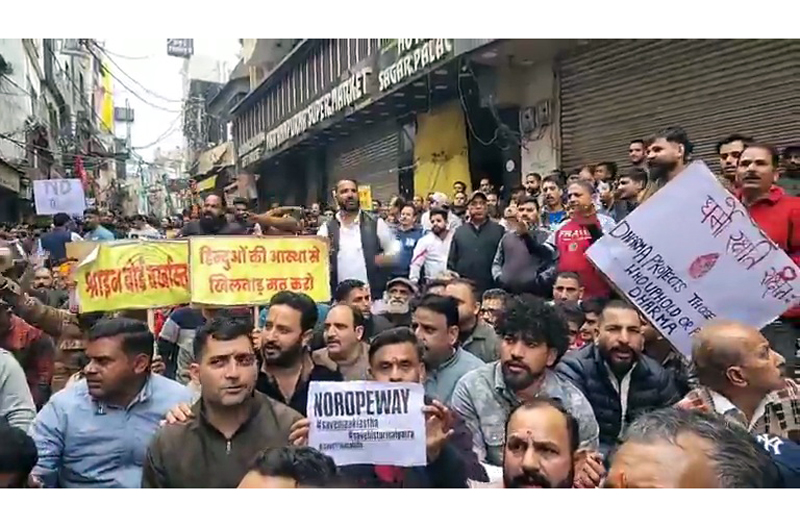
KATRA, Feb 18: Tensions continues in Katra over the proposed ropeway project on the Bhawan route to the holy shrine of Shri Mata Vaishno Devi as local stakeholders observed a day-long shutdown on Wednesday.
Markets remained closed and several hotels displayed “No Ropeway” posters outside their premises as a mark of opposition to the project.
As part of the protest, the Sangarsh Samiti announced the closure of all private shops from Banganga to the Milk Bar area and invited horse, pithu, and palki operators to join the shutdown. The committee stated that the movement is aimed at protecting the livelihoods and interests of local residents.
A protest march was also taken out, which began from Raghunath Mandir and culminated at Sridhar Chowk, where the demonstrators staged a sit-in dharna. The Samiti warned that if the high-level committee fails to take concrete steps addressing their demands, the agitation will be intensified further. Appealing to devotees for support, the protesters clarified that their movement is not against faith but in defence of local interests and livelihoods.
Click here to watch video
The ropeway project was proposed to be initiated in 2024 by the Shri Mata Vaishno Devi Shrine Board. At that time, residents of Katra had staged an 18-day-long protest and strike, following which the Board temporarily deferred the project and constituted a committee to examine the concerns.
Those connected with the pilgrimage economy claim that nearly 4.5 lakh livelihoods could be affected if the ropeway becomes operational. According to the protectors, around 4,000 horse operators and nearly 12,000 individuals associated with pithu and palki services earn their livelihood on this route. In addition, approximately 7,500 shops operate within a 3.5-kilometre stretch from Darshani Deodhi to Bhawan, with each shop providing employment to an average of five to seven people. The local economy also includes over 750 hotels and more than 150 Dharamshalas that depend heavily on the pilgrimage.
Protesters argue that the ropeway would disrupt the traditional religious journey. Pilgrims usually follow a spiritual sequence, passing through Darshani Deodhi and Charan Paduka before reaching Bhawan and later proceeding to Bhairav Temple to complete the pilgrimage. They fear that the ropeway would bypass these traditional stops, weakening the spiritual and cultural essence of the yatra.
 Follow our WhatsApp channel
