

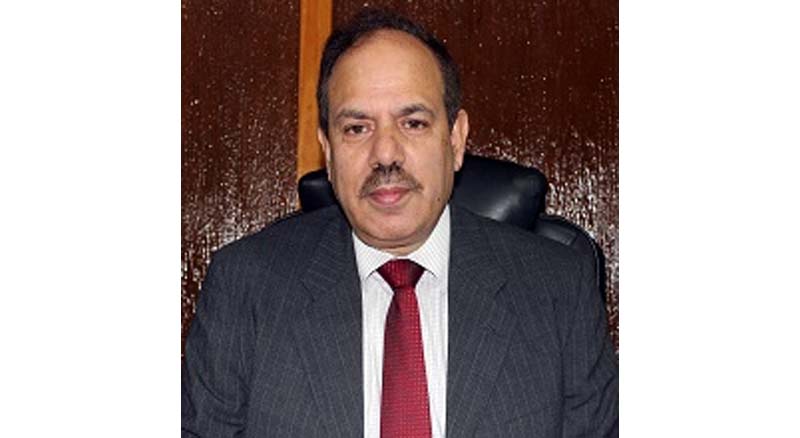
Excelsior Correspondent
SRINAGAR, Mar 3: Vice Chancellor of Islamic University of Science and Technology (IUST), Professor Shakil Romshoo, today said that while major industrial nations drive emissions, vulnerable Himalayan communities including Kashmiris are left to bear the brunt of climate-induced challenges.
Speaking at a workshop titled ‘Water, Weather, and Well-Being: Climate Change in the Kashmir Valley’ organized by the Environmental Policy Group (EPG), Romshoo underscored the paradox of climate change-a global crisis disproportionately affecting J&K, which contribute minimally to greenhouse gas emissions.
He expressed concern that while major industrial nations drive emissions, vulnerable Himalayan communities are left to bear the brunt of climate-induced challenges.
Prof. Romshoo pointed to the decline in saffron productivity-a cultural and economic pillar of Kashmir-as a tangible consequence of shifting climatic patterns.
He also noted alarming weather extremes, such as the heavy snowfall of 2019 and record-breaking cold during the harsh Chillai Kalan winter.
“With global temperatures rising by 0.8°C over the past century, Kashmir has experienced an even sharper increase of 1.3°C,” he said.
Experts during the workshop highlighted the profound impacts of climate change on water resources, agriculture, the economy, and public health in J&K.
International Development Specialist Arjumund Hussain Talib, speaking virtually, revealed that J&K is projected to face a 60% food deficit due to climate change.
He stressed the urgent need for substantial funding and resources for environmental conservation.
As the Kashmir Valley grapples with erratic weather patterns, unpredictable precipitation, and rising temperatures, the workshop aimed to bring together experts, policymakers, academicians, and civil society representatives to discuss urgent climate threats and propose solutions.
EPG Convenor Faiz Bakshi opened the session with a welcome address, reaffirming the organization’s commitment to environmental advocacy.
Dr. Khurshid Iqbal, former Head of Cardiology at Sher-i-Kashmir Institute of Medical Sciences, spoke on the increasing health vulnerabilities caused by climate change.
RTI activist and environmentalist Dr. Raja Muzaffar Bhat made a passionate appeal for immediate action against environmental degradation.
Maajid Farooq, a scientist from the Department of Environment, Ecology and Remote Sensing, delivered a PowerPoint presentation on regional climate trends, backed by data analysis.
Dr. GN Qasba, former Commissioner of Srinagar Municipal Corporation, stressed the urgent need for climate-resilient urban planning.
 Follow our WhatsApp channel
