

Dr Rakesh Verma
rakeshforests@gmail.com
Kaan Sakhiyan is a beautiful and deeply rooted regional celebration originating from the Duggar region, particularly observed during the auspicious nine nights of Navratra. While its presence is now more prominent in the villages and smaller towns of the area, its essence remains a powerful testament to the region’s rich cultural heritage. At its core, Kaan Sakhiyan revolves around the coming together of young girls, who, infused with devotion, excitement, and a strong sense of unity, strive to keep the vibrant cultural traditions of the Duggar region alive through a series of engaging rituals, fervent prayers, and shared experiences.
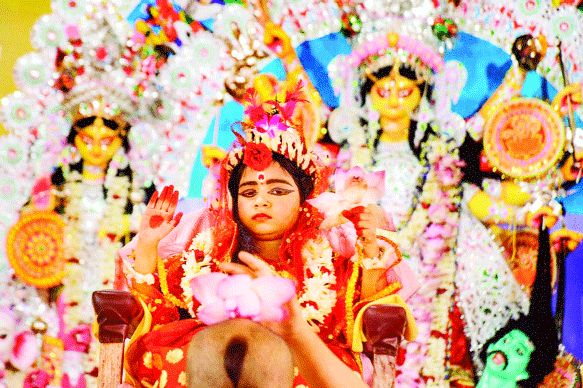
Central to the celebration is the crafting and adornment of a clay idol of Maa Durga. This idol is not merely a representation but a sacred object, often depicted with symbols of the sun and moon, signifying divine omnipresence and celestial blessings. The meticulous decoration of the idol is a communal effort, with the girls adding traditional elements that hold deep cultural significance. Special attention is paid to adorning it with coins, each representing a wish or offering, and kaudis (shells), which have long been associated with prosperity and divine grace in folk traditions. These elements, carefully placed and arranged, imbue the idol with a tangible sense of reverence and a visual narrative of the community’s hopes and spiritual aspirations.
The daily rhythm of Kaan Sakhiyan begins with the early morning hours. The young girls, upon waking, partake in a ritualistic bath, a symbol of purification and spiritual readiness. They then proceed to collect river water in a ‘lota’ (a traditional water vessel), carrying this life-giving element with utmost care to the sacred space where the idol of Maa Durga is placed. This act of bringing river water is not just a practical necessity for the daily worship but also a profound gesture of connecting with nature and honoring the purity of its elemental forces. The collected water plays a crucial role in the ensuing rituals; it is used for ‘puja’ (worship), accompanied by the lighting of ‘diyas’ (oil lamps) and ‘dhoop’ (incense), which fill the air with a fragrant and spiritual ambiance.
The devotional aspect of Kaan Sakhiyan is further amplified through the singing of ‘bhajans’ (devotional songs) and the performance of ‘aarti’ (a ritualistic waving of lamps). These sacred melodies and the rhythmic chanting create an atmosphere of intense spiritual focus and collective prayer. The songs, often passed down through generations, speak of the glory of Maa Durga, her strength, her compassion, and her role as the divine mother. The ‘aarti’, performed with a burning lamp, symbolizes the dispelling of darkness and ignorance, and the invitation of divine light into the lives of the devotees.
A unique and deeply symbolic aspect of Kaan Sakhiyan is the use of the same river water, after the initial worship, to nurture and grow ‘Saankh’ (Barley). This practice is rich with meaning, symbolizing purity, unwavering devotion, and the establishment of a sacred, life-affirming connection with nature. The growing Saankh is seen as a living embodiment of the girls’ prayers and their spiritual journey during the festival. It represents the flourishing of their faith and the ongoing cycle of life and devotion. The evenings are dedicated to further prayers and the continuation of devotional singing and ‘aarti’, ensuring that the spiritual energy of the celebration is sustained from dawn till dusk.
The communal aspect of Kaan Sakhiyan is particularly heartwarming and reflective of the strong social fabric within the Duggar region. Every evening, the girls gather to share a meal together. This meal is not a pre-arranged feast but a beautiful practice known as ‘chuti karna jade’, a term that signifies bringing home-cooked food to share with the group. Each girl contributes a dish from her home, showcasing the culinary diversity and generosity of their families. This tradition perfectly encapsulates the ideals of friendship, camaraderie, and unity. The shared meals, prepared with love and respect, foster a sense of belonging and strengthen the bonds between the girls. These shared moments of laughter, conversation, and sustenance, intertwined with prayers and rituals, etch lasting memories of childhood, cultural immersion, and profound devotion.
As the Navratra festival reaches its culmination on Navmi, the celebrations reach a new crescendo with the performance of ‘Kanjak Pujan’. This ritual involves honoring young girls, seen as embodiments of the divine feminine. Following the Kanjak Pujan, a significant enactment takes place: the ‘Kaan Sakhiyan’ itself. In this performance, one girl takes on the role of Lord Krishna (‘Kanha’), and the other girls become her ‘Sakhiyan’ (friends or companions). They reenact episodes from Krishna’s life, often filled with playful interactions, devotional songs, and moral lessons. This dramatic representation is a highlight of the festival, drawing the attention and participation of the entire village. Villagers gather in large numbers to witness this enchanting performance, offering their blessings and absorbing the cultural narrative being brought to life. ‘Prasad’ (consecrated food offering) is distributed amongst the attendees, further symbolizing the blessings received and shared.
The final day of Kaan Sakhiyan is marked by specific culinary traditions and the solemn conclusion of the idol’s journey. Special delicacies, including ‘Pathoru’ (a type of flatbread) and ‘Puris’, are prepared, adding a final touch of festive indulgence. The celebrations culminate with the immersion of the clay idol of Maa Durga and the Saankh in running water. This act signifies the completion of the cycle, the return of the divine energy to its source, and a promise of continuity for the tradition in the years to come. The running water symbolizes purification and the ongoing flow of life and blessings.
In essence, Kaan Sakhiyan is far more than just a religious observance; it is a living, breathing cultural phenomenon that weaves together spirituality, community, tradition, and the vibrant innocence of childhood. It is a powerful reminder of the enduring strength of cultural heritage, passed down through generations, nurtured by the devotion of young hearts, and celebrated with a spirit of unity and joy that resonates deeply within the Duggar region. The careful rituals, the communal meals, the devotional songs, and the symbolic enactments all contribute to a holistic experience that enriches the lives of the participants and preserves a precious part of India’s diverse cultural tapestry. The intricate details of the idol’s creation, the daily reverence for nature through the river water and growing Saankh, and the joyous camaraderie forged through shared meals and prayers all underscore the profound interconnectedness of the spiritual, the social, and the ecological within this cherished tradition. The entire process, from the initial collection of river water to the final immersion, is a testament to the values of purity, devotion, community, and the timeless reverence for the divine feminine that lies at the heart of Kaan Sakhiyan.
(The author is J&K Forest Services)
 Follow our WhatsApp channel
