

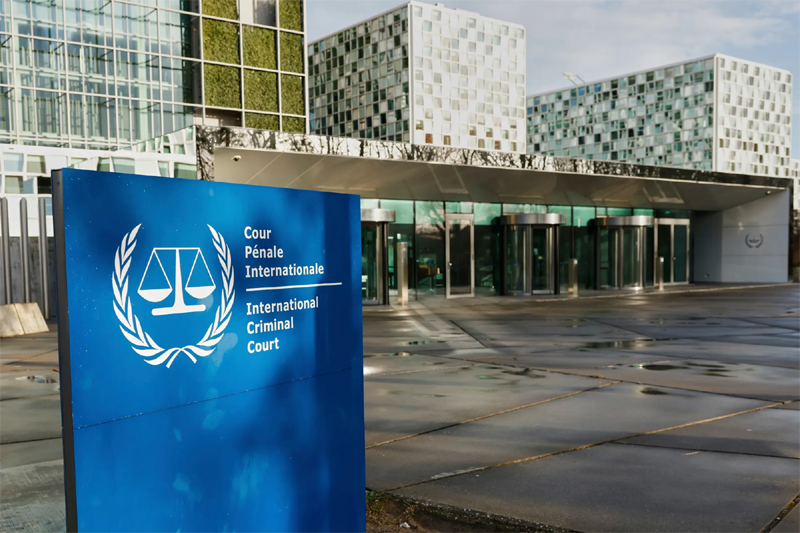
THE HAGUE, Apr 2: The embattled chief prosecutor of the International Criminal Court can potentially resume his duties, a three-judge panel said, after rejecting a United Nations investigation of alleged sexual misconduct with a female aide, according to conclusions viewed by The Associated Press.
A final decision on the fate of British barrister Karim Khan is now up to the Assembly of States Parties, the body that oversees the ICC.
The group moved Wednesday to extend the investigation as it grapples with an unprecedented process, unrest among ICC staff and external pressures.
Khan temporarily stepped down in May 2025 pending the outcome of an investigation by the UN’s Office of Internal Oversight Service into allegations of sexual misconduct, which he has steadfastly denied.
The UN investigation found evidence that Khan had “nonconsensual sexual contact with (the aide) in his office, at his private residence, and whilst on mission,” according to a copy of its report.
In a statement to AP on Wednesday, Khan said through his lawyers that he “firmly maintains that he did not engage in any inappropriate conduct toward the complainant, whether sexual or otherwise.”
Khan’s lawyers also stated that he “categorically denies both any nonconsensual sexual conduct and the existence of any consensual sexual relationship.”
The ICC has declined to comment.
The three judges, selected by the assembly for a legal assessment of the UN investigation, found last month that the investigation was not conclusive enough.
Nevertheless, the judges said they were compelled to make a determination, and they said the findings “do not establish misconduct or breach of duty under the relevant legal framework,” according to their 85-page assessment.
“The resolution of a number of disputes, which remains outstanding, would be necessary before a proper characterisation of the facts can be made,” said the judges, who evaluated more than 5,000 pages of evidence.
The judges wrote that the UN investigators “failed to indicate which witnesses’ testimony they found credible” and “did not resolve narrative inconsistencies.”
The UN investigators were tasked with carrying out an investigation but not assessing whether Khan’s behaviour amounted to misconduct.
The three-judge panel was to use the criminal standard of “beyond a reasonable doubt,” according to its report, and its advice is not binding on the assembly.
The process is unprecedented for the ICC, and the Assembly of States Parties has had to repeatedly create new rules to accommodate the situation.
Khan’s lawyers stressed in a statement Thursday that the three-judge panel unanimously found that the UN investigation did not establish any misconduct or breach of duty.
His lawyers also noted that the UN investigation did not make a final determination of misconduct or breach of duty, and that their material required legal evaluation. (AP)
 Follow our WhatsApp channel
