

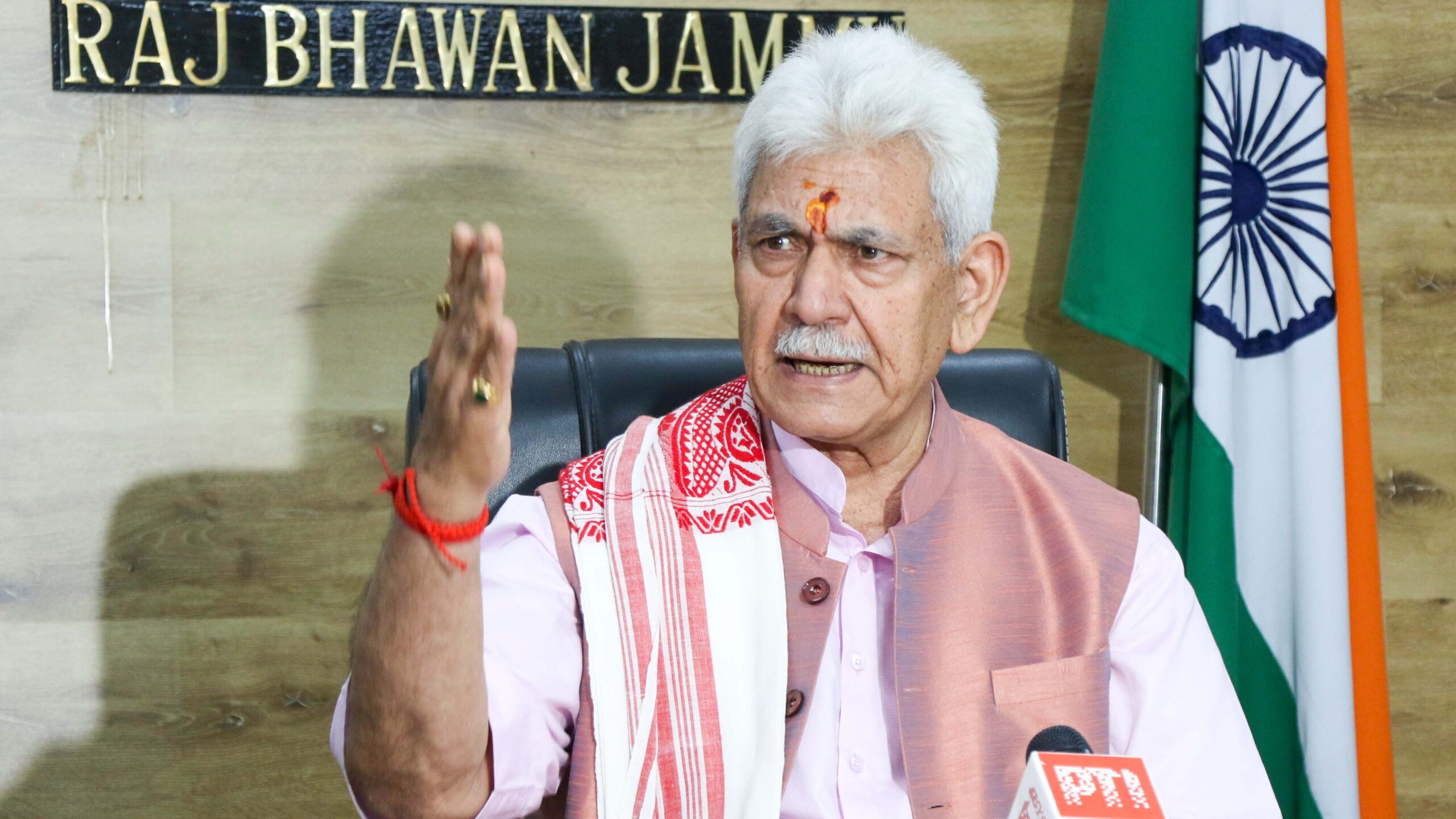
The Lieutenant Governor’s assertion that Jammu and Kashmir is steadily emerging as an investment-ready, competitive destination reflects a decisive shift in the Union Territory’s development paradigm. Over the past decade, massive investments in industrial infrastructure, road connectivity and economic reforms have laid the foundation for growth. Yet, until now, a critical pillar of modern economic competitiveness-efficient logistics handling-remained underdeveloped. With the imminent launch of the Jammu & Kashmir Logistics Policy 2025 and the announcement of a Multi-Modal Logistics Park at Vijaypur, that gap is finally being addressed.
Logistics is no longer a back-end activity; it is the backbone of global commerce, determining both time efficiency and cost efficiency. For J&K, this relevance multiplies due to its unique topography, climatic vulnerabilities and strategic importance. The UT’s mountainous terrain sharply limits the movement of large container trucks across major stretches. This constraint pushes transportation costs above national averages and increases transit times. Ironically, container freight-globally the cheapest and most efficient mode of land cargo movement-remains underutilised here. At the same time, logistics constitutes a significant portion of the final price of goods. For industries located in J&K, and for its horticulture sector, which must compete with Himachal Pradesh, Uttarakhand-and internationally, with Central Asian fruit markets-high logistics costs often erode competitiveness. A Kashmiri apple or a Jammu-manufactured product may be of superior quality, but if the freight cost inflates its market price, the advantage is lost.
Recognising this, the Government has spent the last several years aggressively strengthening the road network. Hundreds of crores have been invested under Central schemes to upgrade highways, complete last-mile road connectivity and ensure all-weather access to remote regions. The four-laning of major national highways is gradually reducing travel time and improving reliability. The upcoming expansion in the rail network further promises a tectonic shift in mobility and freight movement in the coming years.
But infrastructure alone is not enough. What J&K lacked until now was a centralised logistics architecture-integrated, multimodal, digital and resilient. The proposed Logistics Policy 2025 will finally formalise such a framework. If implemented with precision, it can become the game-changer the UT urgently needs. The Vijaypur MMLP, to be developed on a DBFOT basis, exemplifies this modern approach. An inland container depot, warehousing complexes, cold storage infrastructure, truck terminals and freight stations-these are not mere facilities; they are the arteries of a competitive economy. Such hubs drastically reduce transit delays, consolidate cargo, improve tracking, and enable businesses to move goods in hours rather than days.
This transformation holds special significance for J&K’s horticulture sector. Over the years, repeated natural disruptions-snowfall, landslides, road closures-have exposed the vulnerability of fruit farmers due to inadequate cold storage capacity. Without the ability to store perishables for even a short duration, farmers are compelled to sell at distressed prices. Proper logistics hubs with cold chains, pack houses and ripening chambers can safeguard produce, stabilise prices and open access to distant markets. J&K’s strategic needs also demand a robust logistics ecosystem. The UT must maintain adequate reserves of essential commodities on both sides of the Pir Panjal to withstand weather-related disruptions and border sensitivities.
Beyond economics, logistics hubs carry strong socio-economic benefits. They create their own local economies: transporters, loaders, warehouse workers, mechanics, restaurant owners, and small service providers all find new employment avenues. Investments follow infrastructure, and jobs follow investments. The ripple effect is immense. More importantly, it will position Jammu as the logistics gateway to both Kashmir and Ladakh and integrate the region more firmly with India’s trade corridors. For the public, the benefits will be tangible: lower prices, faster deliveries, improved supply of essential goods and better resilience during disruptions.
J&K has already built industrial hubs. It has strengthened roads, improved rail connectivity, and opened avenues for investment. Now, logistics is the next frontier. The draft is ready, and implementation is pending. With the right execution and sustained policy momentum, the creation of a modern, integrated logistics ecosystem could very well become the decisive factor that propels J&K into a new era of economic vibrancy and competitiveness.
 Follow our WhatsApp channel
