

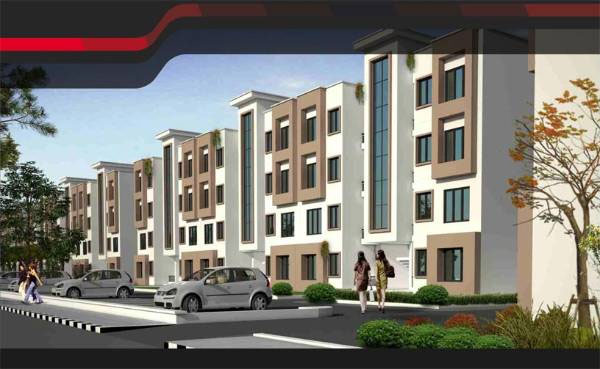
Initiative aimed at meeting rising urban housing needs
Bivek Mathur
JAMMU, Mar 5: Less than a month after Minister Sakina Itoo, on behalf of Chief Minister Omar Abdullah, informed the Legislative Assembly on February 6 about the J&K Government’s proposed push to strengthen urban infrastructure to meet the growing needs of the people, the Jammu and Kashmir Housing Board (JKHB) has moved swiftly to translate those plans into action.
Follow the Daily Excelsior channel on WhatsApp
Official sources said that in Jammu province, the Board has invited Expressions of Interest (EoI) from interested private sector entities to develop two major housing projects in the Jammu and Samba districts under the Public-Private Partnership (PPP) model.
These projects, spanning a combined 114 Kanals of JKHB land, mark a significant initiative by the Housing and Urban Development Department to address the Union Territory’s rising demand for planned and organized residential spaces, they said.
Official sources said the first project is proposed at Chowadhi area of Jammu district, where 69 Kanals (3.49 acres) of land within the urban influence zone have been identified for residential development.
“This site is expected to feature a modern mix of residential towers, flats and villas, designed to cater to the increasing demand for quality housing along the city’s expanding outskirts,” they said.
The second project, according to the official sources, is planned in the Birpur area of Bari Brahmana Tehsil in Samba district and will cover 45 Kanals (2.27 acres).
Unlike the Jammu site, they said, this development is envisioned as a mixed-use project integrating residential towers with commercial complexes, thereby creating a self-sustained urban ecosystem for residents as well as business establishments.
Sources further said that both projects are likely to be guided by the Jammu and Kashmir Unified Building Bye-Laws 2021 and the 2020 Housing and Township Policy, ensuring adherence to modern safety norms and scientific urban planning standards.
To ensure inclusivity, statutory housing provisions for Economically Weaker Sections (EWS) may also be incorporated in accordance with Government notifications, they said.
To attract reputed private developers, they said, the Housing Board may consider long-term lease arrangements of up to 99 years, reflecting its commitment to sustainable infrastructure growth and structured urban expansion.
The indicative development period for the projects has been envisaged at up to three years from the date of appointment of the developer.
 Follow our WhatsApp channel
