

‘Migrant rehabilitation is not merely a welfare measure’
*Expedite infra development at emerging destinations
Mohinder Verma
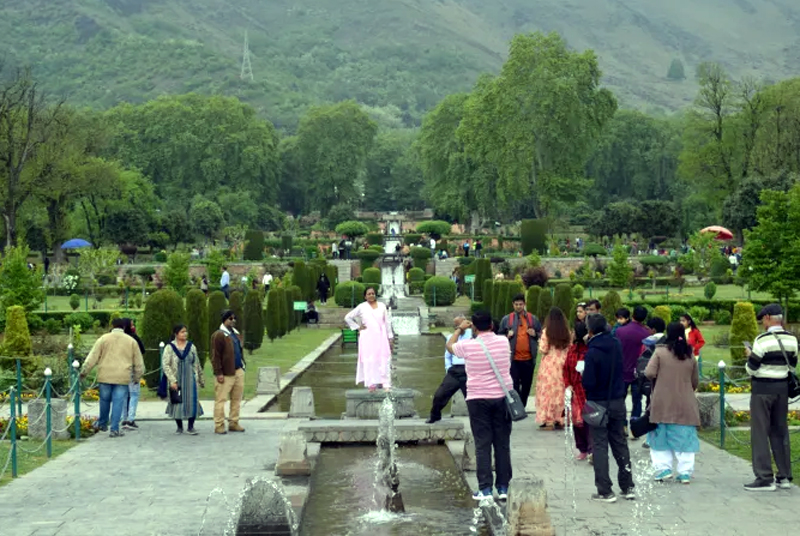
JAMMU, Mar 29: With Union Territory of Jammu & Kashmir witnessing an unprecedented surge in tourist arrivals, the Department-Related Parliamentary Standing Committee on Home Affairs has sounded a note of caution warning that unplanned growth could strain fragile ecosystems and overwhelm popular destinations if not backed by comprehensive planning.
Follow the Daily Excelsior channel on WhatsApp
“Although there was a decline in tourist arrivals in 2025 compared to 2024, largely attributable to the Pahalgam incident, the sector demonstrates resilience with recovery visible from June 2025 onwards. The cumulative footfall of approximately 1.78 crore by December 2025 indicates restoration of confidence and sustained interest among visitors”, the Parliamentary Panel observed.
Stating that tourism continues to be one of the key drivers of economic activity and employment generation in the Union Territory, the Committee said, “the upward trend in tourist arrivals during recent years has contributed significantly to livelihoods in hospitality, transport, handicrafts and allied sectors”.
However, the sustained increase in the tourist footfall, while economically beneficial, also brings the risk of over concentration in already saturated locations potentially leading to ecological degradation and infrastructure fragile, the Committee observed and recommended that development of emerging destinations must be accompanied by adequate infrastructure, waste management systems, carrying capacity assessment, connectivity improvement and local community participation.
“A long-term sustainable tourism strategy be prepared integrating environmental safeguards and tourists carrying capacity norms. Infrastructure development initiatives at emerging destinations may be expedited in a time-bound manner with clear outcome indicators”, the Committee further recommended.
The Parliamentary Panel has further recommended greater emphasis on high-value tourism segments such as eco-tourism, adventure tourism and winter tourism. “Skill development and entrepreneurship support may also be provided to local youth to maximize livelihood benefits. Measures for periodic monitoring of tourist satisfaction, safety perception and infrastructure adequacy could be initiated”, the report said.
The Committee has reiterated that tourism has emerged as a vital sector for economic revitalization of Jammu & Kashmir and sustained focus on diversification, infrastructure strengthening and confidence building measures will be essential to maintain the growth momentum.
It is pertinent to mention here that significant growth was witnessed in tourist arrivals in Union Territory of Jammu and Kashmir from 2022 to 2024, with total footfall increasing from 1.88 crore to 2.36 crore. Moreover, there is noteworthy increase in foreign tourist arrivals from about 20,000 in 2022 to over 65,000 in 2024 and this reflects growing international confidence in the Union Territory as a tourist destination.
Meanwhile, the Parliamentary Panel observed that even as the Government has stepped up financial and welfare support for displaced families, over 47,000 migrant families continue to remain dependent on relief, underlining the unfinished task of comprehensive rehabilitation in Jammu & Kashmir.
Appreciating the completion and allotment of 5,248 two-room tenements in Jammu and the progress made in construction of transit accommodations in the Valley, the Committee observed, “while 4,112 transit accommodations have been completed, 1,888 units remain under construction as such remaining units be completed in a time-bound manner to ensure secure accommodation for employees appointed under the special package”.
On the employment front, the Committee noted substantial progress, with 5,896 out of 6,000 sanctioned posts already filled under the rehabilitation package. Yet, it stressed that the remaining vacancies must be filled expeditiously warning that any delay would dilute the intended impact of the employment component aimed at restoring livelihoods.
The Committee commended the implementation of Direct Benefit Transfer (DBT) systems, digitization of documentation processes and the issuance of PM-JAY SEHAT cards, noting that these initiatives have significantly improved transparency, efficiency and access to essential services for migrant families.
The Standing Committee recommended that financial relief, though necessary may progressively be complemented by long-term livelihood generation, entrepreneurship promotion and integration measures.
“Migrant rehabilitation is not merely a welfare measure but also a sensitive socio-economic and humanitarian issue and sustained efforts, adequate housing, secure employment, community confidence-building and infrastructure support in areas of return are essential for ensuring dignified and sustainable reintegration”, the Parliamentary Panel said.
 Follow our WhatsApp channel
