

Dr Satwant Singh Rissam
ssrissam84@gmail.com
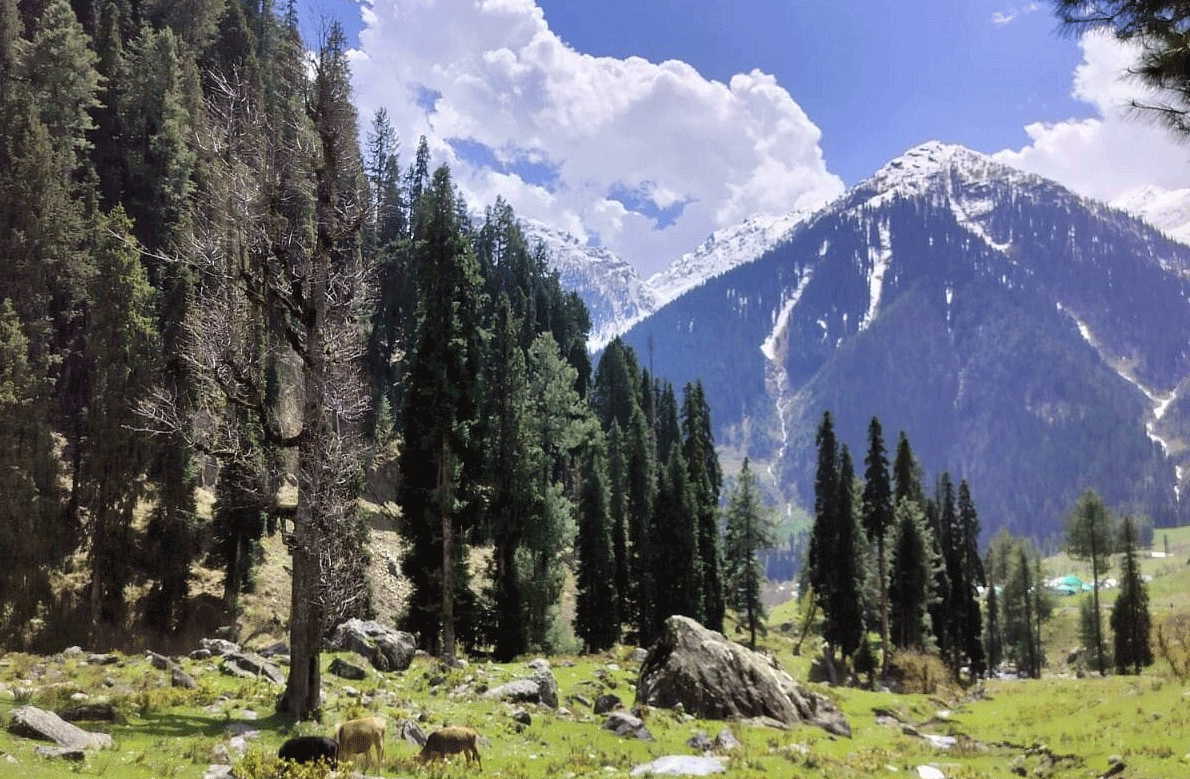
While driving out of Jammu towards Kashmir on the curvy roads, trees and green forests start flashing around us. Some moments come when we stop on the highway and it feels as if forests are alive and are standing tall like guards as they eat bad air from the passing vehicles. Forests are the foundation of Jammu and Kashmir’s environment as they keep life going. In fact, new data shows that about 20,194 square kilometers of area of the Union Territory’s land is covered by forests which is around 48% of its geographical area. As a result, it ranks among India’s greenest areas and a true natural heritage treasure. This green cover is more than just numbers-it’s our living heritage.
I learned about them from my car and developed love for nature while watching trees everywhere as they hold animals, bees, birds, medicinal plants and add in many other ways to our life. For centuries, it has protected wildlife, regulated climate, supported water sources, and we must plant more and protect them as in present times they are being cut and need protection more than ever before. Moreover, local stories and traditions honor these woods as sacred gifts from nature. Different districts highlight this heritage’s strength. For example, Doda district has most of the total forest area. Baramulla, Udhampur, and Anantnag also have significant forest cover. Likewise, Kupwara has the highest density of its land coming under forest area. In addition, these regions are heritage hotspots with habitats for rare species, and vital for biodiversity that generations have cherished and tell stories about.
However, there are variations across regions, places like Srinagar and Budgam have less forest due to expanding towns and development which appears like a danger to our life too. We need growth, but not at the expense of our irreplaceable heritage. Jammu and Kashmir’s forests are especially important because they lie in the sensitive Himalayan area which serve as natural barriers, preventing soil erosion, landslides, and floods. Additionally, they maintain river flow for agriculture and drinking water-a lifeline our ancestors relied on. So, losing these forests would erase this vital legacy from our life because every tiny root in the soil is working hard to keep tress flashy and provide us clean air.
Nevertheless, threats loom over this heritage. Adding to it is illegal logging, land encroachment, fires, and climate change which pose serious risks. Next, rising temperatures and irregular rainfall damage trees and wildlife. Moreover, human activities in wild areas accelerate loss and lead to animal conflicts. We need to take strategic steps to protect our natural heritage, like involving local communities that have been protecting forests for generations because they have the best knowledge of the land and can help monitor threats; planting more trees through community initiatives to quickly restore degraded areas; managing forests sustainably with techniques like selective harvesting to maintain healthy ecosystems; using satellites and technology for real-time monitoring of fires and illegal activities to address issues early; and responsibly developing eco-tourism to create jobs, draw tourists who value the heritage.
Jammu and Kashmir’s forests are a source of pride and an invaluable inheritance. There are different laws in various acts that address the protection of forests. However, laws and regulations alone won’t bring results unless we develop a sense of value toward our forests. For this, reminding people about fundamental duties in the constitution is more important, as Article 51 A-g clearly emphasises that we must protect our forests, which are an integral part of India’s natural heritage. Sustained efforts toward afforestation can lead to the conservation of forests in J&K. Ultimately, safeguarding them requires effective policies, decisive action, and increased awareness. Together, we can build a more sustainable future, as forests are not just scenic views-they underpin environmental stability and support life. In fact, preserving this heritage ensures a resilient future for all because healthy forests mean clean air and safe homes. So, we must act now for the sake of future generations despite all challenges.
(The author is Media and communications professional)
 Follow our WhatsApp channel
