

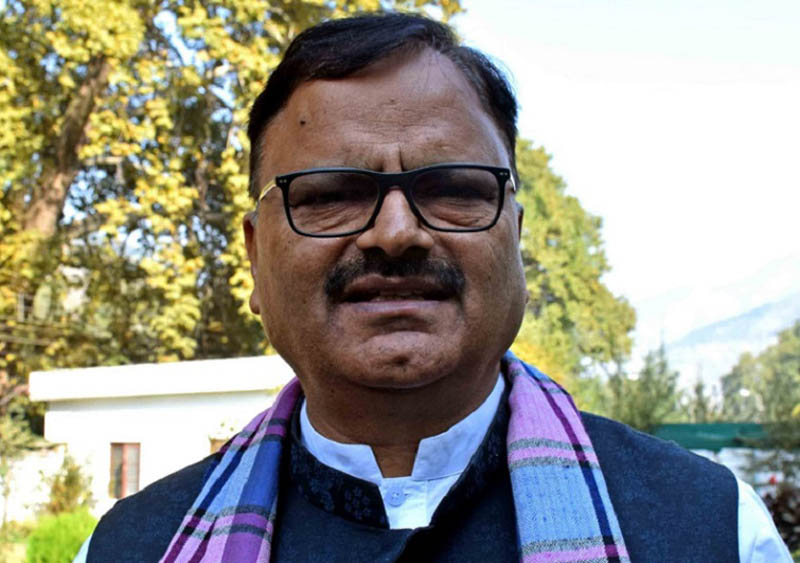
Excelsior Correspondent
SRINAGAR, June 19: Minister for Jal Shakti, Forest, Ecology, Environment, and Tribal Affairs, Javed Ahmad Rana, today said that there are gaps in the implementation of the Jal Jeevan Mission (JJM), saying that several water supply projects under the scheme were constructed in areas with no proper water source.
Click here to watch video
Speaking to reporters in Baramulla, Rana blamed the absence of a popular Government in Jammu and Kashmir over the last 5-6 years for the collapse of the system and the resulting mismanagement. “JJM was introduced in 2019, but we have received complaints from several places that projects were made where there is no water source. The department is now investigating how such decisions were taken.”
He said that the Government is committed to reviving the system. “Due to the absence of an elected Government, there were political setbacks that damaged the developmental process. We are bringing it back on track. God willing, all hurdles causing people to suffer will be removed in the coming time,” he added.
The Minister also responded to complaints regarding the distribution of timber and firewood under the State Forest Corporation (SFC), calling it “unsuccessful.” He said the policy is under review, and the department is working to ensure timber and firewood reach those who actually need it.
On the issue of agriculture and the lack of irrigation facilities affecting farmers and their crops, the Minister attributed the issues to prolonged dry spells and climate change. “Rainfall is decreasing, water sources are depleting, and the water table is going down. We are facing all these challenges,” he said.
To tackle the crisis, he said that previously approved schemes are being revived and new irrigation and flood control projects are being planned. “I have raised these issues. We will be funding irrigation and flood control schemes in areas like Nawababad and other areas under a phased mission,” he said.
The Minister said that the Government is committed to need-based interventions and infrastructure revival to ensure better water and agricultural services for the people.
 Follow our WhatsApp channel
