

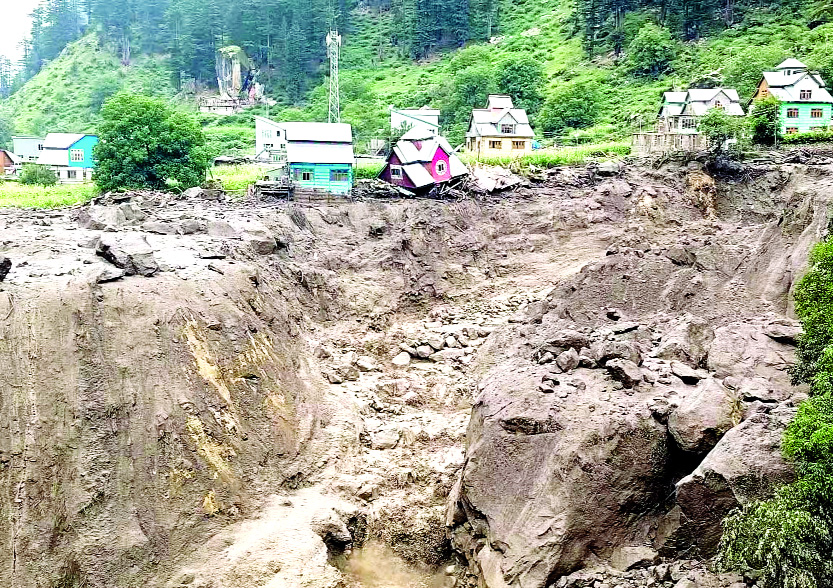
Natural disasters often leave behind not only the scars of destruction but also test the will and intent of Governments to respond with urgency, fairness, and compassion. The recent devastating cloudbursts, flash floods, and heavy rains that struck the Jammu division are a prime example. They left thousands of families grappling with losses-valuables washed away, houses and belongings damaged, and, most importantly, civic infrastructure battered beyond recognition. Roads caved in, drains and nullahs choked with stone and silt, and even after more than two weeks, the normal water supply was not restored in Jammu. Whatever has been temporarily restored is solely due to the round-the-clock efforts of engineers and ground staff. Yet, despite this dire reality, the response in terms of the release of funds for restoration has been far from satisfactory.
It is deeply concerning that while the Srinagar Municipal Corporation received its entire CAPEX budget-about Rs. 46 crore in totality and is already at the tendering and developmental stage, the JMC is still awaiting approval for nearly Rs. 26 crore of its own CAPEX budget. This inexplicable delay has paralysed developmental works in Jammu, at a time when restoration cannot wait another day. More disturbingly, an additional proposal of Rs. 60 crore, specifically meant for repairing flood-hit infrastructure in Jammu city, has not seen the release of even a single penny.
The damage in Jammu has been extensive and demands urgent intervention. Lanes and streets are filled with silt and stones, nullahs have turned into menacing threats, and vital infrastructure lies broken. Residents who witnessed the havoc of overflowing nullahs during the rains live under a persistent shadow of fear. Even the sight of dark clouds now sends shivers down their spine, given the damage they have just endured. Repairing these nullahs and strengthening retaining walls is not a matter of routine development-it is a matter of immediate public safety. Delays in funding will only worsen the situation, leaving thousands of families exposed to repeated disasters.
It defies both logic and compassion as to why JMC’s CAPEX grants remain withheld when SMC’s funds have been duly released. At such a moment, the argument of regional discrimination naturally resurfaces in public discourse. For decades, people of Jammu have voiced concerns about unequal treatment in terms of fund allocation and prioritisation. The withholding of Rs. 26 crore meant for JMC adds weight to such concerns, especially as the city struggles to restore its infrastructure. If there was ever a time to demonstrate that governance transcends regional biases, this is it. Every day lost in releasing money means further delays in starting and completing urgent restoration works. The stakes are high because delayed restoration of drains, nullahs, and water supply schemes can easily turn into another human-made disaster if heavy rains strike again.
Politics and bureaucratic red tape are not appropriate at this time. Disasters demand collective action and swift decision-making. The Government of the UT must immediately release JMC’s pending CAPEX funds as well as the Rs. 60 crore proposal for flood restoration. Only then can the city begin the crucial work of rebuilding. Political parties, civic bodies, and social organisations must rise above their divides and present a united front to ensure people get timely relief and restoration. Any further delays will only deepen public suffering and bring the Government under sharp scrutiny for indifference and neglect. The recent calamity was not of anyone’s making, but the response to it will be judged by history. Jammu’s people are suffering, its infrastructure is broken, and its patience is wearing thin. What they need is not promises, but action. The release of funds is the first and most urgent step in that direction.
 Follow our WhatsApp channel
