

Tashi Sharma
Jammu stands out as the only city: to be the home of India’s top 5 prestigious institutions
As the sun sets over the Tawi River, it doesn’t just cast a golden hue over temples and old bazaars. It now gleams off the steel structures of AIIMS, echoes in the quiet classrooms of IIT, and inspires countless dreams rising with the Himalayan winds. Jammu is no longer just a city-it is a campus, a culture, and a cause.
Legacy of Learning: The Historical Roots
Jammu’s tryst with education began well before Indian independence. The illustrious Shri Ranbir Modern Higher Secondary School, founded in 1872 by Maharaja Ranbir Singh, laid the groundwork for formal education in the region. This was followed by a remarkable milestone in 1905 when Maharaja Pratap Singh established the Prince of Wales College, which continues to function today as Government Gandhi Memorial Science College, a testament to the Maharajas’ far-sighted commitment to education.
The Vision of Pioneers: Geological Excellence
Few know that Jammu also holds a pioneering legacy in geological studies. Dr. D.N. Wadia-regarded as the father of Indian geology, founded the Department of Geology at the then Prince of Wales College in 1907. His work laid the foundation for the Wadia Institute of Himalayan Geology, later established in Dehradun, but ideated in the very soil of Jammu. This highlights not just academic growth, but also the city’s historical relevance to scientific advancement in the Indian subcontinent.
An Avalanche of Institutions
The last three decades have seen an educational renaissance in Jammu. The establishment of multiple prestigious institutions of national importance has turned the city into a magnet for students.
Among the stellar institutions:
* Central University of Jammu – established in 2009, it has quickly emerged as a centre for advanced studies and interdisciplinary research.
* Shri Mata Vaishno Devi University (SMVDU) – founded in 1999 near Katra, it offers cutting-edge programs in science, engineering, and management.
* Indian Institute of Mass Communication (IIMC) – opened in 2012, nurturing future media professionals.
* Indian Institute of Management (IIM) Jammu – founded in 2016, now counted among India’s growing IIM network.
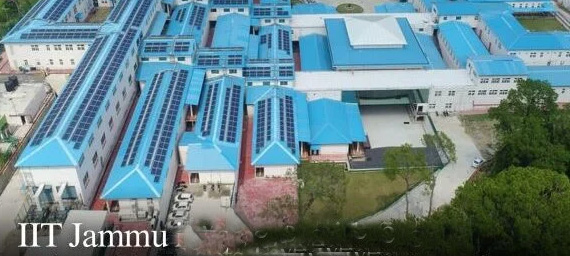
* Indian Institute of Technology (IIT) Jammu – launched in 2016, already contributing to technological innovation in the region.
* All India Institute of Medical Sciences (AIIMS) Vijaypur – with its foundation laid by the Prime Minister in 2019, is already transforming healthcare and medical education in the region.
* Cluster University of Jammu – established in 2016, integrating multiple constituent colleges into a dynamic academic collective.
Jammu is also poised to get a National Law University (NLU)-adding another feather in its already brimming cap.
A Unique Academic Concentration
Jammu’s academic dominance becomes even more evident when viewed against the backdrop of India’s leading states. In Maharashtra, the prestigious AIIMS is located in Nagpur, while the IIT is situated in Mumbai, with no single city hosting both. Gujarat boasts the IIM in Ahmedabad, but its AIIMS is placed in Rajkot, several hundred kilometers away-limiting integrated academic access. Himachal Pradesh presents a similarly fragmented picture, with AIIMS in Bilaspur, the Central University in Kangra, and IIT in Mandi, each in separate districts. In Punjab, AIIMS is established in Bathinda, IIT in Ropar, and IIM in Amritsar, again making it geographically dispersed. Uttar Pradesh, despite being one of India’s most populous states, has its institutions-IIT in Kanpur, AIIMS in Gorakhpur, IIM in Lucknow, and Central University in Prayagraj, scattered across the state. Jammu, however, is unique in India: it has consolidated all five national-level institutions-IIT, IIM, AIIMS, IIMC, and Central University, within a single metropolitan zone. This concentration not only enhances student mobility and inter-institutional collaboration but also positions Jammu as an unparalleled academic hub in the country.
City of Lights, City of Learners
Today, as one drives through the newly developed zones like Vijaypur-home to AIIMS, a visible transformation is evident. Once a sleepy stretch, it now glows with activity and infrastructure, almost resembling a township in itself. “Vijaypur is no longer just a dot on the map-it’s an academic and medical nucleus,” says a senior official from the Health Ministry.
Drift that Sparked Development: A Blessing in Disguise
The long-standing divide-culturally, geographically, and administratively, between the Jammu and Kashmir divisions has historically impacted the equitable distribution of resources, including education. With the new administrative clarity, the government has pushed for parallel development in both Jammu and Kashmir regions, ensuring that one does not eclipse the other. Where earlier, many key institutions were disproportionately centered in Kashmir, the drift has encouraged institutional decentralization. While IIT Jammu, IIM Jammu, and AIIMS Vijaypur have been strategically placed to boost Jammu’s profile. Meanwhile, Kashmir University, NIT Srinagar, and newer campuses like AIIMS Awantipora continue to receive upgrades and central funding, ensuring Kashmir is not left behind. The perceived drift has, in a sense, triggered a competitive development model-each region striving to match or outdo the other in terms of educational excellence.
Education as the Engine of Growth
The surge in educational infrastructure across Jammu and Kashmir is more than a developmental milestone, it is a transformative force shaping the Union Territory’s economic and social fabric. On the economic front, the establishment of premier institutions such as IIT, IIM, AIIMS, and Central University is catalyzing the growth of an entire ecosystem, spurring investments in housing, transport, research, and service sectors. It has led to job creation not only within academia but also in allied fields such as administration, healthcare, IT services, publishing, construction, and local entrepreneurship. With more students migrating to J&K for quality education, cities like Jammu and Srinagar are witnessing an uptick in rentals, food services, coaching centers, and cultural tourism, further boosting the local economy.
While, on the social front, this educational renaissance is empowering youth with knowledge, skills, and confidence, dismantling old stereotypes and creating a progressive, inclusive society. It is bridging the rural-urban divide by encouraging participation from underrepresented areas and marginalized groups. The rise of institutions also creates an environment for gender parity, as more young girls from conservative backgrounds can now access quality education close to home. Furthermore, the intermingling of students from different parts of India fosters national integration andharmony, breaking the isolation that the region once faced. Ultimately, education becomes a strategic tool for long-term peace, civic maturity, and regional stability-making Jammu and Kashmir not only a hub of learning but a beacon of hope and resilience.
 Follow our WhatsApp channel
