

281 works completed, remaining 7 progressing steadily
*Waste to Wonder Park, Oceanarium nearing reality
Mohinder Verma
JAMMU, Jan 29: Jammu and Srinagar, the two cities selected from the Union Territory of Jammu and Kashmir under the Smart Cities Mission (SCM) of the Union Ministry of Housing and Urban Affairs, have achieved near-total completion of their approved projects with only a handful of works remaining.
Follow the Daily Excelsior channel on WhatsApp
As per the information provided by the Ministry of Housing and Urban Affairs in a written reply to the Lok Sabha, 288 projects worth Rs 6,603 crore were taken up in Jammu and Kashmir under the Smart Cities Mission. Of these, 281 projects amounting to Rs 6,464 crore have been completed, while seven projects worth Rs 140 crore are currently under execution.
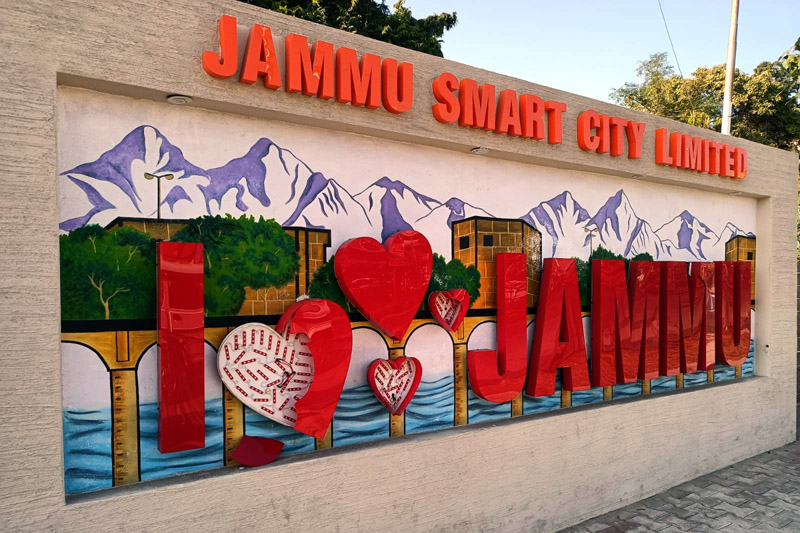
In Jammu city, a total of 127 projects costing Rs 2,969 crore were sanctioned. Of these, 125 projects valued at Rs 2,940 crore have already been completed, leaving two projects worth Rs 29 crore still ongoing. The city has claimed Rs 489 crore in Central assistance, of which Rs 444 crore has been utilized, reflecting steady financial and physical progress.
Srinagar city, with a larger project portfolio, had to implement 161 projects worth Rs 3,634 crore. Out of these, 156 projects costing Rs 3,524 crore stand completed, while five projects involving Rs 111 crore remain under progress. The city has utilized Rs 441 crore out of Rs 452 crore of Central funds claimed under the Mission.
Overall, Jammu and Kashmir has recorded a completion rate of over 97 per cent under the Smart Cities Mission, placing it among the better-performing regions in terms of execution. The projects span critical sectors such as urban mobility, public spaces, water supply, solid waste management, IT-enabled governance and surveillance infrastructure, supported by Integrated Command and Control Centres (ICCCs).
With only a small number of projects left to be completed, officials expect the remaining works in both Jammu and Srinagar to be wrapped up soon, marking a significant milestone in urban infrastructure development in the Union Territory.
An officer of Jammu Smart City Limited, when contacted, said, “the remaining two projects are Waste to Wonder Park at Bhagwati Nagar and Oceanarium at Bagh-e-Bahu, and work is apace on both. These projects are likely to be dedicated to the people by the end of 2026 or early 2027”, adding “both the projects are already approved under the Smart City Mission and sufficient funds are available for their completion”.
Regarding the Oceanarium at Bagh-e-Bahu, the officer informed that the tender for supply of live marine ornamental aquatic fish, including a three-year replenishment period on EPC mode, has recently been floated and, hopefully, the entire procedural formalities will be completed within the shortest possible timeframe.
About the Waste to Wonder Park, the officer said, “work is being executed as per the fixed timeframe and progress is being regularly monitored by the Chief Executive Officer of Jammu Smart City Limited on a regular basis”.
EXCELSIOR made repeated attempts to ascertain the progress of the remaining five projects of Srinagar Smart City Limited, but there was no response from the Chief Executive Officer.
Regarding the plans for sustaining and scaling the digital infrastructure and innovations developed under the Mission, Minister of State in the Ministry of Housing and Urban Affairs, Tokhan Sahu, informed Parliament that, to ensure the sustainability of digital infrastructure such as Integrated Command and Control Centres (ICCCs) established across Smart Cities, the Ministry of Housing and Urban Affairs (MoHUA) has issued an advisory on “Re-purposing the SPVs created under the Smart Cities Mission,” which directs States/UTs to support ICCCs in developing self-sustaining business plans.
“For scaling up, ICCCs are encouraged to extend support to nearby Urban Local Bodies (ULBs), line departments and other National and State Missions or initiatives”, he further said, adding that ICCCs will also continue to develop and implement innovative, city-specific solutions to address local challenges in areas such as solid waste management, traffic management and citizen-centric services, thereby strengthening urban governance and service delivery under the Mission.
 Follow our WhatsApp channel
