

One section fails to attract tourists, another remains shut
*Operational cost outpaces revenue generation
Mohinder Verma
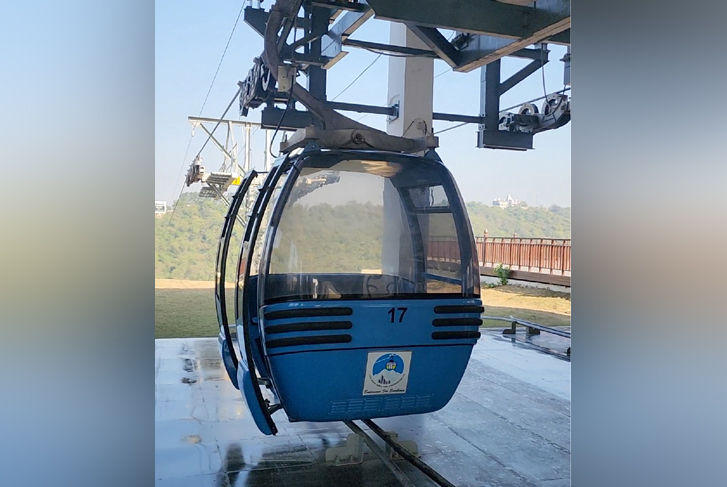
JAMMU, Jan 30: Conceived as a landmark step to give a push to the tourism sector in the region, the Jammu Ropeway has turned into a white elephant, with cabins remaining nearly empty even as lakhs of pilgrims and tourists pass through the winter capital every year, thereby exposing poor promotion and a glaring mismatch between planning and ground realities.
Follow the Daily Excelsior channel on WhatsApp
While the Bahu-Mahamaya section of the Jammu Ropeway was inaugurated by the then Lieutenant Governor of the Union Territory, Girish Chandra Murmu, on July 27, 2020, the 1.18-kilometre-long Peerkho–Mahamaya section was thrown open to the public on July 17, 2021.
It was officially stated at the time of inauguration of the second leg that complete operationalisation of the Jammu Ropeway would give a further boost to the tourism sector in J&K, besides providing a fillip to the socio-economic development of the region by generating direct and indirect livelihood opportunities for locals. Further, it was claimed that the Jammu Ropeway would be a major tourist attraction in the region and would add to the aesthetics of Jammu city.
However, even several years after its complete inauguration, the Jammu Ropeway has failed to achieve the intended objectives, mainly due to poor planning and least promotion by the Tourism Department, official sources told EXCELSIOR.
“Even as the Peerkho-Mahamaya section continues to remain closed in the aftermath of the devastating floods of August-September last year, the operational Bahu-Mahamaya stretch has failed to draw sufficient tourist footfall to even meet its day-to-day expenses”, sources said, disclosing that on an average, less than 100 persons take a ride on the Bahu-Mahamaya stretch per day.
They further said, “With negligible ticket sales on most days, even after slashing of prices by the Jammu and Kashmir Cable Car Corporation, the revenue generated is reportedly far below the operational and maintenance cost, effectively turning the much-hyped project into a financial burden on the exchequer,” adding “the expenditure on keeping the ropeway operational and its maintenance is being met from the profits generated by the Gulmarg Gondola”.
Regarding the Mahamaya-Peerkho section, the sources informed that the Jammu and Kashmir Cable Car Corporation has already projected a requirement of around Rs 5 crore for restoration of damages suffered at the Peerkho Station of the ropeway, but till date, not a single penny has been released by the Government, thereby hampering restoration work.
“On its own, the Cable Car Corporation has started some works, but at present no time-frame can be specified for complete restoration of this section and making it operational”, they further said, adding that even the Roads and Buildings Department has yet to fully restore the road approaching the Peerkho Station, several months after the devastating floods of last year.
The under-utilization of the ropeway has raised serious questions over the Government’s tourism promotion strategy, particularly when Jammu serves as the gateway for lakhs of pilgrims visiting prominent religious destinations, including Raghunath Temple, Ranbireshwar Temple, and those undertaking onward journeys to the cave shrine of Shri Mata Vaishno Devi in the Trikuta hills of Katra.
“Ironically, despite a steady flow of pilgrims and tourists passing through Jammu throughout the year, the ropeway has failed to find a place in standard pilgrimage itineraries or tourism publicity material. There is little on-ground visibility, inadequate signage, minimal digital outreach and no concerted effort to market the ropeway as a must-visit experience offering panoramic views of the Tawi River and surrounding heritage sites,” sources said.
Tourism stakeholders said that without aggressive promotion, integration with Vaishno Devi pilgrimage packages and timely restoration of the damaged section, the ropeway will continue to bleed resources. “Jammu needed a vibrant tourism asset, but what we have today is a white elephant running, but going nowhere”, they added.
 Follow our WhatsApp channel
