

Raman Sharma
jkrtiact@gmail.com
In recent months, Jammu city has witnessed a growing trend that has raised serious concerns about the way traffic laws are being enforced. From repetitive squats as punishment (Uthak Bethak) by traffic police authorities to foul language and even slapping, such practices are not uncommon in Jammu nowadays.
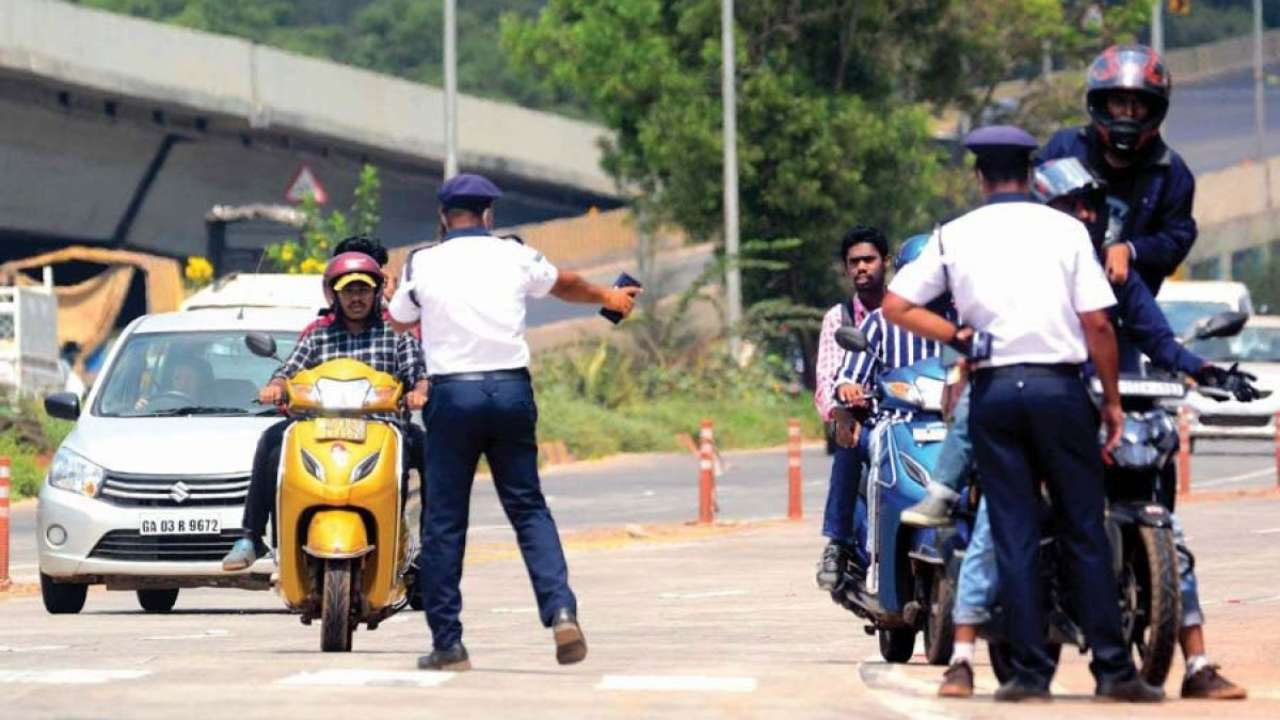
At several chowks and naka points in Jammu City, traffic police officers, often accompanied by a group of self-styled media persons, are stopping motorists to check for traffic violations. While ensuring road safety and adherence to the Motor Vehicles Act, 1988 is undoubtedly a lawful duty of the traffic authorities, the concern is the manner in which these checks are being conducted, which is increasingly becoming a matter of public debate.
Section 132 of the Motor Vehicles Act empowers police officers in uniform to require a driver to stop and produce their driving licence or other necessary documents. Further, Section 206 authorises temporary seizure of the licence under certain circumstances. However, these powers are not unfettered. They must be exercised with fairness, respect for citizens’ dignity, and within the bounds of the law.
Unfortunately, the current practice at some nakas in Jammu city reflects a worrying departure from this standard. Instead of maintaining professional decorum, some uniformed officers engage in public scolding and humiliation of motorists. Videos of these confrontations, recorded by unofficial “media” persons present at the scene, are circulated on social media, amplifying the embarrassment for the individual concerned. Even if a person has allegedly violated a petty traffic rule, they retain the constitutional right to dignity that forms part of Article 21, as interpreted by the Supreme Court in different judgments. This right extends to protecting individuals from unnecessary public shaming, particularly when the matter can be handled through lawful challaning procedures.
Section 180(2) of the Bharatiya Nagarik Suraksha Sanhita (BNSS), 2023 also recognises the right of a person to remain silent and not make statements that may incriminate them. Even the accused in heinous crimes are not to be paraded or subjected to public humiliation. The Supreme Court in D.K. Basu vs State of West Bengal (1997) laid down clear guidelines for the treatment of those in custody, emphasising the need to preserve human dignity. While traffic violations generally do not result in arrest, the underlying principle remains: law must be enforced without degrading the individual.
The involvement of so-called media channels, especially social media operators at these naka points, raises an additional legal concern. The presence of such individuals, who are neither recognised journalists nor authorised by law to be part of enforcement activities, compromises both the dignity of the citizen and the credibility of the police. There is no provision under the Motor Vehicles Act or the Police Rules that permits random individuals to record and publicise enforcement proceedings. If genuine media coverage is needed, it should be done through proper channels, ensuring that personal details of alleged violators are not disclosed without consent. These people claiming as media persons are in fact member of the fan club of traffic police officers .
The Jammu and Kashmir Police, at the Headquarter, Zonal and Traffic Police levels, already have dedicated Public Relations sections. These official channels can and should be used to create public awareness about traffic rules and other legal provisions. However, instead of relying on these structured modes, some traffic police officers are inviting members of their personal fan clubs, masquerading as so-called journalists, to naka points. Such practices serve more as publicity stunts than genuine enforcement or awareness drives.
The total number of human deaths during the last 4-5 years, attributed to road accidents in Jammu and Kashmir, reveals the competence of traffic authorities in managing the roads. Another serious issue is the selective deployment of traffic nakas. Many residents have observed that while prominent naka points in certain high-visibility areas are manned, often attracting media attention, other critical junctions suffer from complete neglect. As a result, major stretches of the city experience chaotic traffic jams, especially during peak hours, with no officers in sight. This selective enforcement undermines the very purpose of traffic regulation, which should be to ensure smooth movement and safety across the city, not just at a few showcase locations.
Citizens, too, must be aware of their rights under the Motor Vehicles Act. They have the right to ask for identification of the officer stopping them. They have the right to receive a copy of the challan specifying the section under which they are being booked. If their documents are seized, they must be informed in writing of the reasons. They cannot be compelled to make self-incriminating statements.
The police and traffic authorities must be sensitised to the fact that enforcing the law and preserving public respect are not mutually exclusive. Professionalism demands that while discipline is maintained on the roads, enforcement is carried out in a manner that is firm but polite, lawful yet dignified. The aim should be corrective action, not public spectacle. Internal guidelines should prohibit unauthorised individuals from participating in enforcement drives, and officers should be trained in handling violations without verbal aggression or humiliation.
Jammu city, like any other civilised society, needs effective traffic management. The traffic police should focus on high-congestion areas, deploy personnel strategically, and use technology such as CCTV monitoring and e-challans to detect and penalise violations without unnecessary confrontation.
Law and dignity must go hand in hand. A road user who breaks a rule should be penalised according to law, but their fundamental rights should not be trampled in the process. The uniform must command respect through discipline and fairness, not fear and humiliation.
 Follow our WhatsApp channel
