

Taresh Gupta
tareshgupta042@gmail.com
As Jammu and Kashmir enters the year 2026, the region stands at a decisive stage in its journey of development and stability. The years gone by have been marked by change-administrative restructuring, policy reforms, and renewed focus on governance and economic growth. There has been visible progress in certain areas, yet several long-standing issues continue to affect daily life, economic confidence, and social well-being.
The future of Jammu and Kashmir will depend not only on government policies but also on how effectively these policies are implemented on the ground. Development must be judged by outcomes-better jobs, improved services, safer communities, and rising confidence among citizens. It has been seen first hand how financial discipline, transparency, and efficient use of resources can make a real difference. Equally, it has been seen how delays, poor planning, and weak accountability reduce the impact of even well-intended schemes.
From 2026 onwards, Jammu and Kashmir must focus on building peace, strengthening institutions, creating employment, improving social services, and ensuring that every rupee spent delivers value to the public. The following areas deserve serious and sustained attention, to make life of people easy and peaceful.
Peace at Borders
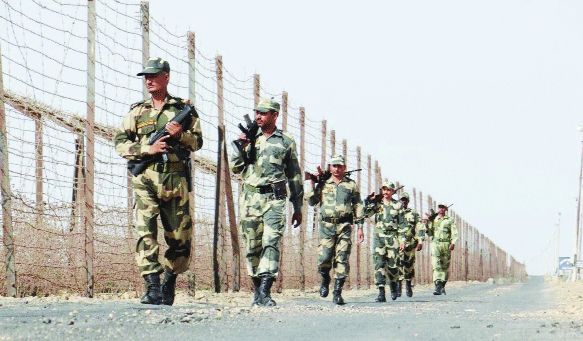 Peace along the borders of Jammu and Kashmir is the foundation for all progress. Without peace, development efforts lose momentum, private investment remains hesitant, and normal life is constantly disturbed. Over the past few years, the border situation has seen relative improvement, but it remains fragile and demands continuous attention.
From 2026 onwards, border security must rely on a mix of strong defense preparedness and human-centered development. Modern technology such as surveillance systems, drones, and better communication networks should continue to be used to monitor border areas effectively. Coordination between different security agencies must remain strong to respond quickly to any threat.
At the same time, people living in border villages must not feel neglected. They need proper housing, schools, healthcare facilities, roads, and employment opportunities. Development in border areas builds confidence and reduces migration. The public sector must continue funding border infrastructure and rehabilitation schemes, while the private sector can contribute through small industries, renewable energy projects, dairy and agriculture-based enterprises. Peace at borders is not only about security-it is also about stability, dignity, and opportunity for those who live there.
Law and Order Situation
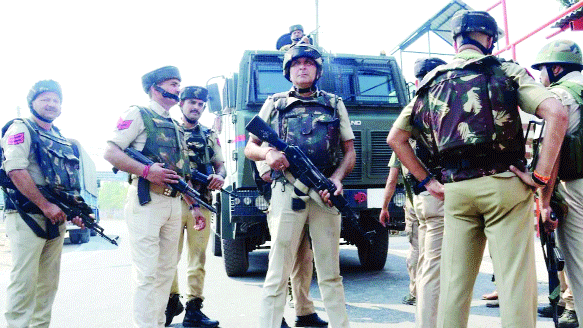 A stable law and order situation is essential for a healthy society and a functioning economy. While large-scale disturbances have reduced, challenges such as drug-related crimes, cybercrime, financial fraud, thefts and occasional public unrest continue to pose concerns.
From 2026 onwards, policing must become more professional, technology-driven, and people-friendly. Police personnel need regular training in cybercrime investigation, financial crimes, and crowd management. Digital tools such as online complaint systems, crime data analysis, and CCTV networks can improve efficiency and transparency.
Community policing should be encouraged so that citizens see the police as partners rather than as a distant authority. Trust between law enforcement agencies and the public helps prevent crime before it happens. The government must ensure adequate funding, manpower, and legal support, while private technology firms can assist by providing digital solutions and training. A strong law and order system creates confidence among citizens, tourists, and investors alike. A sense of peace and security must prevail among citizens.
Healthcare
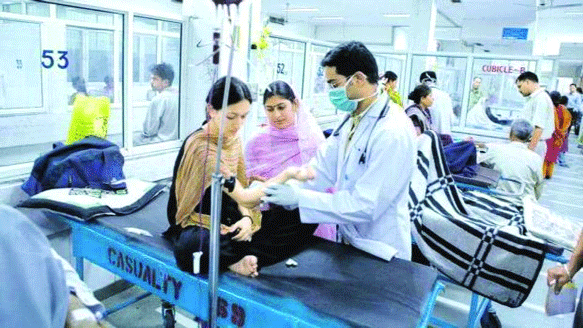 Healthcare is one of the most important areas affecting the quality of life of citizens. Jammu and Kashmir has seen expansion in healthcare infrastructure, including new medical colleges and hospitals. Despite this, people rush to outside UT States for better healthcare which comes at a great cost. However, challenges remain in accessibility, quality, and affordability, especially in rural and remote regions. Rural areas should be prioritized in coming year.
From 2026 onwards, the focus must shift from only building hospitals to strengthening healthcare delivery. Primary health centres need sufficient doctors, nurses, medicines, and diagnostic facilities. Many health issues can be treated at the primary level if services are reliable and timely.
Telemedicine should be expanded further so that patients in distant areas can consult specialists without long travel. Preventive healthcare must be given priority through regular health camps, vaccination drives, nutrition programs, and mental health support. Early detection reduces long-term costs and suffering.
The public sector must continue investing in hospitals, medical education, and health insurance schemes. The private sector can play a supportive role by setting up affordable hospitals, diagnostic centres, and specialty clinics, particularly under public-private partnership models. Transparency in billing, ethical medical practices, and financial discipline are essential to build trust in the healthcare system.
Education
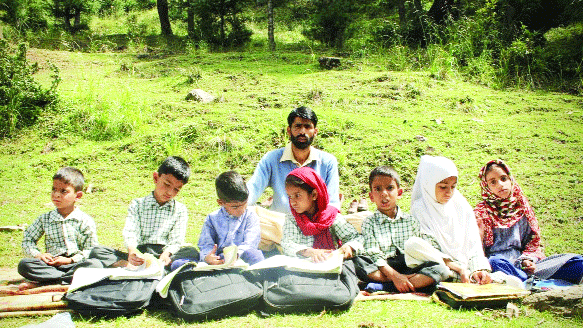 Education is the strongest pillar for long-term development and social stability. While enrolment levels in schools have improved, the quality of education remains uneven across regions. Many schools lack proper infrastructure, trained teachers, and digital access particularly in rural areas. The rural areas must be given adequate attention.
From 2026 onwards, education reforms must focus on quality, relevance, and inclusiveness. Schools need better classrooms, libraries, laboratories, and internet connectivity. Teachers must receive regular training to keep pace with modern teaching methods and technology.
The curriculum should go beyond textbooks and exams. Students must learn practical skills, financial literacy, digital awareness, communication skills, and basic entrepreneurship. Vocational education should be integrated at the school level so that students have multiple career options.
Higher education institutions should strengthen ties with industry to ensure that courses match job market needs. Internships, apprenticeships, and industry projects should become common. The government must invest in policy reforms and monitoring, while the private sector can support through skill development centres, scholarships, educational technology platforms, and mentoring programs. Education should prepare young people not only to pass exams, but to succeed in life.
Industry and Employment
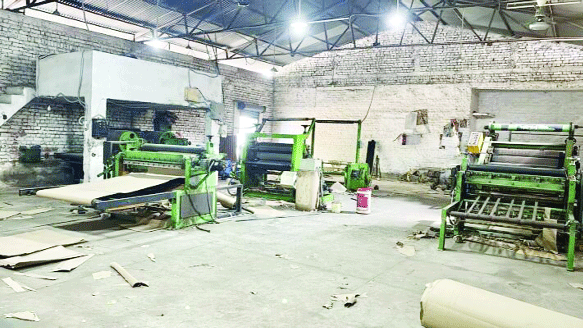 Unemployment, especially among the youth, remains one of the biggest challenges in Jammu and Kashmir. Many educated young people struggle to find suitable jobs, leading to frustration and migration outside the region.
From 2026 onwards, industrial development must be aligned with local strengths. Sectors such as agriculture processing, food packaging, handicrafts, handloom, horticulture, renewable energy, tourism services, and small manufacturing offer strong potential. Industrial estates must be fully equipped with reliable power supply, water, roads, and digital connectivity.
The government should simplify procedures, provide stable policies, and ensure time-bound approvals. Incentives should be linked to actual job creation and local employment. The private sector must invest responsibly and focus on long-term growth rather than short-term gains.
Skill development programs must be closely linked with industry needs so that local youth are trained for available jobs. Employment generation should not be seen only as a social obligation, but as a key driver of economic stability and peace. The Central Government be approached for financial packages and tax exemptions to boost industrial development in the UT.
Businesses
Small and medium businesses form the backbone of the local economy. Traders, shopkeepers, transporters, contractors, and service providers support thousands of families. However, many local businesses face challenges such as lack of affordable finance, complex regulations, and limited access to larger markets.
From 2026 onwards, the business environment must become simpler and more supportive. Access to bank credit should be improved, especially for small entrepreneurs and start-ups. Digital payments, e-commerce platforms, and online marketing can help local businesses expand beyond regional boundaries.
Compliance with taxation and regulatory requirements should be made easier through guidance and digital systems. Professionals such as Chartered Accountants can play a key role in helping businesses with accounting, GST compliance, financial planning, and transparency.
The Government must reduce unnecessary red tape and ensure policy stability. A strong and confident local business community leads to self-reliance, job creation, and steady economic growth.
Infrastructure Development
Infrastructure development is the backbone of economic growth and social progress. Roads, power supply, water systems, internet connectivity, housing, and urban facilities all require sustained investment.
From 2026 onwards, infrastructure projects must focus on quality, durability, and timely completion. Rural connectivity should be improved so that villages are linked to markets, schools, and healthcare facilities. Urban planning must address issues such as traffic congestion, waste management, and affordable housing.
Public funds must be used carefully, with strict monitoring and accountability. Private investment should be encouraged through transparent contracts and public-private partnership models. Strong infrastructure supports all other sectors-industry, tourism, education, healthcare, and agriculture.
Filip to Tourism sector
Pilgrimage tourism is one of the greatest strengths of Jammu and Kashmir. Religious destinations such as Vaishno Devi, Amarnath, and other sacred sites attract millions of pilgrims every year, generating income and employment for local communities. Jammu region which has remained neglected so far should be given importance. There are many spots, when developed, can be favourite tourist destinations in coming times. Besides, tourism related development projects should be executed well in time.
From 2026 onwards, pilgrimage tourism must be managed in a more organized and sustainable manner. Facilities such as accommodation, sanitation, transport, medical aid, and crowd management need continuous improvement. Safety and environmental protection must remain top priorities.
The Government should invest in infrastructure and clear regulations, while the private sector can develop hotels, guest houses, transport services, and local handicraft markets. Local youth should be trained as guides, service providers, and hospitality staff. Well-managed pilgrimage tourism not only boosts revenue but also strengthens the region’s cultural and social fabric.
Drugs Menace
 Drug abuse has emerged as a serious social problem in Jammu and Kashmir, particularly affecting the youth. It damages health, families, productivity, and public safety.
The solution requires a balanced approach combining prevention, treatment, and enforcement. Awareness programs in schools, colleges, and communities are essential to educate young people about the dangers of drug abuse. Rehabilitation centres must be accessible, affordable, and professionally managed.
Law enforcement agencies need better coordination and intelligence to break drug supply networks. The government, healthcare providers, educational institutions, and civil society must work together with compassion and determination to address this issue.
Proper Utilization and Management of Funds
All development efforts depend on how well financial resources are managed. Even large budgets fail to deliver results if funds are misused, delayed, or poorly monitored.
From 2026 onwards, there must be strong focus on financial discipline, transparency, and outcome-based spending. Technology can be used to track projects, monitor progress, and ensure timely completion. Audits and reviews should focus not only on compliance, but also on performance.
The private sector must also follow ethical financial practices. Chartered Accountants and other professionals have an important role in auditing, compliance, advisory services, and financial planning. Proper utilization of funds can significantly improve outcomes across all sectors.
Conclusion
The journey of Jammu and Kashmir from 2026 onwards will depend on peace, good governance, and partnership between the public and private sectors. Development must be practical, transparent, and focused on people’s real needs.
With careful planning, honest implementation, responsible financial management, and collective effort, Jammu and Kashmir can move towards lasting stability, economic growth, and social harmony. The challenges are serious, but with commitment and cooperation, a brighter future is well within reach.
(The author is a Chartered Accountant in Practice, presently working in Jammu.)
 Follow our WhatsApp channel
