

Bharti Sharma
bhartisharma705139@gmail.com
As a student and a resident of Jammu, I feel a deep connection with my city, its culture, and its traditions. For me, Jammu is not just a place to live, but a place full of faith, peace and beautiful temples. It is proudly known as the “City of Temples” and this name truly suits it.
Jammu is famous for having many temples. Almost every area has a temple—some are small and simple, while others are very well-known. These temples are not just places of worship, but also an important part of our culture and daily life. Many people start their day with prayers and visiting temples is a common habit here. This strong faith is one of the main reasons why Jammu is called the City of Temples.
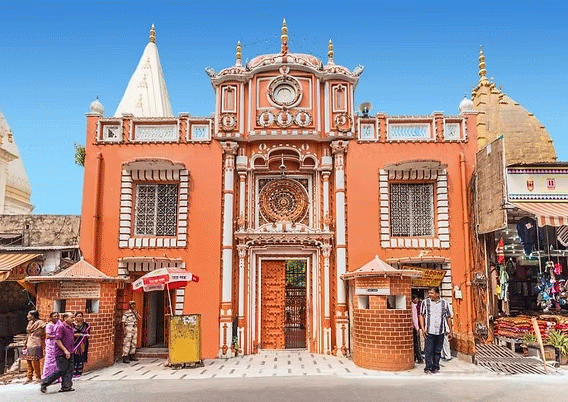
One of the most famous temples is the Raghunath Temple. It is dedicated to Lord Rama and is one of the largest temple complexes in North India. The temple is known for its beautiful design and peaceful environment. Every day, many devotees come here to pray and seek blessings. It also has great historical and cultural importance.
Another important temple is the Ranbireshwar Temple, dedicated to Lord Shiva. It is famous for its large Shivling, one of the biggest in the region. There are also many smaller crystal Shivlings inside the temple. During Mahashivratri, the temple becomes very crowded and full of devotion.
A very special place in Jammu is the Peer Kho Cave Temple. It is an ancient cave temple dedicated to Lord Shiva. It is believed that Jamwant from the Ramayana meditated here. The cave gives a calm and peaceful feeling, making it a perfect place for people who want some quiet time.
The Bahu Fort Temple, also known as Bawe Wali Mata Temple, is another important religious place. It is dedicated to Goddess mahaKali and is located inside the historic Bahu Fort. Along with its religious importance, it also offers a beautiful view of the city and the Tawi River, which is very important for the people of Jammu.
Jammu is also closely connected to the Vaishno Devi Temple. It acts as the main gateway for this holy journey. Many pilgrims stay in Jammu before going to Katra, which makes the city an important center for religious tourism.
Another reason why Jammu is called the City of Temples is its peaceful and devotional environment. You can hear the sound of temple bells, bhajans and prayers throughout the day. What makes Jammu even more special is the unity among people. Along with temples, places like the Peer Budhan Ali Shah Dargah show that people of different religions live together with respect and harmony.
Festivals are also a big part of life in Jammu. During Navratri and Diwali, the whole city becomes lively and colorful. Temples are decorated beautifully and the streets are filled with happiness. These festivals bring people together and show the true spirit of the city.
Jammu truly deserves to be called the “City of Temples.” The large number of temples, strong faith of the people and peaceful environment make it a very special place. As a student from Jammu, I feel proud of my city. It teaches me the importance of faith, tradition and unity. Jammu is not just a city—it is a feeling that stays in the heart of everyone who visits it.
About the Author:
This article is written by Bharti Sharma, a student of Mass Communication & New Media at Central University of Jammu.
 Follow our WhatsApp channel
