

Suhail Bhat
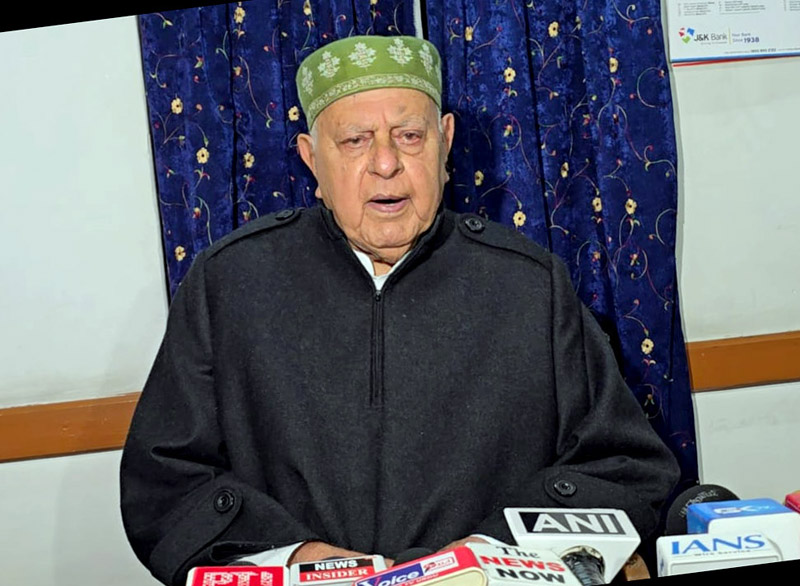
Srinagar, Apr 8: National Conference president and former Chief Minister, Dr Farooq Abdullah, today welcomed the ceasefire between the United States and Iran, saying that war is not a solution and warned that a prolonged conflict could have pushed the world towards a deeper global crisis.
Click here to watch video
Speaking to reporters here, the National Conference chief said dialogue remained the only viable path to peace, “war is not the solution to anything”.
“I would like to thank God that he gave courage to both countries to sit on a table and solve their problems. Because without talks, there is no way,” he said.
Abdullah said that the war had already affected people far beyond the region. He warned that further escalation could have triggered a global crisis, particularly due to the strategic importance of Middle Eastern energy supplies.
“The whole world has been affected by this war. If it increases further, then the problems of the world will increase so much that only God knows what will happen. Because the energy source is the most important thing for the world,” he said.
He said that people from Jammu and Kashmir are employed in Gulf countries and support families through remittances. “Many of our families work in these areas and send money home. Today, everyone’s lives have been affected,” he added, expressing concern over livelihoods disrupted by instability in the region.
Abdullah said that multiple proposals from both sides would now be subject to negotiation, expressing hope that talks would ultimately lead to lasting peace. “We do not want war. It was necessary for them to sit at the table and solve this problem,” he said.
He declined to credit any single country for mediation efforts, instead attributing the breakthrough to “God’s mercy,” while noting that global powers, including China and Russia, are increasingly influential in shaping international outcomes.
Turning to India’s foreign policy, he emphasised the importance of maintaining balanced relations and pursuing diplomacy over confrontation. “If India wants to progress, we have to extend the hand of friendship with every country. We can move forward with friendship. We will move back with enmity,” he said, adding that the same principle applied to relations with Pakistan.
Abdullah also warned of the economic consequences had the conflict escalated further, pointing to rising oil prices, potential fuel shortages, and increasing costs of essential goods.
He said that durability of ceasefire would depend on the success of upcoming negotiations. “I cannot say what will happen next, but if talks are successful, there will be no reason for war,” he said.
 Follow our WhatsApp channel
