

DUBAI, Mar 24: Iranian missiles and drones targeted Israel and Gulf Arab states Tuesday, even as US President Donald Trump said the US was in talks with the Islamic Republic to end the war.
Trump also delayed a deadline for Iran to open the strategic Strait of Hormuz for shipping or see its power stations targeted by airstrikes, briefly driving down oil prices and boosting stocks.
The delay offered a reprieve after the US and Iran traded threats over the weekend of strikes that could have cut electricity to millions in Iran and around the Gulf and knocked out desalination plants that provide many desert nations with drinking water, while raising fears of possible catastrophe if nuclear plants were hit.
But any information on the talks described by Trump remain in dispute with Iran, which denied any talks had been held.
“No negotiations have been held with the US,” Iranian parliament Speaker Mohammad Bagher Qalibaf posted on X, adding that “fakenews is used to manipulate the financial and oil markets.”
Israeli Prime Minister Benjamin Netanyahu also said Israel will continue to strike Iran and Lebanon even as the US considers a ceasefire.
“There’s more to come,” he said.
Iran hits Israel and Gulf neighbours, while Israel attacks Beirut
—————————————————————————
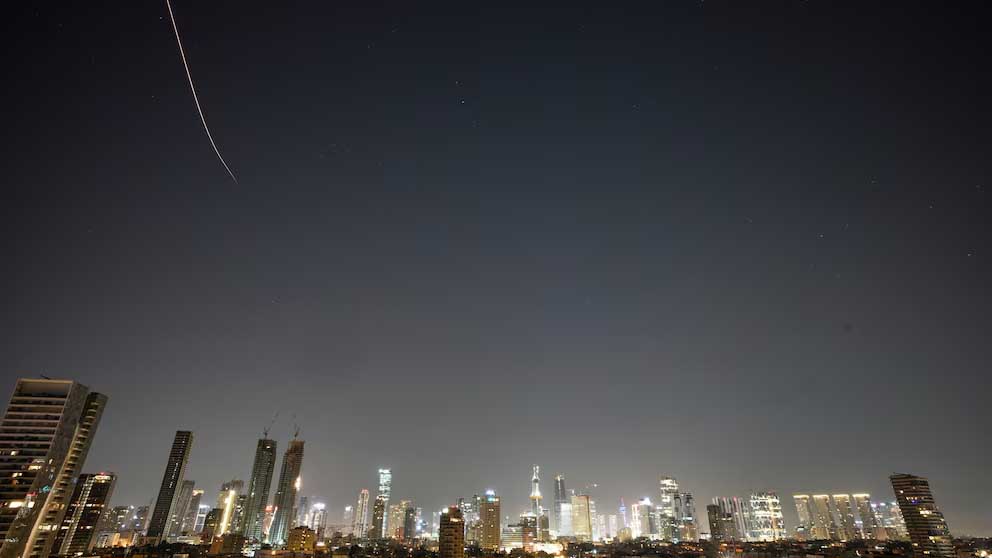
Iran fired three waves of missiles at Israel early Tuesday, with reports of an impact in the country’s north, the Israeli Home Front Command said.
Israel, meantime, pounded Beirut’s southern suburbs saying that it was targeting infrastructure used by the Iran-linked Hezbollah militant group.
In Kuwait, power lines were hit from air defence shrapnel, causing partial electricity outages in several hours. Missile alert sirens sounded in Bahrain, and Saudi Arabia’s Defence Ministry said it had destroyed 19 Iranian drones targeting its oil-rich Eastern Province.
Oil prices briefly fell below USD 100 a barrel after Trump claimed his government was in talks to end the war. But that respite was short lived, with the price of Brent crude, the international standard, back to USD 104 a barrel in morning trading, up more than 40 per cent since Israel and the US started the war on February 28.
Iran sceptical of Trump’s motives in deadline extension
————————————————————–
Trump initially set a deadline of late Monday, Washington time, for Iran to reopen the Strait of Hormuz or face attacks on its power plants, but on Monday he gave Tehran five more days to comply.
Iran has allowed a small number of ships through the strait, which leads from the Persian Gulf to the open ocean, but has said it will continue to target vessels linked to the US, Israel or its allies.
Its leaders are wary of Washington’s motives, in part because Tehran was in negotiations with the US before the surprise attack that started the war. Iran had also been in talks last year when the US and Israel attacked its nuclear facilities, starting a 12-day war.
Trump’s extension of the deadline comes as a contingent of thousands of Marines is on the way to the area, raising speculation that the US may try to seize Kharg Island, which is off of Iran’s coast and vital to the country’s oil network.
The US bombed the island in the Persian Gulf more than a week ago, hitting its defences but saying it had left oil infrastructure intact.
Iran has threatened if the US appears to be on the verge of landing troops it could mine the Persian Gulf, which would complicate an amphibious assault and also imperil all shipping in the area.
The delay could be timed to coincide with the arrival of US Marines in the region, expected Friday, wrote the New York-based think tank the Soufan Centre in an analysis.
“As Trump has in the past, he could be moving military assets into place, in this case to prepare for an invasion and seizure of Kharg Island, while using negotiations as a cover until those assets are fully combat-ready.”
However, the centre also noted that “Trump could be actively seeking an offramp. Whether Iran reciprocates is yet to be seen.”
Trump has said he has no plans to send ground forces into Iran but has not ruled it out. Israel has suggested its ground forces could take part in the war.
Iran’s death toll has surpassed 1,500, its Health Ministry has said. In Israel, 15 people have been killed by Iranian strikes. At least 13 US military members have been killed, along with more than a dozen civilians in the occupied West Bank and Gulf Arab states. (AP)
 Follow our WhatsApp channel
