

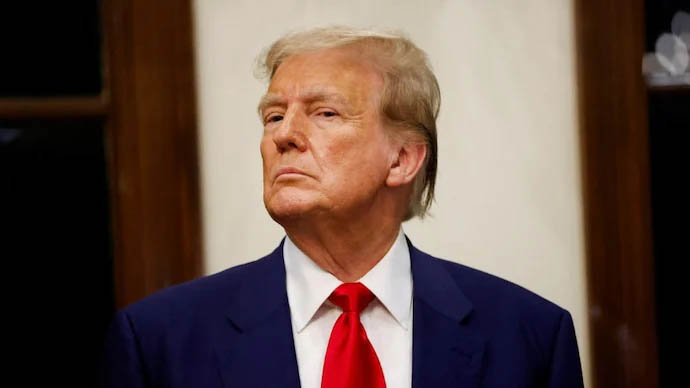
TEHRAN, May 25 : US President Donald Trump’s now aborted move to rename the Persian Gulf as the ‘Arabian Gulf’ or ‘Gulf of Arabia’ stirred sharp condemnation from Iranian officials, who saw it as a politically charged attack on Iran’s national identity and historical legacy.
The suggestion reportedly emerged ahead of Trump’s visit to Saudi Arabia, Qatar and the United Arab Emirates. Although never formalised, the plan drew immediate backlash from Tehran. Nasser Seraj, Deputy for International Affairs at Iran’s Interior Ministry, labelled the idea “a violation of the cultural rights of nations” and “an assault on the Iranian people’s historical identity.”
Foreign Minister Abbas Araghchi dismissed the proposed name change as “politically motivated and hostile,” warning that altering the centuries-old nomenclature would only incite widespread anger. “Any short-sighted step will have no legal or geographical validity,” Araghchi posted on X, “but it will certainly provoke the wrath of Iranians everywhere,” reports RFI.
The body of water – bordered by Iran on one side and several Arab states including Iraq, Saudi Arabia, and the UAE on the other – has long been at the centre of a naming dispute. While Arab nations sometimes refer to it as the Arabian Gulf, the term “Persian Gulf” remains internationally recognised, including by the United Nations and most global institutions.
Exiled Iranian Crown Prince Reza Pahlavi, who is currently residing in the US weighed in on the issue, calling the idea “an affront to the people of Iran and our great civilisation.”
Eventually, Trump reportedly dropped the proposal. According to CNN, US officials said the decision was abandoned amid concerns it could escalate tensions with Iran. The retreat came as Iranian officials made clear they would formally protest any attempt to rewrite what they see as an established historical fact.
The Persian Gulf naming dispute already remains a symbolic flashpoint in a region fraught with tension, as Iran has been heavily on odds against its Arabian counterparts regarding the nomenclature. The episode also served as a reminder of how semantics, too, can become a battleground of international politics. (UNI)
 Follow our WhatsApp channel
