

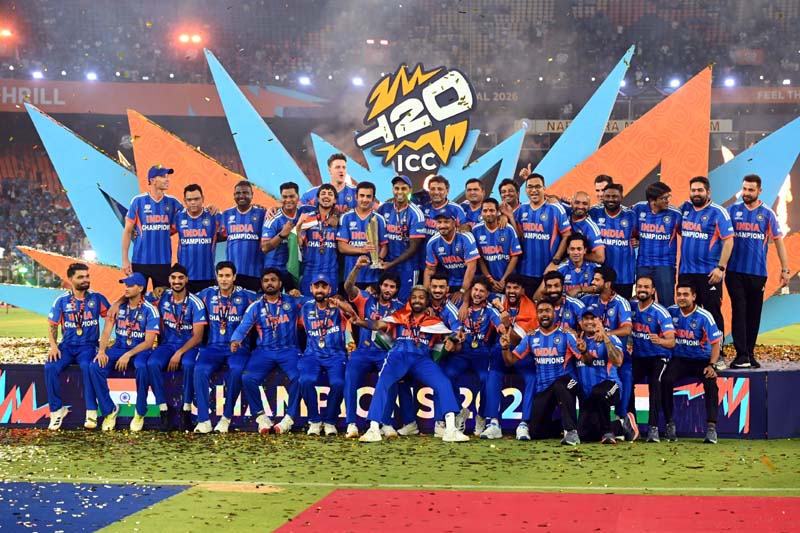
India’s emphatic triumph in the 2026 ICC Men’s T20 World Cup is a defining moment in the evolution of modern Indian cricket. By clinching their third T20 World Cup title and, remarkably, becoming the first team in history to win back-to-back championships, the Indian cricket team has reaffirmed its position as the undisputed powerhouse of the shortest format. The comprehensive 96-run victory over New Zealand in the final at Ahmedabad was a statement of dominance, depth, and belief. For a nation where cricket is next only to faith, this achievement resonates far beyond the boundary ropes. Indian cricket today shines like a polar star-steady and radiant in both sunshine and moonlight-symbolising consistency, resilience, and excellence.
A significant share of credit for this remarkable transformation must go to the leadership of Jay Shah and his administrative team. Over the past decade, the Indian cricket administration has focused not only on financial strength but also on infrastructure development, grassroots talent identification, and professional management. The IPL has been the cornerstone of this transformation. More than a tournament, the IPL has evolved into a global talent incubator where young cricketers are exposed to international standards of competition, pressure situations, and high-performance environments. The league has provided a platform for uncapped and relatively unknown players to rub shoulders with the world’s best, learning from them while showcasing their own skills. The current Indian T20 squad is perhaps the finest example of the IPL’s success story. Players like Abhishek Sharma, Sanju Samson, Rinku Singh, Arshdeep Singh, Ishan Kishan, Axar Patel, and Jasprit Bumrah are all products of this vibrant cricketing ecosystem. Each of them has honed his craft through years of high-intensity IPL competition. Today, they represent a generation of cricketers who are fearless, technically sound, and mentally prepared for the biggest stages.
What makes the 2026 World Cup triumph even more remarkable is the fact that India achieved it without several stalwarts who were part of the victorious 2024 squad. The absence of experienced names such as Rohit Sharma, Virat Kohli, Mohammed Shami, and Ravindra Jadeja could have weakened any team. Instead, it opened the door for a new generation of cricketers to rise and claim their moment. This generational transition was not without challenges. During the group stage of the tournament, India suffered a significant defeat at the hands of South Africa. The loss not only dented confidence but also placed the team under pressure due to concerns over net run rate. In a short tournament like the T20 World Cup, even a single defeat can threaten qualification prospects. The early exit of traditional giants like Australia and Pakistan’s inconsistent performances during the tournament serve as reminders that sporting supremacy is never permanent.
However, the setback proved to be a blessing in disguise. The defeat served as an early wake-up call, forcing the team management to reassess strategies and strengthen the players’ resolve. Coach Gautam Gambhir and the support staff resisted the temptation to make sweeping changes. Instead, they demonstrated faith in the players who had been selected after careful deliberation. That decision proved decisive. The players responded with remarkable determination, displaying the character that defines champions.
Perhaps no story in this World Cup is more inspiring than that of Sanju Samson. For years, Samson’s immense talent had often been overshadowed by inconsistency and intense scrutiny from fans and critics alike. At one stage during the tournament, his place in the side appeared uncertain. Yet when the team needed him the most, Samson rose to the occasion spectacularly. His explosive performances in the last three matches, including a breathtaking innings in the final, turned him into the standout performer of the tournament and silenced his detractors. Abhishek Sharma’s journey mirrored a similar narrative. After struggling through much of the tournament, he produced a scintillating performance in the final when it mattered the most. His fearless strokeplay during the powerplay set the tone for India’s mammoth total and effectively put the match beyond New Zealand’s reach. Another bold call by the team management was to persist with Varun Nair despite fluctuating performances. Such decisions underline the importance of trust in team-building. Ishan Kishan’s return to the national setup also became one of the highlights of the tournament. Having been sidelined for nearly two years, Kishan justified his selection with consistent performances at the top of the order.
Yet this World Cup triumph was never about individual brilliance alone. It was a classic example of collective effort and team synergy. Axar Patel’s sharp fielding and match-turning catches, Tilak Verma’s stability in the middle order, Shivam Dubey’s late-innings acceleration, Hardik Pandya’s all-round contributions, and Arshdeep Singh’s disciplined bowling all played vital roles in India’s campaign. Jasprit Bumrah, however, remained the spearhead of the bowling attack. His extraordinary figures in the final once again demonstrated why he is regarded as one of the greatest fast bowlers in modern cricket. Bumrah’s ability to deliver pinpoint yorkers under pressure has become almost legendary.
The final against New Zealand showcased India’s dominance in its purest form. Despite New Zealand’s impressive semifinal victory over South Africa, the Kiwis were simply overwhelmed by India’s relentless intensity. The Indian top order-Samson, Abhishek, and Kishan-virtually decided the contest within the first ten overs. Shivam Dubey’s powerful finishing touches ensured that the target became insurmountable.
Interestingly, India’s journey to the title was not flawless. The team recorded the highest number of dropped catches during the tournament, including two in the final itself. Yet what truly distinguishes champions is the ability to overcome imperfections and rise when it matters most. The victory also shattered the long-standing jinx associated with the Ahmedabad venue for Indian cricket. Another defining feature of this Indian side is its exceptional team bonding. The unity among the players was visible throughout the tournament.
Indian cricket today possesses an extraordinary depth of talent. It is often said that India now has the talent pool to field three competitive international teams simultaneously. Young cricketers from every corner of the country-including emerging regions like Jammu and Kashmir-are knocking on the doors of the national team. With the BCCI investing heavily in infrastructure, coaching systems, and grassroots development, the future of Indian cricket appears secure and even more promising.
As celebrations begin across the nation, with prize money announcements and victory parades expected in the coming days, the pride of over a billion cricket-loving Indians is palpable. Yet the cricketing carnival is far from over. In just a few days, the IPL season will begin again, bringing with it another wave of excitement, opportunity, and discovery. For India, cricket never truly pauses-it simply evolves.
 Follow our WhatsApp channel
