

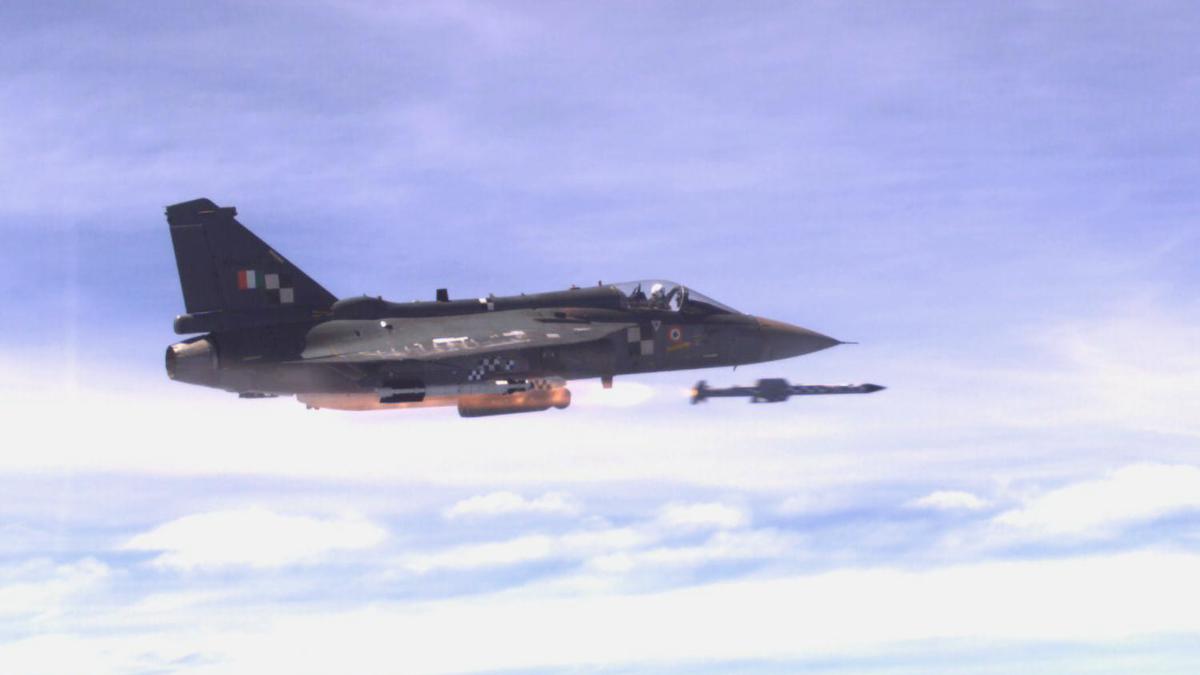
India’s successful test firing of the indigenous beyond visual range air-to-air missile ‘Astra’ marks another milestone in the country’s march towards self-reliance in defence technology. Launched from a Su-30 Mk-I fighter jet off the coast of Odisha, Astra showcased its remarkable precision and operational effectiveness by striking unmanned aerial targets with pinpoint accuracy. While the feat in itself is commendable from a technological standpoint, it signifies something much larger: India’s steady transformation into a nation capable of developing cutting-edge strategic weapons despite longstanding global restrictions and technological barriers. For decades, Indian defence research has operated under the weight of embargoes, trade restrictions, and the denial of critical technologies such as advanced guidance systems, supercomputers, and dual-use components. These challenges, rather than deterring progress, galvanised India’s scientific community to push the boundaries of innovation and indigenisation. The development of Astra with an indigenous radio frequency seeker is a shining example of this unwavering commitment.
In the modern age of warfare, air superiority has become the defining element of military strategy. Conflicts are no longer confined to ground offensives alone; instead, the emphasis has shifted toward neutralising the enemy’s ability to strike even before their weapons are deployed. This necessitates an arsenal of advanced air-to-air, surface-to-air, and anti-missile systems capable of dominating the aerial battlefield. Astra, with its range exceeding 100 km, fills a critical void in India’s aerial combat capabilities by giving the Indian Air Force the edge to engage enemy aircraft long before they pose a direct threat.
India’s progress in the missile domain has been notable. From the development of the world-class supersonic BrahMos cruise missile to the successful deployment of a broad spectrum of missile systems-surface-to-surface (Agni series), surface-to-air (Akash), air-to-surface, and even marine-to-surface-India has built a robust missile ecosystem. The Astra project enhances this portfolio by adding an invisible, precision-guided, long-range air-to-air strike capability, vital for both deterrence and operational readiness. Astra is particularly significant because it is now entirely homegrown, including its seeker technology-a critical and highly sensitive component. The Indigenous radio frequency seeker, developed by DRDO and tested flawlessly during the recent trials, underscores India’s maturing technological base and confidence in its research institutions. More than 50 public and private sector companies, including Hindustan Aeronautics Limited, played a part in this development, reflecting a new collaborative spirit in the Indian defence industry.
The synergy between political will, strategic foresight, and scientific brilliance cannot be overlooked. Initiatives like “Make in India” and the strengthening of defence industrial corridors have created an enabling environment for indigenous innovation. The Defence Minister’s public commendation of DRDO, the IAF, and industry partners not only celebrates this success but also reinforces the message that India is committed to reducing its dependence on foreign arms. The role of Indian scientists in this journey has been nothing short of extraordinary. Despite working with limited budgets and facing severe international curbs, they have produced technologies that rival or surpass global standards. The recently deployed anti-missile and drone interception systems during Operation Sindoor are a testament to India’s ability to protect its airspace and installations with indigenous systems.
As India sets its sights on developing even more lethal, precise, and long-range weaponry, the success of Astra is both a validation and a springboard. It is a statement to the world that India is no longer a mere importer of arms but an emerging hub of high-end defence technology. Astra is not just a missile-it is a symbol of India’s scientific resolve, strategic foresight, and national pride. It demonstrates what can be achieved when scientists, defence personnel, and policymakers work in unison towards a common vision. As global conflicts grow more complex and technologically intense, India’s continued investment in indigenous systems will be crucial not just for self-defence but also for asserting its role as a responsible and self-reliant global power. India is deeply committed to upholding the rule of law and is making relentless efforts, round the clock, to strengthen national security in today’s complex and evolving threat landscape.
 Follow our WhatsApp channel
