

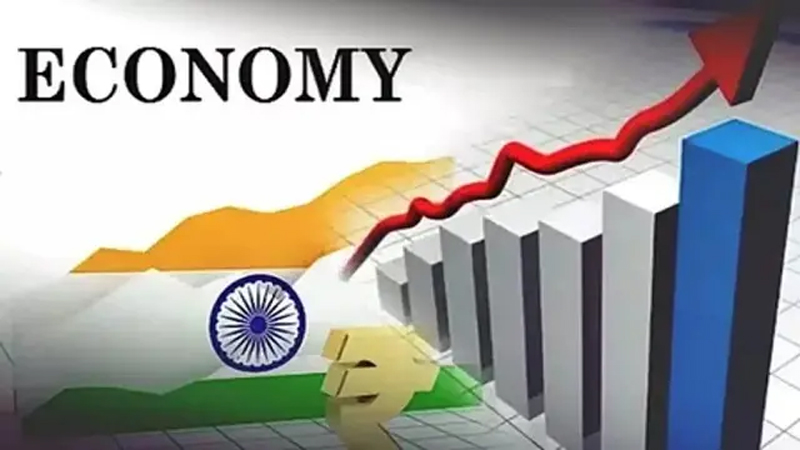
India’s economic journey over the past decade has been transformative. From being one of the so-called “fragile five” economies in the early 2010s, India has now emerged as the fourth-largest economy in the world, overtaking Japan, according to NITI Aayog CEO. With a GDP of approximately USD 4.19 trillion, India is now behind only the United States, China, and Germany. This ascent, while long in the making, has been significantly accelerated under the leadership of Prime Minister Narendra Modi, who has implemented a series of economic reforms and policy interventions that have redefined India’s global economic standing.
Over the last decade, a combination of structural reforms, infrastructure investments, and targeted welfare schemes have provided a robust foundation for sustained growth. One of the most impactful reforms was the implementation of the Goods and Services Tax in 2017, which unified the country into a single market and enhanced tax compliance. Demonetisation in 2016, although controversial, accelerated the push toward a digital economy, which has now become a cornerstone of India’s financial inclusion strategy. The Insolvency and Bankruptcy Code introduced in 2016 also marked a significant shift in how bad debts were handled, bringing much-needed discipline to the corporate borrowing ecosystem. In addition, the Government has launched massive infrastructure programs such as the Bharatmala and Sagarmala projects to improve road and port connectivity. The Make in India initiative aimed to boost manufacturing, while Startup India and Digital India have empowered entrepreneurs and digitized governance. The Production-Linked Incentive schemes across sectors such as electronics, pharmaceuticals, and renewable energy have been instrumental in attracting foreign investment and boosting exports.
These reforms have not only improved macroeconomic indicators but also had a significant socio-economic impact. India’s per capita income has doubled according to IMF projections. Millions have been lifted from poverty, and the middle class has expanded, driving private consumption, especially in rural areas. The formalization of the economy through platforms like Jan Dhan Yojana, Aadhaar, and UPI has also led to improved efficiency in welfare delivery. India is now seen as a reliable global partner in manufacturing and technology, especially as global supply chains diversify away from China. The IMF’s World Economic Outlook highlights India as a relatively stable growth engine, projecting a 6.2 percent GDP growth rate in 2025 – significantly above the global average of 2.8 percent. International investors are increasingly confident in India’s trajectory, as reflected in robust FDI inflows and rising stock market capitalization.
Despite this impressive trajectory, challenges remain. The unemployment rate, especially among the youth, is a growing concern. India also faces regional disparities, with certain states lagging behind in development metrics. Another pressing issue is the need for skilling and reskilling its massive workforce to align with the demands of an evolving digital and AI-driven economy. Moreover, climate change, urban congestion, and resource sustainability pose structural threats to long-term growth. Internationally, geopolitical tensions – including trade wars, instability in the Middle East, and supply chain disruptions – could impact India’s export-led sectors. Additionally, global monetary tightening and inflationary pressures could lead to capital outflows and exchange rate volatility.
The NITI Aayog’s “Viksit Bharat @2047” vision outlines an ambitious path to become a USD 30 trillion economy by India’s centenary of independence. This also includes achieving the status of a high-income country, with a per capita income exceeding USD 14,000. To meet these targets, the Government is focusing on six key building blocks: macroeconomic goals, empowered citizens, sustainable economic development, technological leadership, global diplomacy, and robust governance. Achieving these will require deep policy coordination, continued private sector participation, and efficient public service delivery.
India’s elevation to the fourth-largest economy in the world is a testament to the decade of decisive governance and policy innovation under Prime Minister Modi. The journey from USD 4 trillion to USD 30 trillion will be arduous, but with the right mix of vision, execution, and inclusivity, India is well-positioned to take its place among the world’s leading developed nations by 2047.
 Follow our WhatsApp channel
