

Prof Raj Shree Dhar
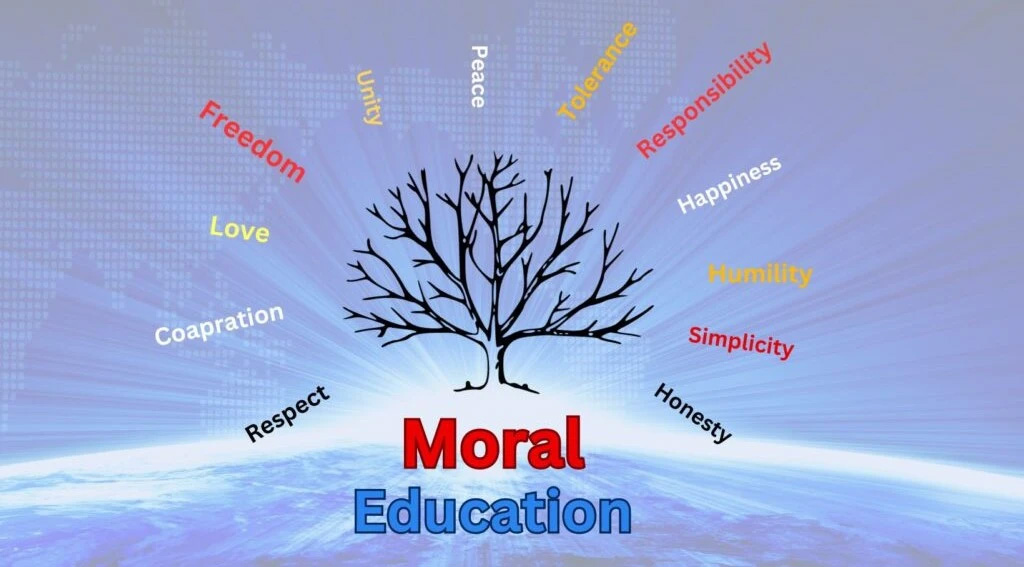
Moral education is important in the world for several key reasons, all of which contribute to the well-being of individuals, communities, and societies at large. It helps individuals understand the values of empathy, respect, fairness, and justice. By learning these principles, people are more likely to cooperate, resolve conflicts peacefully, and work together for common goals. A society where individuals adhere to moral norms (such as honesty, integrity, and respect for others) is more likely to be stable and harmonious. Understanding moral principles allows individuals to better relate to others’ experiences and perspectives. Moral education encourages togetherness, which is critical for building compassionate relationships and reducing discrimination. People who are morally educated tend to care more about the welfare of others, promoting humanitarian behaviors such as helping those in need.
In a globalized world with increasingly diverse populations, moral education promotes respect for human rights and cultural diversity. Understanding that all people deserve dignity and respect regardless of their background, nationality, or beliefs is crucial for fostering peaceful international relations and creating inclusive societies. It helps individuals appreciate the interconnectedness of all people, encouraging tolerance and acceptance of differences. In democratic societies, moral education plays a crucial role in ensuring that citizens understand and value the principles of democracy, such as equality, justice, and the rule of law. Educated citizens are more likely to actively engage in civic life, vote responsibly, and hold their governments accountable. It also helps develop a sense of responsibility toward society, encouraging individuals to participate in social and political processes that contribute to the good socially. Many of the moral issues facing the world today, such as climate change, economic inequality, and global health crises require collective action based on shared moral values. Moral education encourages people to think about the long-term consequences of their actions on the environment, future generations, and global communities.
The connection between ancient Indian education and moral values is deeply inter-twisted, as traditional Indian educational systems were not only focused on academic knowledge but also emphasized the development of character, virtue, and the cultivation of ethical conduct. Education in ancient India was holistic, aiming to shape the whole person, body, mind, and spirit.
The Vedas, which form the foundation of ancient Indian knowledge, were not just religious texts but comprehensive guides for living ethically and responsibly. They laid the groundwork for the understanding of Dharma (righteousness or moral order), which was central to all aspects of life. Education in ancient India was closely tied to Dharma, which included not just ritual practices but also ethical principles of right action, truth, and social responsibility. Students were taught to follow the principles of non-violence, truthfulness, non-stealing, and Brahmacharya (self-control). The study of the Vedas, Upanishads, and other scriptures often involved moral reflection, where students were taught to contemplate their duties to family, society, and the universe.
In ancient India, the Gurukul system was the primary mode of education, where students lived with a guru (teacher) and were taught not just knowledge but also values and ethical principles. The relationship between the guru and the students was often seen as sacred, based on mutual respect and devotion. The guru-shishya (teacher-student) relationship emphasized the transmission of moral values, such as honesty, integrity, gratitude, and humility. Students learned to treat their teacher with reverence and were expected to embody the virtues taught by the guru in their daily lives. The Gurukul system placed a strong emphasis on the development of personal character. It taught students to act responsibly, to serve their community, and to practice self-discipline and ethical conduct in every aspect of life.
The Mahabharata and Ramayana, two of the most important epics in ancient India, played a significant role in moral education. These epics are filled with stories that impart moral lessons about duty, righteousness, selflessness, sacrifice, and the consequences of actions. For instance, the Bhagavad Gita, part of the Mahabharata, is a dialogue between Arjuna and Lord Krishna, where Arjuna is taught about the nature of duty, the importance of selfless action, and how to act in accordance with righteousness even in the face of personal dilemmas. The Gita serves as a profound text on moral philosophy and ethical decision-making. Similarly, in the Ramayana, Lord Rama’s life serves as an ideal of moral behavior from his commitment to truth and justice to his unwavering adherence to dharma, even at great personal cost. For example, Yoga philosophy, which focuses on spiritual discipline, self-control, and mental purity, teaches moral values such as Ahimsa, Satya, and Asteya as foundational principles in the Yamas and Niyamas (ethical guidelines for life). These principles encouraged individuals to live ethically, be compassionate toward others, and cultivate a disciplined life. The Vedanta philosophy, particularly the teachings of Shankaracharya, emphasized the realization of the Self (Atman) as one with the Supreme Reality (Brahman), leading to a life of detachment, moral conduct, and service to other. The Upanishads, the philosophical texts that follow the Vedas, delve deeply into the nature of existence and the relationship between the individual soul (Atman) and the universal soul (Brahman). They also emphasize the importance of moral purification and self-discipline in attaining spiritual enlightenment. The Upanishads encourage introspection and self-awareness, promoting the cultivation of virtues like contentment, non-attachment, and truthfulness as essential for spiritual growth and ethical living.
In ancient Indian education, the concept of Samskara (moral conditioning or spiritual rites) was integral. Samskaras were rites of passage or rituals designed to imbue individuals with moral values and ethical behavior at key stages in their life. These rituals were believed to purify the mind and body, ensuring that individuals grow into morally responsible and spiritually aware members of society. They helped reinforce the values of respect, discipline, responsibility, and empathy. Ancient Indian culture used stories, fables, and parables to impart moral lessons. For instance, the Panchatantra-a collection of animal fables-was specifically designed to teach wisdom and moral behavior to young minds. Each story in the Panchtantra revolves around ethical dilemmas, illustrating the consequences of good and bad actions. These stories are often used to teach virtues like honesty, courage, loyalty, and prudence, providing young learners with practical examples of how to navigate moral challenges in everyday life.
In ancient India, education was seen not just as a means for personal advancement but as a way of preparing individuals to serve society and uphold moral duties. The concept of Lokasamgraha (the well-being of the world) and Seva (service) was emphasized, encouraging students to think beyond their own interests and contribute to the welfare of others. Moral education in this context was linked to the idea that personal spiritual progress could not be achieved without fulfilling one’s social duties and contributing to the greater good. In ancient India, education was not just about acquiring knowledge; it was deeply rooted in the cultivation of moral values, ethical principles, and spiritual wisdom. Whether through the study of sacred texts, philosophical teachings, the Gurukul system, or stories and parables, ancient Indian education sought to develop individuals who were not only wise but also virtuous, compassionate, and responsible members of society.
(The author is Dean, Engg. and Computer Technology & Students Welfare, Cluster University of Jammu)
 Follow our WhatsApp channel
