

Excelsior Correspondent
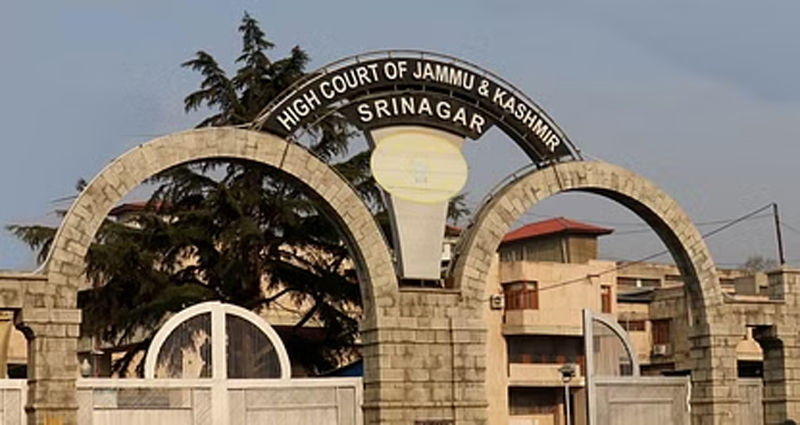
SRINAGAR, July 31: The Division Bench of the High Court has set aside the writ court judgment for holding the employees of Institute of Management, Public Administration and Rural Development (IMPARD) for entitlement of University Grants Commission (UGC) pay scale.
Follow the Daily Excelsior channel on WhatsApp
The Division Bench of Justice Sanjeev Kumar and Justice Sanjay Parihar concluded that the judgment passed by the Single Bench is not sustainable in law and set aside the same.
The bench said the employees of IMPA and its faculty members are governed by IMPA regulations and pay scale of other Government employees would also apply to them including faculty members.
“Although at one point of time, the IMPA management had mulled to provide different mechanisms for the faculty members and had also taken up the matter with the Finance Department. However, before any deliberation could take place, these IMPA employees approached this Court and challenged the interim pay revision order issued in respect of faculty members”, the DB said.
When the writ petition was filed by these employees it was contested by the IMPA by way of a specific plea that the J&K IMPA Regulations were applicable to all the employees including the faculty members.
“Therefore, in the absence of any challenge to the faculty regulations, the prayer of the respondent-employees for giving benefits of UGC Regulations and their revision from time to time as per UGC Scheme of pay scale was wholly unsustainable”, the court added.
The court by allowing the appeal of Government against the writ court judgment made it clear that the IMPA management is at liberty to take a decision for framing a different set of pay rules for its faculty members as was contemplated in the year 1999.
The pay revision it is noted, for the State Government employees was affected in terms of SRO 18 dated 19.01.1998 and the same was adopted and made applicable by IMPA to its employees excluding faculty posts of Professor, Associate Professor and Assistant Professor, but, no final decision with regard to the revision of the pay scales of faculty members was taken.
However, on account of interim pay revision adopted by IMPA, the faculty members were given the corresponding revised pay scale of the State Government. Before any final decision with regard to pay revision of faculty members of IMPA could be taken, they approached the court for quashing the interim pay revision Order No. 356 of 1999 dated 28.10.1999.
The said Government order was assailed primarily on the ground that the employees of IMPA having been appointed in the UGC pay scale were entitled to a revised pay scale prescribed by UGC and not the corresponding pay scale of the State Government. The plea was accepted by the Writ Court and in terms of the judgment impugned, the writ petition filed by the respondents was allowed holding the respondents entitled to revised UGC pay scale.
However, the Government aggrieved of the said decision by the writ court assailed the judgment on the ground that the Writ Court has not appreciated the fact that the employees of IMPA were governed by the IMPA Service Regulations of 1992, whereby the UGC Grade prescribed earlier for the faculty positions were deleted.
The counsel representing the Government submitted that the employees of IMPA including its faculty members are governed by the IMPA Regulations, 1992 and not by UGC pay regulations for faculty members and it is also not disputed that the IMPA has not so far taken any policy decision to implement the UGC pay scales and their corresponding revisions from time to time.
 Follow our WhatsApp channel
