

Excelsior Correspondent
SRINAGAR, June 10:The Indian Institute of Management (IIM) Jammu today inaugurated the Capacity Building Program (Batch-4) for Finance and Planning & Monitoring Department officials of the Government of Jammu and Kashmir.
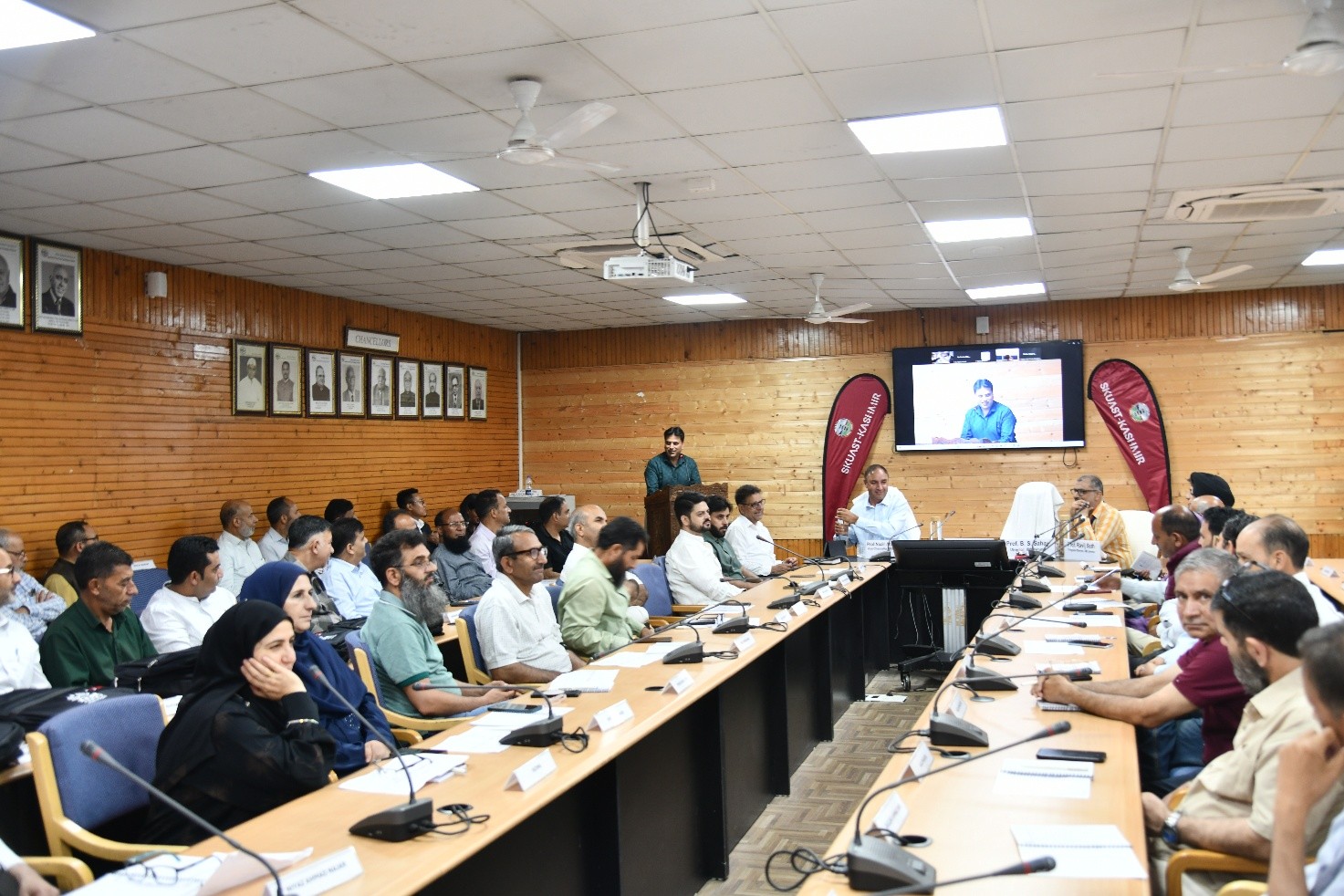
The inaugural ceremony took place at SKUAST Kashmir, Srinagar. This program is conducted under the aegis of the Centre for Innovation and Transformation in Governance (CITaG).
Talat Parvez Rohella, Secretary, Planning Development and Monitoring Department, Government of J&K, and Madan Gopal Sharma, Director, Planning, J&K (attending virtually) presided over the inaugural ceremony. The event was graced by the presence of Prof Nazir Ahmad Ganai, Vice Chancellor, SKUAST-Kashmir.
Also present on the occasion were Dr Sanjay Pathak, Chairperson, Executive Education & Consultancy, IIM Jammu (joining virtually), along with Program Directors Prof Ravij Seth, Dr Guangpuanang Kahmei, and Dr Garima Maurya. Dr Kapil Gumte and Dr Chinmaya Kumar Swain are also serving as Program Directors for the training program under CITaG.
In his address, Talat Parvez Rohella highlighted the role of CITaG in driving the Government’s vision of a developed Jammu and Kashmir through data-driven decision-making, AI integration, and innovative governance practices. He noted that the training equips officials with advanced IT tools, governance models, and real-world case studies, aimed at strengthening institutional capacity. He also underlined the value of leveraging IIM Jammu’s academic excellence and mentorship in executing the CITaG project to build a robust, transformative governance ecosystem in the region.
Prof Nazir Ahmad Ganai emphasized the need for Jammu and Kashmir to transition from a primarily agrarian economy to a diversified, innovation-driven one. He underscored the importance of moving from primary to secondary agriculture to boost per capita income.
Madan Gopal Sharma urged the participants to attend all sessions, actively engage, and contribute innovative ideas—especially in areas such as PPP models, revenue generation, and emerging technologies like AI and machine learning.
Prof Sanjay Pathak emphasized the significance of the three-day learning experience. Prof Ravij Seth outlining the program’s objectives, structure, and expected outcomes. Dr Garima Maurya expressed optimism about the enriching insights and meaningful discussions that would unfold throughout the sessions.
 Follow our WhatsApp channel
