

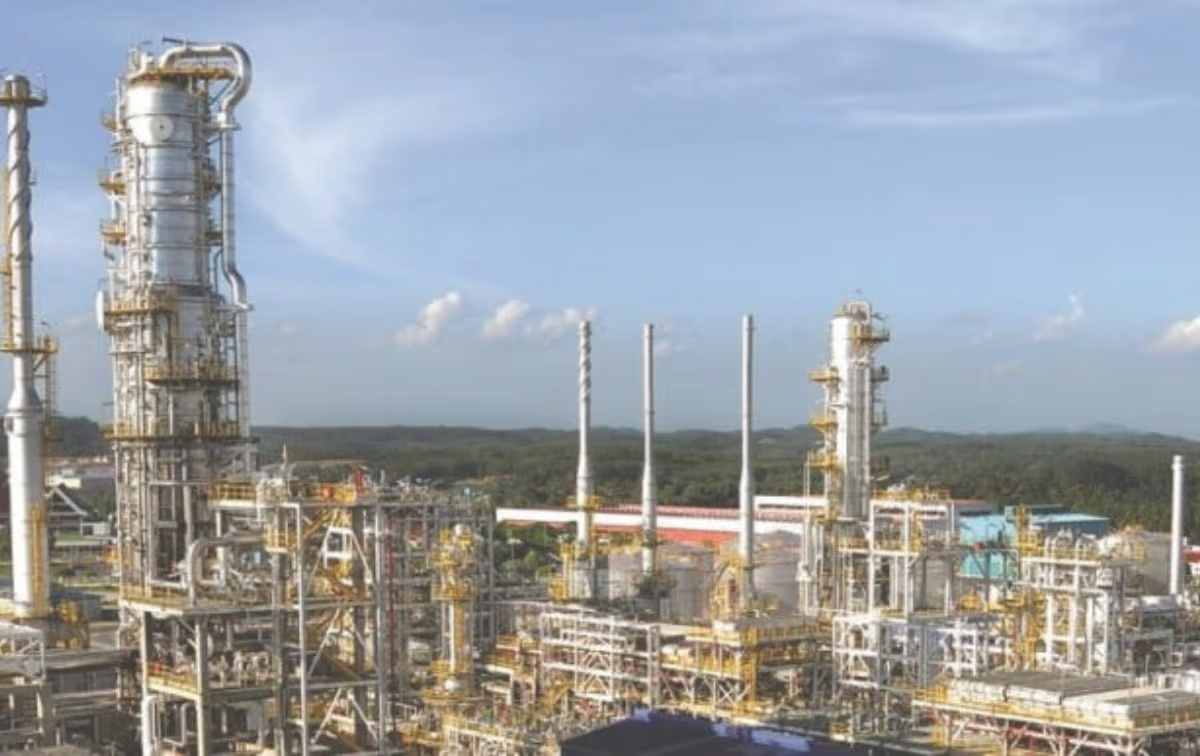
NEW DELHI, Jan 5: Hindustan Petroleum Corporation Ltd (HPCL) has commissioned a residue upgradation facility (RUF) at its Visakhapatnam refinery, significantly enhancing the plant’s deep-conversion capability, distillate output and profitability, the company said on Monday.
The 3.55 million tonnes-per-year facility includes India’s first residue hydrocracking unit and the world’s first LC-Max unit, capable of converting about 93 per cent of low-value bottom-of-the-barrel oils into high-value petroleum products.
The project marks a major step in upgrading India’s refining complexity and reducing dependence on imported fuels.
HPCL in a statement said the new unit will raise distillate yields at the Visakh refinery by up to 10 per cent from pre-modernisation levels, and substantially improve gross refining margins by enabling the processing of heavier and opportunity crudes and delivering a superior product slate.
The commissioning follows the Visakh Refinery Modernisation Project and lifts the refinery’s Nelson Complexity Index to 11.6, placing it among India’s most advanced deep-conversion refineries, the company said.
“Visakh Refinery will now have the capability of enhancing its distillate yield by up to 10 per cent (from pre-VRMP [Visakh Refinery Modernization Project] levels). The Gross Refining Margins (GRMs) of the Visakh Refinery are set to increase substantially on account of superior product slate, flexibility to process many heavier or opportunity crudes, and higher value realisation per barrel,” the statement said.
This significant increase in middle-distillate output helps HPCL to reduce the gap between its HSD marketing and refining volumes, lowers dependence on external sourcing, strengthens the supply chain, and drives higher profitability through improved product realisation and margin capture.
The facility features three LC-Max reactors, each weighing about 2,200 tonnes, among the heaviest globally. Several critical equipment components were manufactured domestically, aligning with the government’s Aatmanirbhar Bharat self-reliance initiative.
HPCL said improved heat integration and process efficiency have reduced the refinery’s energy intensity, lowering operating costs and supporting sustainability goals.
Alongside the physical commissioning, HPCL has deployed a digital optimisation suite for the LC-Max unit, integrating real-time monitoring, predictive analytics and AI-driven optimisation to improve operational stability, yields and on-stream performance.
The company said the higher middle-distillate output will help narrow the gap between HPCL’s diesel marketing and refining volumes, reduce external sourcing and strengthen supply-chain resilience, supporting higher profitability.
In a separate statement, Engineers India Ld (EIL) said the commissioning of the Residue Upgradation Facility (RUF) at Visakhapatnam refinery, featuring the world’s first and largest LC-Max unit, marks a major milestone in India’s refining sector and sets a global benchmark for scale and technological complexity.
EIL said it provided comprehensive project management consultancy (PMC) services for the 3.55 million tonnes-per-year facility, implemented as part of the Visakh Refinery Modernisation Project (VRMP). Larsen & Toubro executed the project as the engineering, procurement and construction (EPC) contractor.
The LC-Max-based RUF ranks among the most complex residue-processing facilities commissioned worldwide. Using LC-Max technology at an unprecedented scale, the unit is capable of converting about 93 per cent of bottom-of-the-barrel residues into high-value distillates, significantly enhancing refinery margins and overall refining complexity.
EIL delivered end-to-end project management and engineering services across the project lifecycle, coordinating with HPCL, L&T, licensors, vendors and multiple stakeholders to overcome technological, logistical and execution challenges, the company said. (PTI)
 Follow our WhatsApp channel
