

K B Jandial
kbjandial@gmail.com
The withdrawal of the Letter of Permission to the Shri Mata Vaishno Devi Institute of Medical Excellence (SMVDIME) by the National Medical Commission (NMC) on 6th January may have doused the ‘flames’ of agitation in Jammu, but the smoke it has left behind is choking the very spirit of the constitution and institutional integrity.
On the surface, the NMC’s decision appears to be a clinical exercise in administrative hygiene. A “surprise inspection” revealed substantial deficiencies that warranted immediate withdrawal of the permission granted five months ago. Protecting the interest of the admitted students, it ordered them to be relocated in GMCs of J&K UT. A clean operation! But scratch the surface, and one finds a festering wound of regulatory incompetence and a dangerous precedent bordering communal overtones. This should worry every right-thinking citizen.
Question on NMC’s Credibility: The NMC is India’s apex statutory regulatory body. Its word is supposed to be law, based on rigorous, objective assessment. Yet, in the case of SMVDIME, it has reduced itself to a point of ridicule.
Straight Talk
In September 2025, the NMC’s Medical Assessment and Rating Board (MARB) inspected the Institute and found it “perfect.” They validated the faculty, the bed strength, and the infrastructure as worthy of an “Institute of Excellence.” Based on this, the LoP was granted.
Fast forward a mere five months to January 2026. Purportedly acting on a “complaint,” it conducts a surprise inspection like a ‘raid’ and suddenly discovers “substantial deficiencies” in teaching faculty, Residents, outpatient attendance and bed occupancy.
How did “perfect” facilities become “grossly deficient” in five months? How did a world-class faculty vanish? For a regulatory body to reverse its stand so blatantly within such a short time, suggests that either the initial assessment in September was a favour, or the January inspection was under pressure. This happened when various organisations gradually extending support to Sangharsh Samiti which was gaining momentum.
Strength of Shrine Board: Finding no positive response from the right quarters, the Sangharsh Samiti launched a smear campaign, targeting the Lieutenant Governor, the Shrine Board, and individuals of recognized integrity and professionalism. The Samiti, apparently overlooked the Shrine Board’s laudable record of service to humanity and socio-cultural development that transcends religious boundaries to benefit the entirety of society. The Shrine Board is not merely a statutory temple administrator; it has transformed into a vital engine of development and a custodian of Sanatana traditions. Its initiatives included promoting Vedic learning, Sanatan traditions and local culture and foster spirituality and cultural heritage, renovations of neglected temples, protecting environmental ecosystem of the area, rebuilding, and renovation of half a dozen schools in the area, grant of annual financial assistance to School for Hearing Impaired students and reconstruction of a school building for them at Chaitanya Ashram Jammu etc. The Board’s initiatives have fostered spirituality and human welfare, and to craft a divisive narrative against such an institution is deplorable. To target the Board is to attack the very developmental engine that has sustained Jammu’s infrastructure and heritage for nearly four decades.
A “Victory” for Whom? Politically, the aftermath has been theatrical. The Sangharsh Samiti immediately claimed the closure as a vindication of their agitation. The BJP also hailed the decision. What exactly is being hailed? Is the closure of a proposed premier Medical College a victory for Jammu? Is the disbursement of students, especially Muslim a cause for celebration?
The agitation was rooted in the discontent regarding overwhelming admission of Muslim students . But the “solution”-withdrawing the college’s permission entirely-is akin to burning down a house to kill a rat. Relocating the admitted students, including a reported 47 Muslim students, to other GMCs was a smooth administrative fix. But it effectively validates the exclusionary demands of the agitators. If the closure were truly about deficient infrastructure, why is it projected as a victory?
The Shrine Act and the Secular Fabric: The core of this firestorm is the utilization of Mata’s charawah for non- Hindus as the protesters and some others strongly felt that funds coming from Hindu devotees must benefit Hindus exclusively. This logic is legally flawed and morally corrosive.
Sections 18(6) and 18(7) of the Shrine Act (1988) mandate the Board to provide “General Education” and “Medical Relief.” The “General” implies a universal, non-sectarian service. It does not say that charawah should benefit only Hindus to the exclusion of others.
The Shrine Board has historically worked for the socio-economic development of the entire area , building infrastructure, universities, professional educational institutions etc. that is fostering culture for all. To demand that a medical institute exclude students based on faith is to misunderstand the deity’s ethos and the Board’s statutory framework.
Outside of specific “Minority Educational Institutions,” law and regulatory authorities do not recognize educational institutions that restrict admission to a single community. To demand a “Hindus Only” or ” Muslim only” medical college is to demand an educational apartheid that violates our Constitution and the philosophy of Vasudhaiva Kutumbakam which is associated with such shrines.
The Cost of Disharmony: What has occurred is a deepening of the Hindu-Muslim divide. The agitation sent a message that students from Muslim community are unwelcome in an institution run by the Shrine Board. The response-instead of upholding the rule of law and the logic-was to shut the institution down under a pretext. By shutting the doors under a pretext, a message is sent that clamour can override logic.
A “Medical College of Excellence” has been traded for a “Victory of Division.” The relocated Muslim students will carry with them the repugnant memory of being unwanted and the Hindu students will grow up thinking that segregation is a victory. Remember, the fire in Jammu may be doused, but the embers of communal distrust may glow brighter.
The Roadmap: In the given situation, the Shrine Board essentially has three primary options.
The “Deemed University” Route: This is perhaps the most sustainable long-term option. By becoming a Deemed University under the UGC Act, the institution gains significant autonomy over its admission process. The UGC Regulations 2023 provides a new “Simplified Guidelines” that allow a Cluster of Institutions to apply for Deemed status. To qualify for it, an institution usually needs to offer multiple faculties. Currently, the Shrine Board is already managing Nursing, Paramedical, and Social Sciences (Gurukul). By adding two more facilities like Public Health and Allied Health Sciences, it can apply for Deemed status.
The Deemed Universities typically conduct 100% of their admissions through Central Counselling rather than the State Quota (BOPEE). This automatically creates an All India Character, ensuring that students from across India can compete for seats. A Deemed University status transforms the medical college from a “Regional Institute” into a “National Asset” and will protect the Shrine Board from local political pressure regarding reservations and align the institution with the national spirit of the Shrine.
Minority Status under Article 30: Under Article 30(1) of the Constitution, religious and linguistic minorities have the right to establish and administer educational institutions. Taking the benefit of the landmark judgment of the 11-Judge Constitution Bench of the Supreme Court in T.M.A. Pai Foundation case ( 2002) and locally of Batra Medical College (ASCOMS), the Shrine Board can legally claim the protection of rights of a minority educational institution. The Court held that the unit for determining a minority (religious or linguistic) is the State, meaning thereby that it is in the State jurisdiction, not of Central Govt. This is why Hindus can be a minority in J&K despite being a majority in India. If granted, the college could reserve up to 50% of its seats specifically for Hindu students.
Some critics claim that there is a legal hurdle in declaring SMVDIME Minority Institution as unlike the ASCOMS which was founded by a private religious society (Udasin Society), the SMVDIME was established by the Shrine Board, which is a creation of a State Act (1988). It was in line with the Supreme Court’s judgment in “Azeez Basha” case (1967) which held that if an institution is created by a statute (like AMU), it cannot be a “minority” institution because the Government established it, not the community. However, in a historic 4:3 majority verdict in Aligarh Muslim University v. Naresh Agarwal (2024), a 7-judge Constitution Bench overruled the Azeez Basha judgment ( 1967)and held that an educational institution does not lose its “minority” status, just because it was created by a statute.
All India Quota (AIQ) through NOC: The Board has already attempted this, but was rejected by the NMC. Experts say that it requires a specific administrative “bridge.” They say, the J&K Government would need to issue a NOC, surrendering the State Quota seats in favour of a Central/All-India pool. This would bypass the regional demographic “imbalance” by opening seats to the entire national merit list.
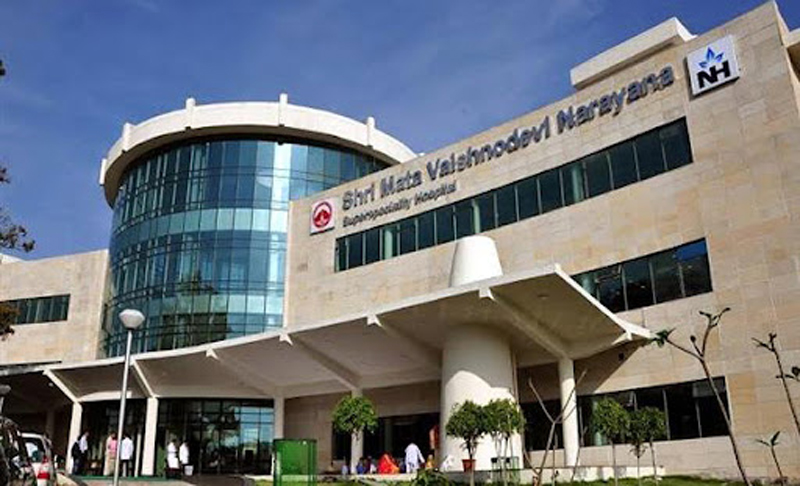
Usage of Infrastructure: As the medical college recognition remains stalled due to the NMC’s recent withdrawal of permission, the infrastructure created with huge funds can considered for creating a Post-Graduate Research Centre for Converting the facility into a high-end research hub or a “DNB” (Diplomate of National Board) centre, which focuses on specialist doctors rather than undergraduate MBBS students. The second option could be expansion of the existing Narayana Superspeciality Hospital into some sort of a regional “AIIMS-like” hub for specialized surgeries (Cardiology, Oncology), fulfilling the “medical relief” mandate of the Act.
 Follow our WhatsApp channel
