

Ms Pallavi Minhas and Dr Rajneesh Chauhan
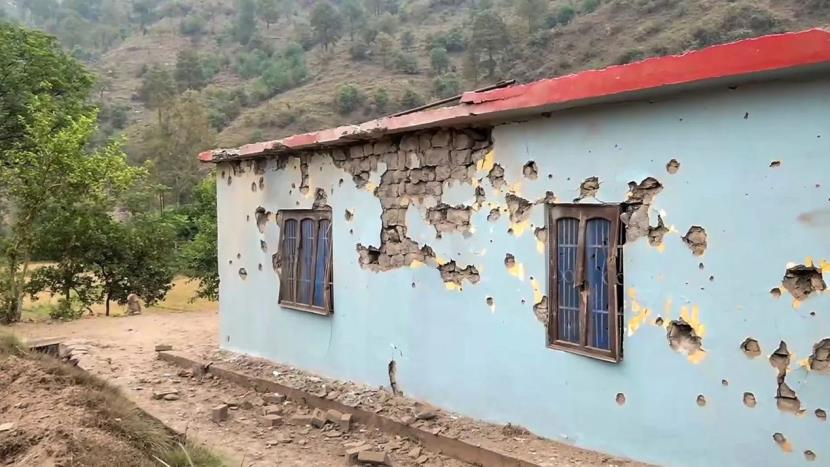
Every night, Rashida from Baramulla, sleeps with her children in the corner of her house, not knowing if the next day will bring school or shelling. This unpredictable existence is not new to her. Across Jammu and Kashmir’s borderlands, thousands of families exist in suspension between routine and disruption, where security is temporary and terror is constant.
In India’s highly securitized environment, the most geographically vulnerable zones, such as Jammu and Kashmir nearest to the country’s protective shield are paradoxically the most exposed. Far from being sanctuaries of security, these zones bear the heaviest burden of military-actions, cross-border animosity, and insurgent attacks. Subject to exceptional legislations such as the Armed Forces (Special Powers) Act (AFSPA), designed to maintain law and order in disturbed areas, security forces presence is ubiquitous but so is civilian vulnerability.
While the state invokes sovereignty and national interest to justify militarization, the reality experienced by the border communities is one of perpetual displacement, interrupted education, forsaken livelihood, and psychological trauma. The irony is poignant: the very citizens that the state purportedly safeguards are frequently left exposed to the cascading effects of both state and non-state violence.
Simultaneously, residents in these areas are actively involved in cooperation with security operations. Some offer localized intelligence to security officials, guide security forces through operations, or host security forces in times of need. Flag-hoisting ceremonies by villagers, especially youth, during national festivities like Independence Day or Republic Day are usual in these areas. In many cases, the decision to stay on in their forefather’s homes despite perpetual danger is a demonstration of strong identity roots.
This type of participation can be considered a kind of patriotism based on mundane activity and not in the form of formal expression. It does not draw on slogans or pageantry but on sustained presence and toughness under uncertain terms. With these citizens, endurance itself is a form of involvement in the national system. Their demands of the state have much to do with fundamental needs like security in school, access to health care (including mental health care), secure public infrastructure, and assistance in case of displacement or war. These are not privilege-driven demands but parity-driven crowd requests for inclusion in planning mechanisms and safeguarding in times of crisis. Their double role as both providers of and beneficiaries from national security measures creates a contradictory scenario. Whereas their presence upholds the territoriality of the state, their daily fragilities question the nature of citizenship and security in the margins.
An appreciation of lived conditions within these areas involves breaking away from seeing border peoples solely in terms of strategic value and understanding their social, emotional, and economic contexts. Their lives provide windows into the cross-cutting of national policy, development, and defense on the ground in ways that are not always anticipated.
Apart from the physical risks of residing in conflict-affected border regions, families throughout Jammu and Kashmir have psychological loads which tend to reach across generations. In numerous homes, children grow up with not just the wail of sirens and the sounds of distant artillery, but also with the inherited psychological load of protracted uncertainty.
This passing on of resilience is crucial but so is its emotional cost. Sustaining existence in the shadow of conflict can produce anxiety, withdrawal, and long-term psychological stress, especially when accessing professional mental health care is limited. Families cope, but individually. In the absence of sufficient psychosocial care, trauma bled quietly from one generation to the next.
And yet, they remain fearful, yes, but also strong. Their emotional restraint, familial unity, and conditioned readiness are manifestations of patriotism as well. They do not merely survive; they nourish the civic virtue that national ideology so frequently extols but so infrequently sustains with meaningful policy.
To actually acknowledge such resilience, symbolic recognition has to be accompanied by structural change-starting with how we plan for civilian protection and learn for peace in areas of long-term conflict. For those living on the edges of war, security cannot just mean troop deployments and ad hoc ceasefires. Civilian-led planning-like the construction of permanent, dignified shelter, regular trauma counseling, and integral peace education in schools-can provide prolonged protection and psychological healing. These steps reaffirm the state’s dedication not only to territorial integrity but to the welfare of its citizens.
Education itself is an especially strong pathway to sustainable peacebuilding. But Jammu and Kashmir still lags behind in terms of access, quality, equity, and inclusion in education. The National Curriculum Framework (2005) conceptualizes education for peace as a cross-cutting value, but the actual experience of children in war zones is still under-addressed in policy and pedagogy.
Instead of shying away from uncomfortable questions, educational environments in Kashmir need to be enabled to encounter them. The intention should not be to exercise one definition of peace but to co-create it by means of critical questioning, experiences lived, and student agency. When young students express what peace means within their own contexts, they not only start a healing process but also participate in the building blocks of democratic thinking.
In this situation, the incorporation of peace education into regional curricula is not a distant ideal it is a tangible requirement. In an environment where kids come of age among bunkers, the schoolroom might be one of the few remaining havens to foster empathy, creativity, and critical thought. Security, therefore, needs to be recontextualized not merely in walls and arms, but in comprehension, articulation, and education that hears.
In areas defined by chronic war, sustainable peace demands a wider definition of security ones that encompass safety, emotional health, and inclusive access to education. Strategies that are civilian-centered, especially those that involve children through trauma treatment and peace education, can establish avenues to healing and resilience. Through complementing conventional strategies with such long-term investments, the state reasserts its dedication to both stability and human development. Thus, education is no longer just a classroom experience it becomes an underpinning for reflective thinking, compassion, and a safer future.
(Ms. Pallavi Minhas is an Assistant Professor of English at Chandigarh University and
Dr. Rajneesh Chauhan is currently working as an Assistant Professor of English at Amity University, Mohali, Punjab.)
 Follow our WhatsApp channel
