

Numbers don’t lie: a single interactive agent can equal the performance of 15 operators, with a total cost estimated at $1,130 monthly. One may wonder how AI is revolutionizing business and the labor market in India. Let’s delve deeper into the matter.
With diverse digital initiatives and robust platforms like Mostbet, progress is around the corner. Learn your trading lessons and unleash potential with specialized tools.
Revolutionizing the Essence of the Employment Sector in India
Artificial intelligence upends one of India’s dominant industries– outsourcing. As enterprises terminate thousands of jobs, Pune startups streamline call centers, and the local government assures civilians that there won’t be any cases of mass unemployment soon.
The question arises here: Is India truly ready to embrace the concept of the “AI factory,” and at what cost?
Undoubtedly, Bharat is on the brink of its largest-scale technological remodeling in a decade: AI is metamorphosing not only the way business is conducted but also the entire structure of the labor market.
In Bengaluru, the hub of the state’s IT industry, startups are implementing AI systems capable of replacing thousands of call center operators, accountants, and data analytics managers. The worldwide market for “conversational AI” leaps forward at 24% annually and, according to Statista, is expected to reach a staggering $41 billion by 2030.
A Wave of Nationwide Layoffs
At present, India’s business outsourcing services sector employs 1.7 million people in call centers, payroll, and data processing. On the other hand, hiring professionals has fallen sharply due to automation, even as demand for AI analysts and coordinators has skyrocketed.
Net job growth has fallen to less than 17,000 per year, compared to the 130,000 projected for 2022–2023. The gradual adoption of interactive agents, which take over most requests, is leading to a wave of layoffs and a market reorientation for next-gen advancements.
Customer service representatives are already facing the aftermath of the AI frenzy. Call center agent Mega S., 32, from Ladakh, who would earn $10,000 a year at a software company, mentioned she was fired immediately after the company added AI sales tracking to the software. Such devastating stories are the next reality, as systems that used to be prompters now handle routine inquiries without any intervention.
What the Future Holds
Promising startups LimeChat and Haptik are breaking the lines by furnishing ventures with extremely cost-effective and potent AI tools that once sounded like a dream. Their ultra-modern bots have robotized 5,000 jobs and handled up to 70% of customer inquiries so far, and within a year, this figure could gain ground up to 95%, according to LimeChat.
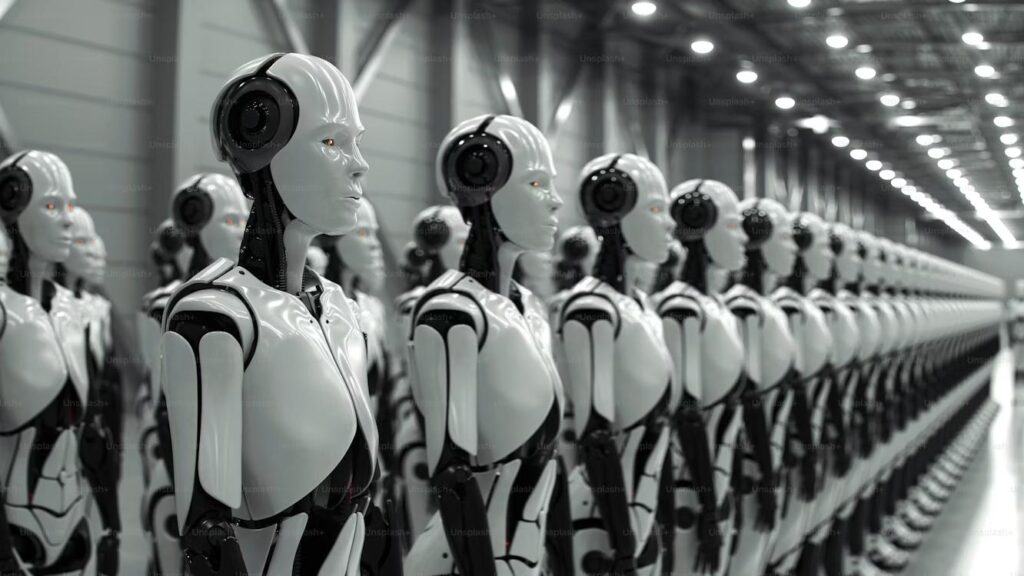
Both companies claim this strategy not only saves cash but also promotes scalability: one bot covers the performance of 15 human operators, costing around $1,130 per month.
LimeChat’s sales sprang up from $79,000 in 2022 to $1.5 million in 2024, according to regulatory filings. In 2025, the company kick-started integrating Microsoft Azure language models and algorithms as an integral part of a partnership to launch a new e-commerce chatbot.
When AI Picks Up the Phone
The outsourcing market of India, which previously supported millions of jobs, is undergoing a 180-degree turn. Due to AI on the rise, Indian call center revenues will be cut in half, while income from other back-office functions is set to fall by 35% within five years, according to Indian investment banks.
This represents a short-term loss for a country that currently holds sway over 52% of the global outsourcing market. Simultaneously, some experts, including Pramod Bagazin, founder of GE Capital’s call center, believe that in the longer term, the country could go from “the world’s back office” to an “AI factory” if it efficiently taps into the demand for automation specialists.
At The Media Ant, an advertising agency, 40% of its staff has already been replaced by AI solutions, involving Neha, a voice assistant who communicates in near-perfect English. She consults with clients, sends sales proposals, and even cracks jokes, making her seem like a real being.
Consumer surveys demonstrate that many still don’t favor chatbots. In a study of 1,000 Indian consumers, 62% said they made purchases based on AI recommendations, compared to 30% globally. But the desire for human interaction remains unbeatable.
Jammu and Kashmir, a region in northern India, has also performed a digital leap into a humanoid future. Currently, about 330 web-based services are accelerating the government framework of AI tech, leveraging robotics for multiple sectors, including healthcare, education, and sustainable tourism.
The Bottom Line
NASSCOM Experts claim that no IT service across India will be left untouched by AI within five years time. However, transformations are painful, and this transformation may be quite chaotic, turning into job losses for a bunch of highly qualified specialists.
 Follow our WhatsApp channel
