

70-yr-old revives eco-friendly transport
Nawshaba Iqbal
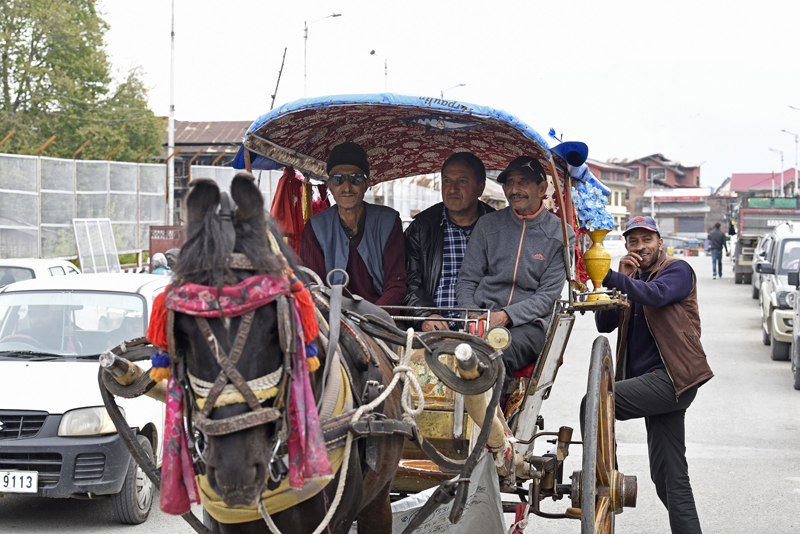
Srinagar, Apr 7: Amid the steady hum of engines and the rush of motor traffic, the clip-clop of hooves has returned to Srinagar, as a traditional mode of transport-the horse-drawn cart, or tanga-reappears on city roads.
Ghulam Rasool Kumar, a septuagenarian, has resumed operating a tanga after several years, attempting to revive a system that once served as a primary means of travel across both urban neighbourhoods and rural belts.
Follow the Daily Excelsior channel on WhatsApp
As his horse trots along the roadside, the wooden wheels creak softly, cutting through the din of honking vehicles and drawing curious glances from passersby.
Kumar, who had earlier spent years operating a tanga from 1967 to 1985, said he was forced to discontinue it due to health issues.
“I operated a tanga for many years but had to stop due to health problems. After that, I worked as a labourer and did other chores to sustain myself,” he said.
The decision to return to the occupation, he said, stemmed from both familiarity and necessity.
“I felt I could not do anything other than this work at this age, so I decided to begin it again,” he added.
Restarting the service came at a considerable cost. Kumar said he invested nearly Rs 3 lakh to arrange the tanga and horse, borrowing small amounts from multiple sources.
The polished harness, the faint smell of hay, and the rhythmic jingle of metal fittings now mark his daily routine as he navigates busy streets.
Recalling the past, Kumar noted that tangas were once part of a regulated system.
“We had licences that were renewed annually. There were checks to ensure that horses were not injured or overloaded,” he said.
Before the widespread adoption of motor vehicles, he said tangas were extensively used for daily commuting, including by Government officials.
Kumar acknowledged that operational costs have increased significantly, but interestingly, he has not fixed fares and instead accepts whatever passengers are willing to pay.
Beyond nostalgia, Kumar believes the service retains contemporary relevance. “If there is a shortage of fuel, people can use this as an alternative. It is also pollution-free,” he said.
The reappearance of the tanga has drawn attention from locals, particularly younger residents unfamiliar with the tradition.
Some pause to watch, others take short rides, while many capture the sight on their phones.
Shakeel Ahmad, a commuter, said the initiative reconnects people with Kashmir’s cultural heritage.
“It is good to see this again. It is part of our culture. The younger generation has not seen this before and will now get to experience it,” he said.
 Follow our WhatsApp channel
