

Col Shiv Choudhary (Retd)
shivchoudhary2@gmail.com
Self-reliance in a geopolitically, militarily and technologically charged era in run up to a secured future is not an isolation; it is the strength to engage the world on your own terms. A war thousands of kilometres away from India can now decide the price of cooking gas in an Indian kitchen, the cost of a farmer’s diesel, or the stability of a young professional’s job. This is the new reality of our world. The rising tensions between Iran, Israel, and the United States are not just another geopolitical episode. Indeed, they are a signal that the world is entering an era where endangering military and devastating technological disruptions will be frequent, fast, and far-reaching. For India, this war and cease of Hormuz, a 21 miles water way is not a distant storm, it is a direct warning. The time to prepare and shape national dominance is not tomorrow, it is now.
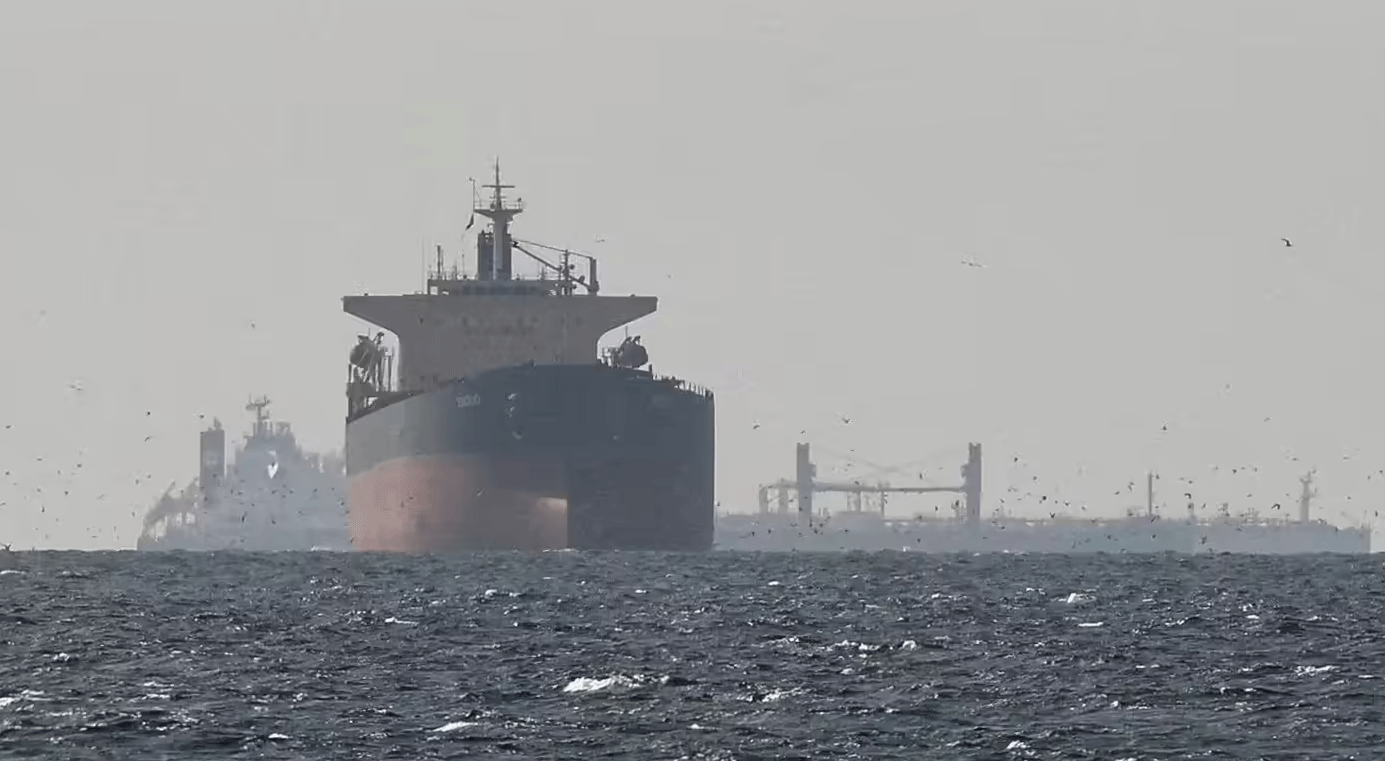
At the heart of this crisis lies the Strait of Hormuz, a 21 miles narrow but powerful gateway through which a major portion of the world’s oil flows. If tensions escalate, even rumours of disruption can send oil prices soaring. Ships may avoid the region, insurance costs may rise, and global supply chains may tighten overnight. In today’s deeply connected world, such shocks travel instantly. What begins as a regional tension quickly becomes a global economic tremor, and India feels the impact almost instantly.
India’s biggest vulnerability in such a situation is its dependence on imported oil. A sudden increase in oil prices directly raises the cost of petrol, diesel, and LPG. This, in turn, makes transport, electricity, farming, and daily goods more expensive. The effect is not abstract, it is visible in higher grocery bills, increased travel costs, and rising electricity charges albeit everything. In the short term, fear can trigger panic buying and hoarding, worsening the situation. In the long term, the country may face slower growth, a weaker rupee, and rising inflation. The harsh truth is that the poor and middle class will get worst hit, as even small price increase can disrupt their daily lives.
The real danger goes far beyond oil. Modern conflicts are no longer limited to borders, battlefields, manmade obstacles or physical occupation of territory. They are fought by targeting the systems that keep nations running. Undersea data cables, which carry most of the world’s internet and communication, are silent but critical lifelines. If these are damaged or disrupted, banking systems, digital payments, government services, data flow, movement and communication networks can slow down or even stop. For a country like India, where digital platforms power everything from small payments to national governance, such disruption can create widespread chaos.
Cyber warfare adds another invisible but powerful threat. Today, nations can attack each other without firing a single bullet through hacking, data theft, and system disruption. Power grids, airports, banking systems, and communication networks are all potential targets. India’s rapid digital growth is a strength, but it also increases risk if security is not strong enough. The battlefield has expanded into cyberspace, where attacks are silent, sudden, and difficult to trace.
Economic systems are equally sensitive. During global uncertainty, investors often move money to safer markets, causing capital outflow from countries like India. This weakens the rupee, increases borrowing costs, and creates instability in stock markets. At the same time, global sanctions or payment disruptions can affect trade, slowing down imports and exports. Businesses face uncertainty, and economic momentum weakens.
The effects are also visible in aviation and shipping. Airlines may have to take longer routes to avoid conflict zones, increasing fuel costs and ticket prices. Shipping becomes more expensive due to higher insurance and security risks. Delays in cargo movement disrupt supply chains, affecting industries and leading to shortages or higher prices in markets. Technology and research also suffer, as India depends on global supply chains for advanced components like semiconductors. Disruptions here can slow innovation and reduce long-term competitiveness.
Yet, the deepest impact of such crises is social. Rising prices, job losses, and uncertainty affect everyday life. Families struggle to manage expenses, and inequality increases. What seems like a distant conflict slowly enters homes, affecting food, fuel, jobs, and future security. This is why such global crises are not just economic or strategic, they are deeply human.
In such times, the role of common citizens becomes extremely important. A nation’s strength does not come only from government policies but also from the behaviour of its people. Panic buying and hoarding must be avoided, as they create artificial shortages and push prices higher. Responsible use of fuel, electricity, and essential goods can reduce pressure on the system. Supporting local products and businesses helps strengthen the domestic economy.
Citizens must also be alert to misinformation. In times of crisis, rumours and fake news spread quickly, creating unnecessary panic. Verifying information before sharing it is a simple but powerful responsibility. Digital awareness is equally important. Basic cybersecurity habits like using strong passwords, avoiding unknown links, and relying on trusted platforms can prevent larger risks. In a digital economy, individual carelessness can have national consequences.
Financial discipline at the household level also matters. Saving money, avoiding unnecessary expenses, and preparing for uncertainties can help families stay stable during difficult times. Communities must come together to support vulnerable groups, ensuring that no one is left behind. A calm, informed, and responsible society makes a nation far more resilient.
At the national level, India must act with long-term vision and determination. Energy security and its assured reserves must become a top priority. Expanding strategic oil reserves can provide a safety buffer during supply disruptions. At the same time, India must invest heavily in renewable energy like solar and wind. However, it is equally important to end import dependence to indigenous manufacturing dependence and to be free threats, blackmailing and disruptions.
Strengthening digital infrastructure is another urgent need. India must invest in its own communication networks, satellite systems, and cybersecurity capabilities. Data and connectivity are now as important as roads and railways. Without secure digital systems, economic and administrative stability cannot be guaranteed.
Economic resilience requires careful planning. The government must control inflation, prevent hoarding, and maintain adequate reserves of essential goods. Strong foreign exchange reserves can help manage currency fluctuations. Policies must protect the poor while ensuring financial discipline. Stability during crisis depends on preparation during normal times.
India must also accelerate its shift from an import-dependent economy to a manufacturing and export-driven one. Producing essential goods domestically reduces vulnerability to global disruptions. Diversifying supply chains and trade partnerships ensures that risks are spread and managed better. Strategic reserves of critical materials can further strengthen preparedness.
Exploration, Innovation and research will shape India’s future strength. Investment in science, technology, ideas and innovation must increase. Collaboration between government, industry, intelligentsia and academic institutions is essential. From artificial intelligence to energy storage, India must aim to become a creator, not just a consumer, of technology.
Defence and intelligence systems must also evolve. Modern threats require integration across cyber, space, and traditional domains. Investment in new technologies like drones and cyber defence is crucial. At the same time, better coordination between agencies will ensure faster and more effective responses.
India’s foreign policy must remain independent, balanced and practical without fear, black mailing, over dependence or hinging on illusions. The country should maintain strong relations with multiple nations and time tested allies while protecting its own national interests. Partnerships must be reliable, especially during crises. Strategic autonomy should be backed by strong domestic capability.
The current global situation is a clear reminder that stability is no longer guaranteed. Events happening far away can directly affect life in India. But within this challenge lies a powerful opportunity. India has the talent, scale and strategic position to become stronger only if it prepares wisely without any delay.
Hormuz is neither the first nor the most disruptive puzzle, the future will bring more disruptions whether in energy, technology, or geopolitics. The real question is not whether crises will come, but whether India will be ready. A strong nation is not defined only by its resources, but by its preparedness, discipline, unity, dominance and visible presence. Correct communication to apprise public on the emerging international, national and impact on life is most vital for building collective strength.
Hormuz crisis is not a wakeup call but a loud knock for shaping India’s shape. By reducing dependence, strengthening systems, looking beyond party politics and elections, and encouraging responsible citizen behaviour, it can move and reshape from vulnerability to true strategic dominance. The world ahead will not reward the most powerful alone, it will reward the most prepared. The next global crisis will not ask who is powerful. It will reveal who is ready. And for India, readiness for national power is not a choice anymore, it is making and shaping destiny. India can achieve
(The writer is a motivational speaker and a change maker)
 Follow our WhatsApp channel
